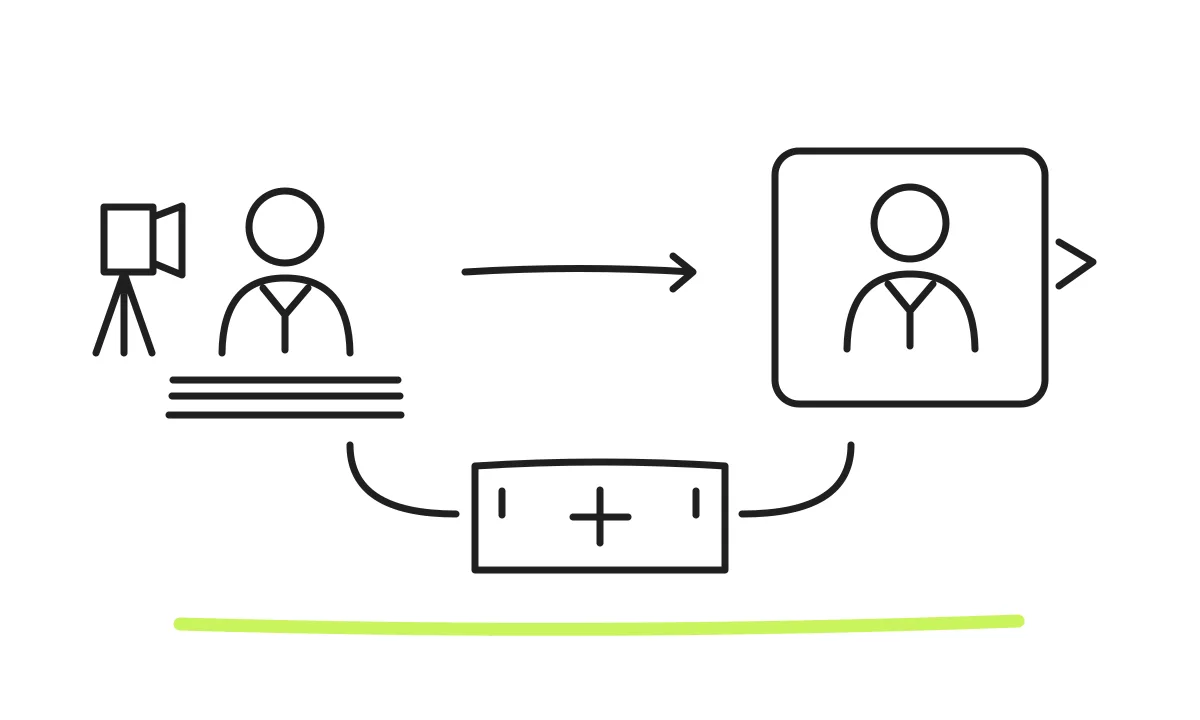
Russian and English YouTube for businesses in Dubai
Choose a bilingual channel model, rehearse second-language delivery and review translation. Includes a matched adaptation example and YouTube audio-track guidance.
In this article (12)
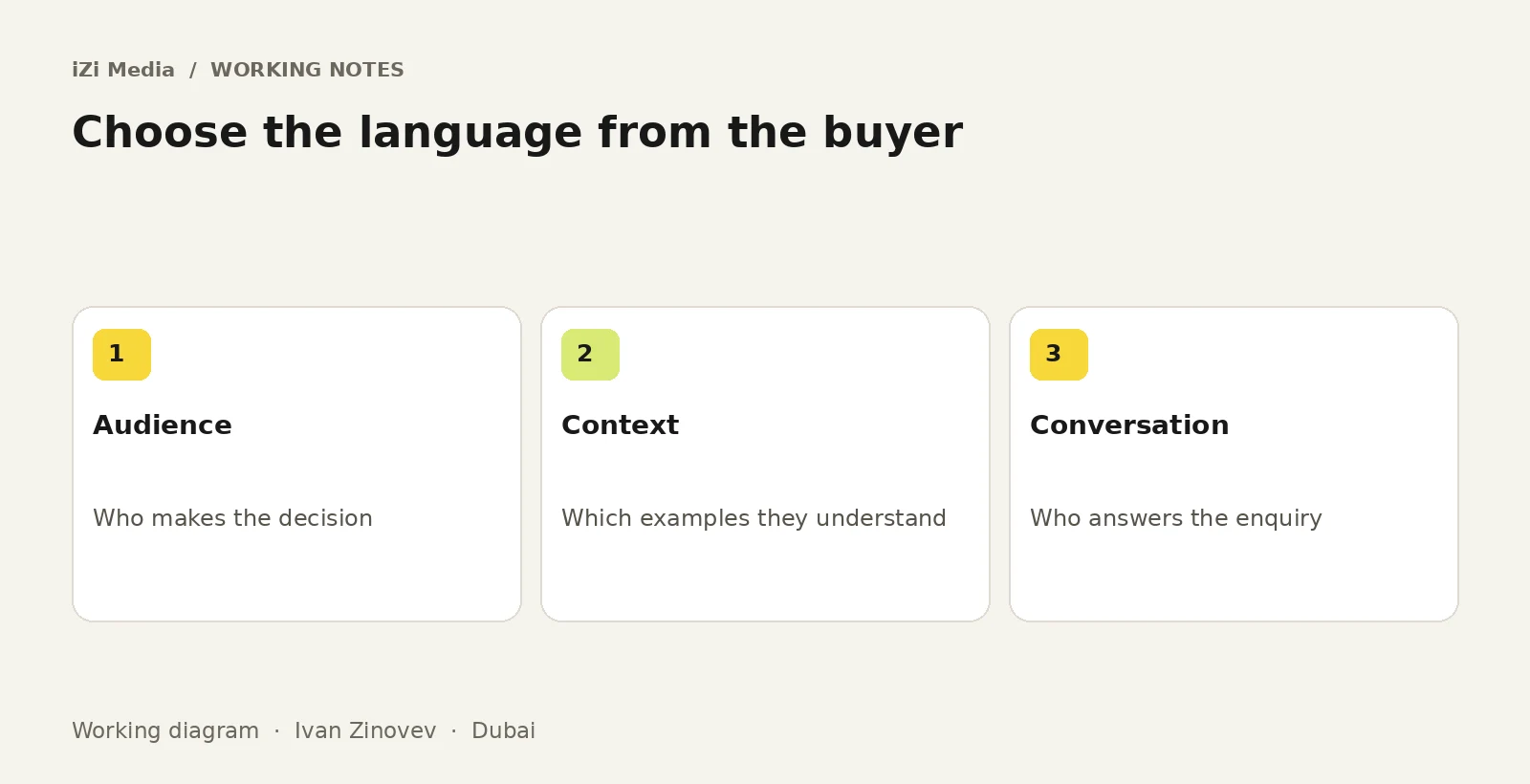
Choose a YouTube language for a Dubai business by the buyers you want to reach and the language in which your team can serve them. If Russian- and English-speaking viewers have the same questions, language versions may work. If they need different examples or services, plan separate editorial work and consider two channels.
Before translating existing videos, check whether the new audience will understand the situations shown and find the closing offer relevant. Then choose a publishing model: one main language, separate versions, multilingual audio where available, or two channels. This guide explains how to assess those options and prepare a trial series.
Separate viewing language from the language of a sale
A Russian-speaking viewer may live in the UAE, need a local service and negotiate a contract in English. An English-speaking viewer may be abroad and planning a Dubai project. Describe where buyers are, what they intend to do and which language they prefer for discussing the work.
Describe a specific group. For example: Russian-speaking entrepreneurs already operating in Dubai who need a local filming team. Another group might be founders of English-speaking UAE businesses who need regular expert videos. Their service requirements may overlap while questions, examples and communication expectations differ.
Name the person who will answer English enquiries and check that the team can run an introductory meeting in English. Prepare the brief and proposal. For a filming project, establish who will explain the task to the speaker on set. Resolve these requirements before publishing the new series.
| What to establish | Russian-speaking group | English-speaking group |
|---|---|---|
| Buyer location | Specific country or city | Specific country or city |
| Intended project | Task and timeframe | Task and timeframe |
| Working communication | Language of contact and approvals | Language of contact and approvals |
| Familiar examples | Recognisable projects and situations | Recognisable projects and situations |
| Enquiry owner | Responsible person | Responsible person |
Fill the table using customer conversations. Ask which language buyers use to research a subject and which they prefer for discussing terms. Understanding English does not necessarily mean they choose it for professional videos.
Check demand before producing a second channel
Ask customers and partners which languages they use for professional material and what questions they try to answer. Request examples of creators they find clear. Then examine channels covering similar tasks: what they explain, what evidence they show and what viewers ask. View counts provide context; the substance of those conversations helps you choose topics.
Define which English-speaking businesses you want to reach. A local small business and an international company may need different approval processes even when both projects use English. A founder preparing to open an office may need help at an earlier stage. These differences should inform the episode plan.
Turn a few hypotheses into proposed episodes. A founder concerned about sounding stiff on camera could need a walkthrough of first-recording preparation. A marketing director comparing suppliers could use an example brief and acceptance criteria. A leader wanting to reduce their participation could use a materials and approval workflow.
Before the trial, record what you want to learn: whether viewers understand the examples, what service questions arise and whether the team can handle the new working language. Choose episodes that help investigate those questions within the available budget and material. The publication count alone cannot guarantee enough observations for a reliable conclusion.
Choose a model that fits the audience differences
One main language is practical when most suitable buyers use it and the team is still developing the first series. Prepare selected materials for another language where useful: translate a service page, add subtitles or record a specific answer for a customer.
Multilingual audio may work when the subject and explanation suit both audiences. Check the feature’s availability in your channel’s YouTube Studio before planning production around it. Review translated titles, descriptions, subtitles and graphics as well as the audio. Explain any context that the original episode assumes its viewers already know.
Consider two channels when the groups need different subjects or offers. Each needs its own packaging, publication, audience replies and review. Even if both versions can be recorded on one day, compare the editorial plans: the preparation depends on how much material needs to be created separately.
In a mixed-language feed, someone following Russian videos may skip English episodes. Use your channel data to inspect whom each series attracts and whether those viewers return. That is a question about audience behaviour; skips alone do not establish that YouTube penalises a channel for using a second language.
| Model | When to consider it | Main team responsibility |
|---|---|---|
| One main language | The primary audience is clear | Improve subjects and production |
| Versions within one channel | Task and content are similar | Check audio and packaging adaptation |
| Two channels | Tasks and editorial plans differ | Maintain two independent series |
| Two languages in one feed | There is a reason for a shared audience | Study each group's response |
Ask what changes beyond the language. If terminology translation and example review are enough, versions may remain close. If the speaker, situation, offer and explanation order all change, this is a separate editorial assignment.
Adapt the examples to the buyer’s situation
Take an episode about choosing a YouTube producer in Dubai. A Russian-speaking entrepreneur may care about the editorial team's language, remote editing and a local crew. Another group may prioritise marketing approvals, staff working language and delivered assets. These are hypotheses to validate through briefs and customer conversations.
Keep the episode’s task: helping a buyer compare teams by the work required. Check whether the examples, document names and team roles are familiar to that group. Explain an unfamiliar term, or reconsider an example that needs a long detour. Use the Dubai YouTube producer guide when preparing the comparison.

Handle currencies carefully. Current local prices can be stated in AED with scope explained. A historic amount from a Russian project should retain its original currency and date, or include an explicit conversion method. Any conversion requires a rate for the chosen date. If the amount does not help explain the idea, describe the work without converting it.
Adapt the invitation too. A Russian version may lead to Telegram if buyers already use it to speak with you. For English, ask customers which contact method they prefer. Whether the link opens WhatsApp, email or a form, explain what they should send and what response to expect.
A matched Russian and English example
Take a teaching video comparing two production estimates. Both versions help a founder understand why totals alone are insufficient. Purpose-made example documents include the studio in one estimate and charge it separately in the other. This describes neither a client nor a promised price.
| Element | Russian source meaning in English | English spoken version |
|---|---|---|
| Question | How to compare two expert-video estimates | How do you compare two estimates for an expert video |
| Main point | First check an identical scope of work | Check that both estimates cover the same work first |
| On-screen example | Two studio rows with Russian labels meaning included and separate | The same rows labelled “included” and “charged separately” |
| Qualification | The conclusion applies to comparable scope | The comparison assumes a comparable scope |
| Next step | Send the task and required scope | Send the brief and the work you need included |
The table translates the Russian source meaning into English for comparison. The English spoken answer is: “One estimate includes the studio; the other charges it separately. Match the scope before comparing the totals.” The action and its reason remain. “Choose the cheapest team” would introduce advice the author did not give.
For a different audience, change the question order or explain unfamiliar roles where needed. Keep the conditions of the example intact. Replacing an included studio with a guarantee of results changes the content and requires separate author confirmation. Pass the approved documents and instructions through the edit brief.
Make the English script sound natural for the speaker
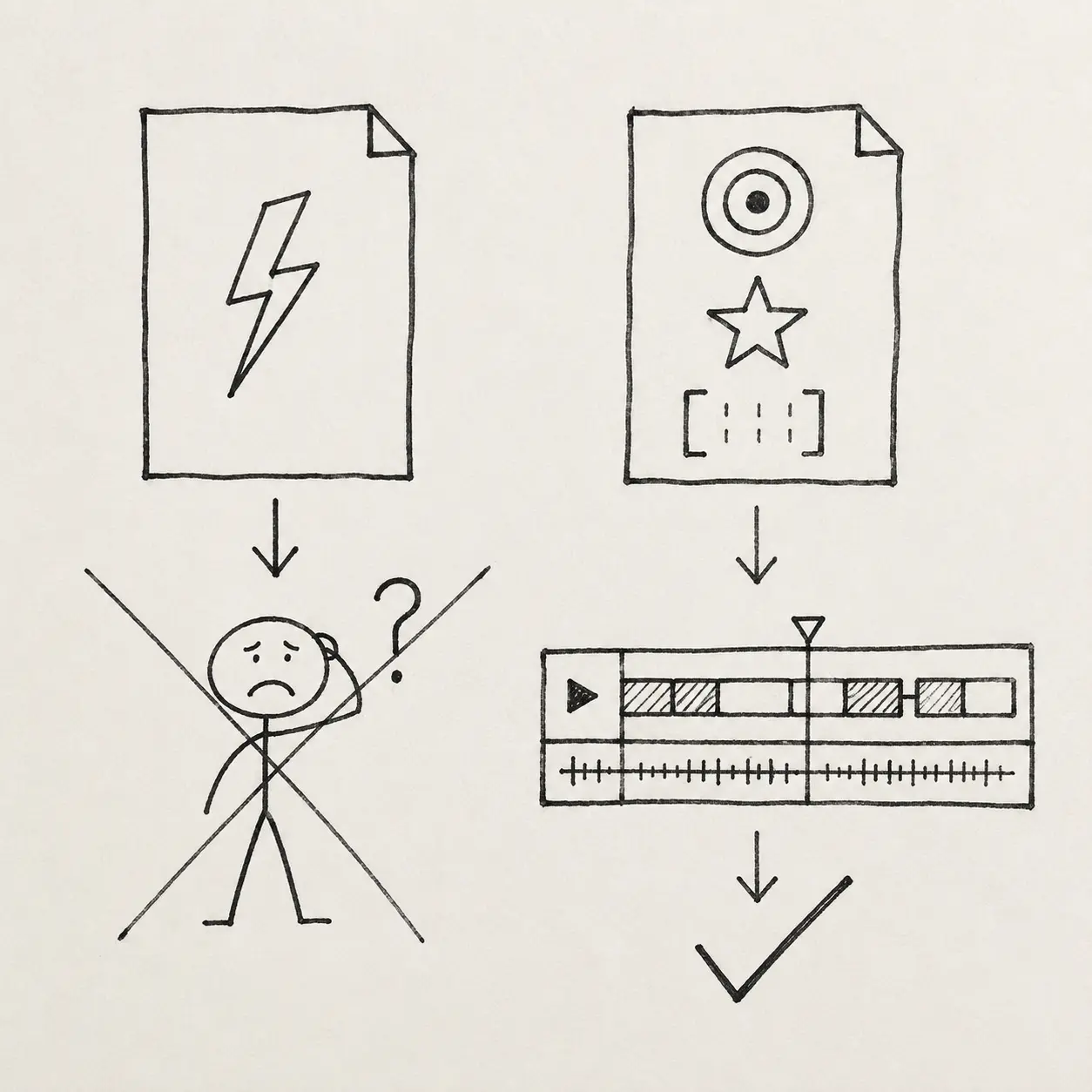
Natural second-language speech may be shorter and simpler than a written translation. Give the speaker wording they understand and can confidently say. First record a short explanation of a familiar example. It shows where an editor is needed, where talking points are enough and where the format should change.
If answering questions is easier for the speaker, try an interview with a producer. Prepare a concrete example they can explain and show. For complex subjects that need exact wording, work with an editor who knows the language and terminology. Ask the speaker to restate the idea after reading it; this can reveal phrases they do not fully understand.
For a teleprompter, read a paragraph aloud and immediately state what decision it helps the customer make. If the meaning is hard to recover, revise it. Long written constructions can be awkward in speech. The speaker's working language should inform sentence length and vocabulary. See the camera and interview preparation guide for preparing examples and rehearsal.

For dubbing, check numbers, names, specialist terms and tone. The visible demonstration must match the spoken explanation. Translate, replace or explain Russian labels in the frame. A transcript-only review will miss them.
Rehearse the second language before filming
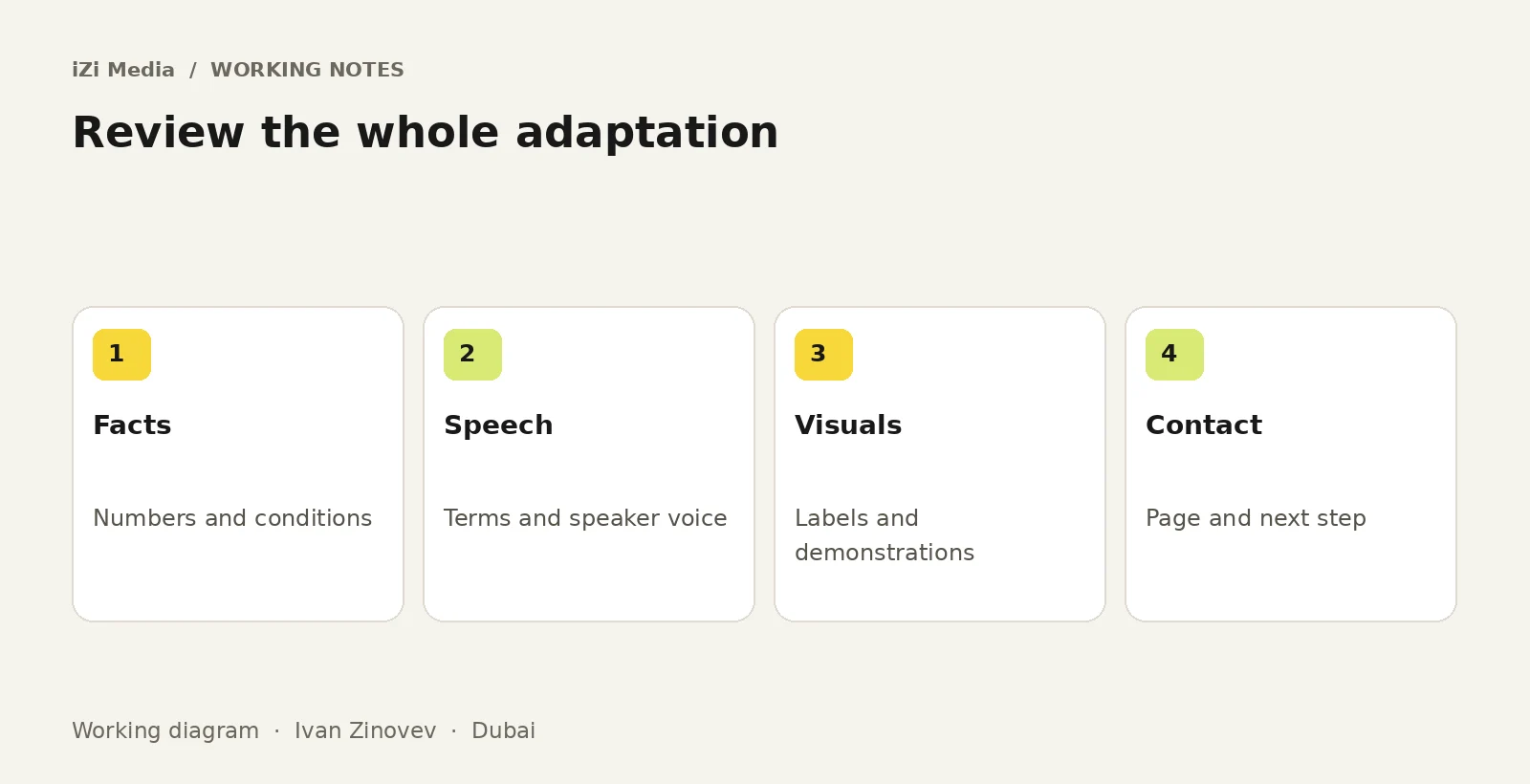
For this example, ask the speaker to explain the two estimates from a talking-point card, then answer, “When would this comparison be invalid?” Check that they can describe the included work and qualification in their own words. Fluent delivery of a memorised sentence does not establish that understanding.
The subject editor compares the conclusion with the documents; the language editor checks intelligibility. In the finished clip, read the labels and check that the speaker’s gesture points to the right row. If meaning is accurate but delivery is difficult, shorten the sentence and repeat the trial. If the conclusion changes, clarify the speaker’s position first. For employee series, include this exercise in content and AI training; the EGC guide explains preparation responsibilities.


Give AI a defined first-pass assignment
AI can produce a draft translation and identify places requiring an editorial decision. Provide the source, audience description and approved terminology. Ask it to preserve the sources of numbers, limitations and the status of examples.
An example instruction: “Adapt this text for a UAE business founder choosing a team for expert YouTube production. Preserve verified facts and links. Suggest adaptations for examples with Russian context in separate notes. Keep all amounts in their original currency. Flag terms with multiple meanings. Use natural spoken English in the main text.”
First compare the draft with its source: amounts, actions, conditions, causal connections and names. Then read it aloud with the speaker and revise phrases that are hard to understand or say. Both checks are necessary because a fluent translation can still change the facts.
Back-translation can help reveal a change, but two model passes may repeat the same error. Compare directly with the source and have someone who understands both the subject and language edit it. For specialist terminology, check relevant documentation or the audience's normal usage.
Anonymise customer documents and use services approved for the materials involved. A complete transaction file is rarely necessary for adapting an example. Retain the situation and verified details needed to explain it, and remove unnecessary identifying information.
Prepare the website to continue the conversation
An English episode should link to an English page about the service discussed. If the invitation is to send a project for review, the page should explain what to send and where. Check that viewers can read relevant examples and contact the team without switching to a language they do not understand.
Each article language version needs an accessible address and a working relationship to its counterpart. Before publishing, test whether switching language opens the matching article. Body text, captions, buttons and tables need to use the selected language. Google's localized-version guidance documents hreflang and canonical requirements.
Keep the approved Russian author name in Russian profiles, Ivan Zinovev in English profiles, and iZi Media as the consistent brand name. An author profile, company information and contact details help connect the pages. Dubai, UAE belongs in the author information and wherever the location affects the work.

Adapt search phrasing to the task. “YouTube producer Dubai” helps someone looking for that specialist. “Video production Dubai” covers a much wider range of filming. Explain the actual service on the page so buyers can assess its fit. For product demonstrations, use the product brand channel guide to identify the additional preparation each language needs.
Compare versions under comparable conditions
If the Russian series already has an audience and the English series starts from scratch, monthly totals mostly show a difference in scale. To assess the adaptation, compare similar subjects at the same time since publication. Account for traffic sources and read the responses.
Some subjects invite detailed investigation; others answer a quick question. Compare corresponding episodes with length and purpose considered. For enquiries, record first-contact language, task and the material the buyer named. Two suitable enquiries in a new language are worth investigating; that sample is too small for stable conversion percentages.
Use specific observations to decide what to revise. If viewers do not understand an example, check its local context. If the speech is difficult to follow, review the recording with the speaker. Questions about a different service may point to the topic or offer. Unclear packaging and limited time to build an audience are other possible explanations. Test a change that follows from the evidence.
Allocate responsibilities before launch
Agree who approves each part before launch. The producer checks that the episode answers the intended question; the subject editor verifies facts and the language editor reviews phrasing. The speaker approves their own position. After editing, check that the graphics match the speech; before publishing, check links and version details. One person may cover several of these responsibilities.
Name source files by topic, language, version and date. A publication register should connect the Russian material, English adaptation, diagrams and destination pages. A factual correction in one version will then identify where the other needs review.
Maintain a shared terminology list for service names, team roles, formats and approval stages. Apply changes to new videos and check important published pages. This saves time when different people handle translation, editing and publication. The content team guide helps organise those handoffs.

Plan the trial series
Describe both audiences and check that sales can work in the new language. Choose a first subject with verified supporting material. After adapting it, record a short rehearsal and correct language or factual problems. Prepare the destination page and send a test enquiry to confirm that it reaches the responsible person.
Use subsequent episodes to test specific questions: example clarity, interview format or the new audience's task. Record what changes and what you observe. Choose a separate channel based on the extent of differences and the team's capacity to maintain it. If almost every episode needs rebuilding, budget for two editorial series.
Connect audience response with actual conversations using the YouTube lead-generation guide. It explains how to distinguish website events, messages and qualified enquiries without losing the buyer's discovery history.
If you choose additional audio tracks
The official YouTube multilingual feature guide, checked on 18 October 2026, describes uploading your own audio tracks to one video through desktop Studio and lists advanced-feature access as an eligibility condition. This is distinct from automatic dubbing. Confirm access in your account before commissioning audio.
For a shared video version of our example, both estimates must be understandable with either audio track. Prepare suitable labels and review them in each language. If the demonstration itself differs, first decide whether the same picture edit is appropriate. Access to another audio track does not replace editorial review.
Frequently asked questions
Does a Dubai business need an English channel?
Not necessarily. A Russian-speaking channel may suit buyers who prefer that language and use it to discuss the work. Plan an English series around a defined customer group that the business is ready to serve in English.
Can we keep a Russian video and add English subtitles?
Yes, if the content itself suits English-speaking viewers. Also review the title, labels in the frame, examples and service page. If the intended audience finds subtitles inconvenient, test a separate audio version or recording in a small series.
Will changing the channel country attract local viewers?
YouTube says the channel country setting is not used to select recommendations. Work on topics, language and viewer response. See the official search and recommendation guidance.
Can AI handle the whole translation?
AI can prepare a draft. Before publication, someone with subject and language knowledge should check figures, explanations, service terms and the author’s position. Review the finished video too: translated labels may differ from the approved text.
Continue the work
Use the Dubai channel launch guide when preparing a first series. To discuss YouTube production, describe both audiences and the language currently used in sales. Send the project to iZi Media with a video or example you want to adapt so we can assess what needs to change.