YouTube for product brands: from demonstration to buying decisions
Prepare product demonstrations, comparisons and founder interviews for YouTube. A worked filming example, evidence checks and production planning in Dubai.
In this article (12)
A product brand can build a YouTube channel around questions that arise when people choose and use its products. Size, materials and care requirements become useful subjects when viewers can see what they change in practice. Start with a product for which the team has samples, documentation and questions from sales conversations.
Someone choosing a knife, coffee machine, office chair or business equipment needs to know whether it suits their task and which features explain a price difference. Before filming, choose the action that will show those features and agree the comparison conditions. This guide covers demonstrations, founder interviews and organising a product series in Dubai.
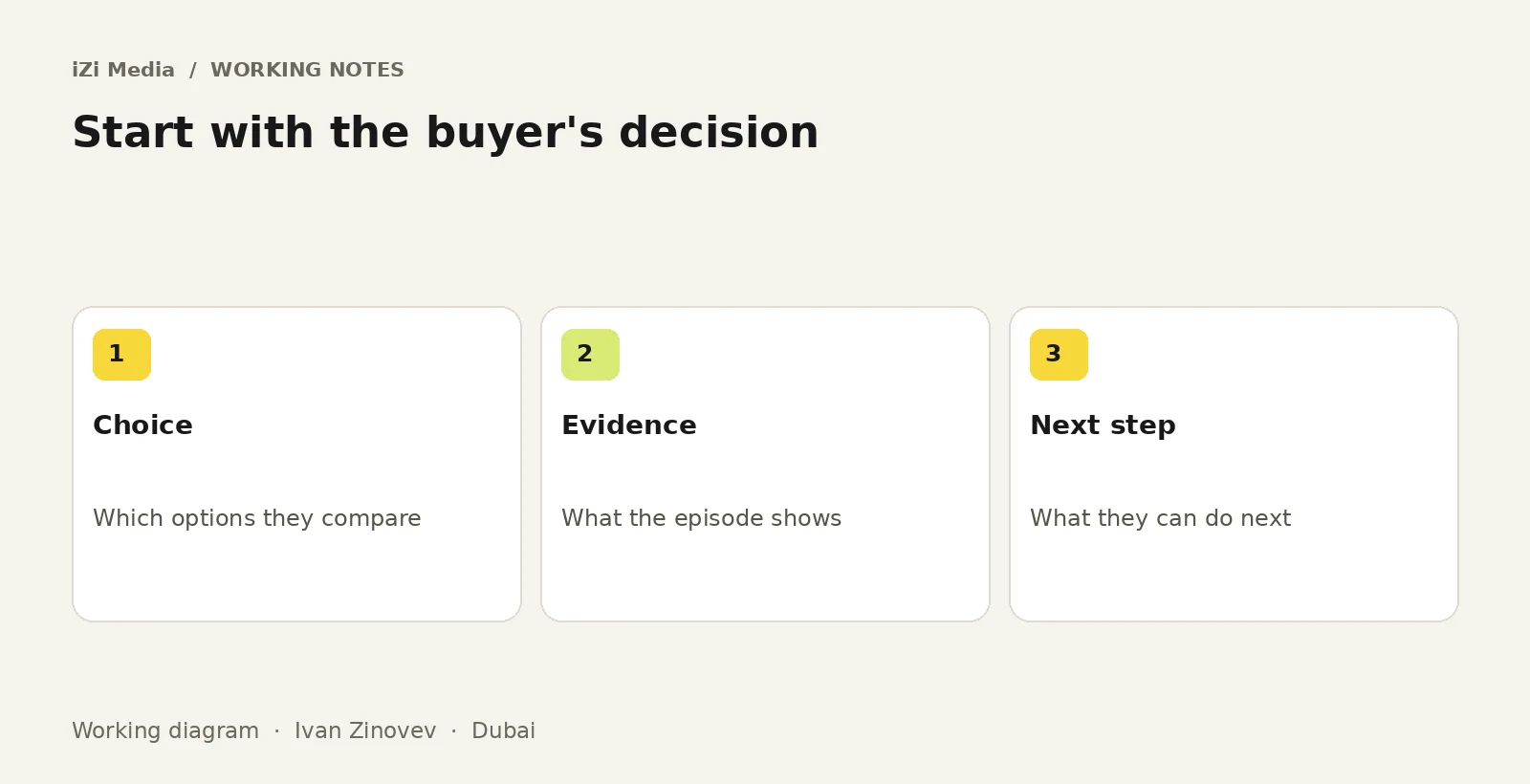
Start at the moment of choice
Ask sales staff to review recent conversations: which models buyers compared, what they asked before paying and what difficulties arose afterwards. Collect the original questions from anonymised enquiries where possible. A recurring question about size, for example, could become an episode showing how to measure and check the fit.
For kitchen products, questions may concern everyday handling, care, storage or fit with a particular routine. For furniture, they may concern dimensions, seating and assembly. For equipment, buyers may ask about compatibility, consumables and servicing. Claims about health, safety or technical standards need specialist review and appropriate documentation. An editor can frame the question; evidence comes from a competent specialist and the product's documentation.
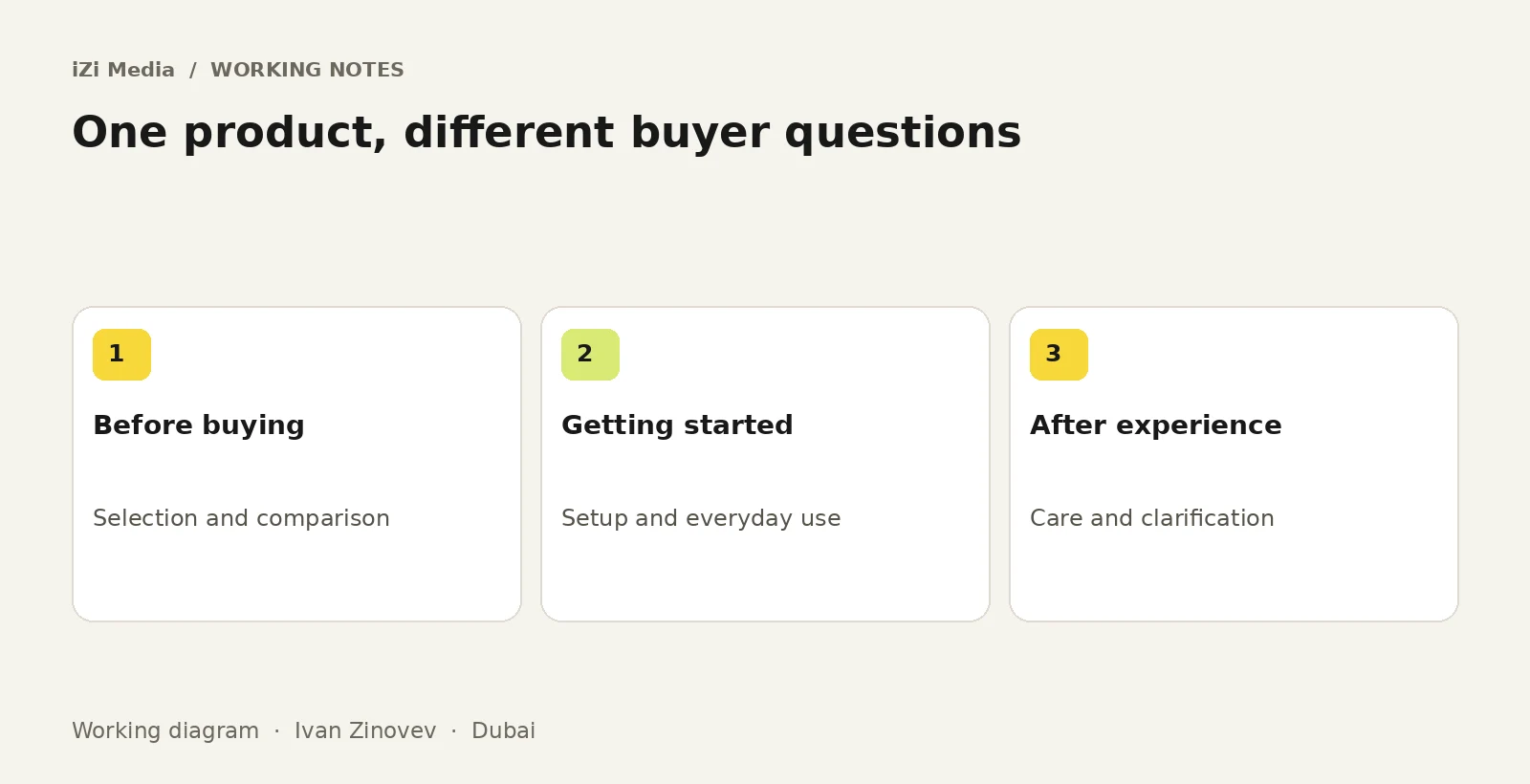
Record when the question arose. Before buying, someone may need help comparing options; during setup, they may need instructions; later, a particular problem may need explaining. Each calls for different material. Recurring problems after purchase are also a reason to check how the product was described during the sale.
| Situation | Episode question | Material to film |
|---|---|---|
| Choosing a size | How to work out which size fits | Measurement and a use example |
| Comparing two options | What differs in the same task | A comparable demonstration of both |
| Questioning the price | Which properties matter during use | Construction and a practical example |
| Already purchased | How to carry out ordinary care | A reviewed step-by-step demonstration |
| Disappointed after use | What expectation formed and what to check | Review of operating conditions |
Each subject should answer a question the business actually hears. Verify recurring questions through sales notes or anonymised enquiries. If the founder is currently your only source, treat their view as a hypothesis and check it in future customer conversations.
Choose the product's role in the episode
Choose the format from the question. Demonstrate an action when buyers need help using the product. Compare models on the same task when they are choosing between them. A construction walkthrough can explain a feature; a founder interview can explain why that feature changed. The same product can support several episodes if each answers a distinct question.
Check that the required material is available. A comparison needs samples and comparable conditions. A design-change story needs the earlier and current versions, or verified material showing them. Care instructions need review by the person responsible for the product. Include any missing preparation in the plan before booking the shoot.
Bring the founder into an episode where their decision needs explaining. They might show why the team changed a dimension or material, including a drawback they accepted. Ask where a buyer would notice the difference in use. Prepare the product or supporting material so the explanation can be shown on camera.
Preparation must distinguish personal preference, professional observation and measured performance. “I find this grip more comfortable” can be demonstrated as personal experience. “This material lasts twice as long” needs a method, conditions and supporting data. Flag such statements before filming and collect their evidence. The founder personal brand guide explains how to prepare a conversation around decisions and experience.
Prepare a comparison viewers can evaluate
A comparison is understandable when the starting conditions, action and outcome are visible. The task must be comparable for both products. If conditions differ, explain why and how that affects the interpretation.
Consider a hypothetical storage-container demonstration. Record the contents, closing method, observation time and placement conditions before filming. Decide what you are investigating: access, occupied space or material behaviour. A home demonstration supports conclusions within its conditions. A laboratory performance claim requires appropriate measurements and a suitable method.
For equipment, show the operation, number of steps and settings. When timing a task, define its beginning and end. When comparing an outcome, explain how you assess it. The viewer can then understand the demonstration's limits and decide whether it resembles their own task.
| Planning item | Example note |
|---|---|
| Question | How does capacity change ease of use? |
| Conditions | Same contents and storage location |
| Action | Open, remove contents and close |
| Observation | Steps required and access to contents |
| Limit | Two samples under the stated conditions |
| Conclusion | Which everyday situation each option suits |
If the outcome differs from the team's expectation, investigate it. Perhaps the second product better suits the chosen task. Perhaps the demonstration reveals a property you have not discussed. A defective sample needs a separate explanation. The edit must preserve circumstances that determine what the result means.
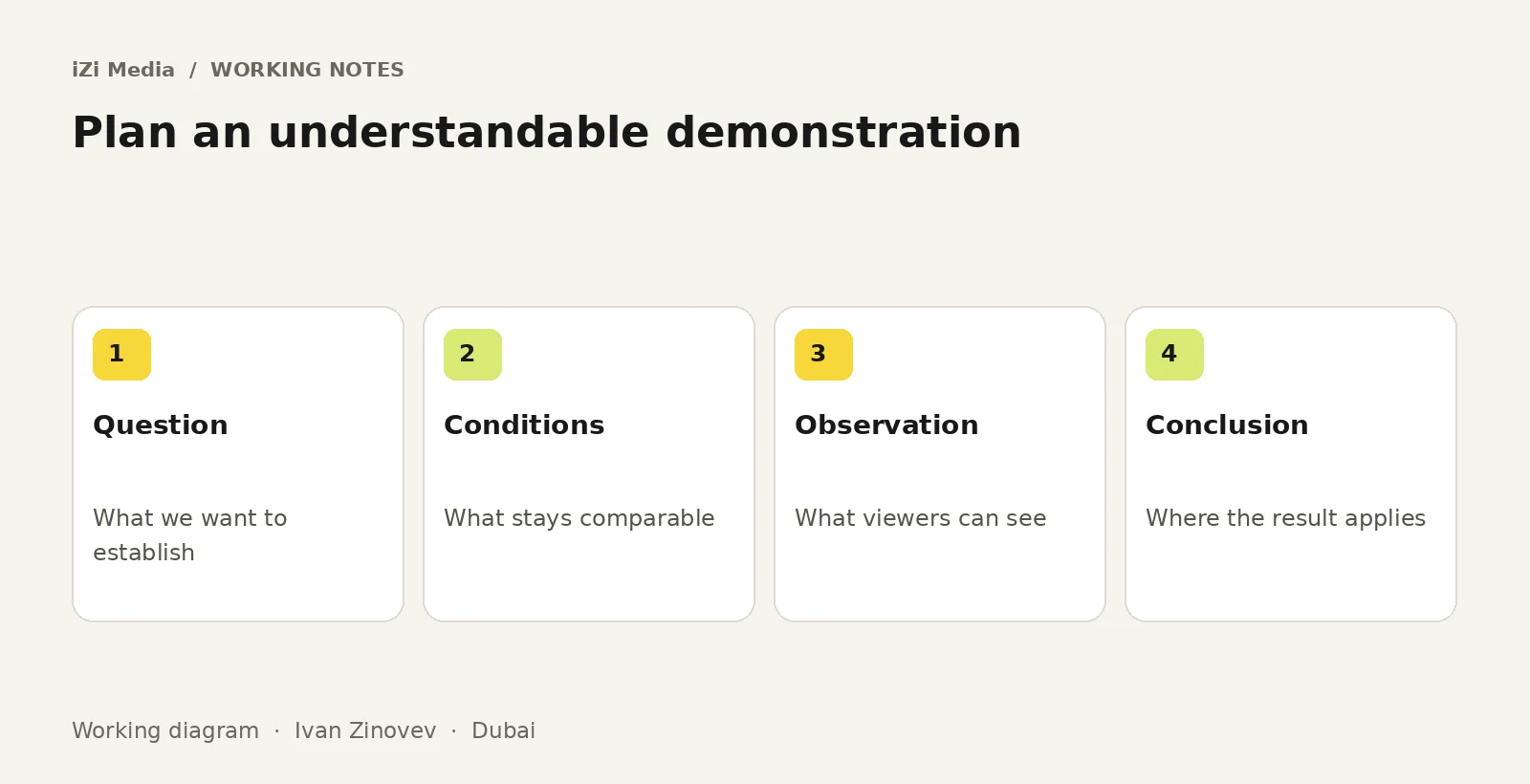
Preparing a comparison of two products
Take an illustrative task: a buyer is choosing between two desktop organisers and wants to know whether they can conveniently retrieve papers at their workstation. Call the samples A and B. We have no test results; this is a filming plan for gathering observations.
| Part of the episode | What to record | What to establish |
|---|---|---|
| Starting situation | The workstation and papers the person actually uses | The access needed and the space available |
| Same task | The same set of papers in each sample | Whether the contents fit without changing the task |
| Action | The person retrieves the chosen document from both samples | Which movements and rearrangements were needed |
| Explanation | A close view of the detail that affected the action | Why the difference occurred and whether placement matters |
The presenter asks: “Who would you choose A for, and who would you offer B to?” Record the answer after the demonstration. If the samples require different conditions, show the difference and explain which situation each conclusion concerns. One trial can support a discussion of observed convenience in those conditions; it does not establish the durability of the entire range.
Mark the wide view, close view of the action and placement shot in the filming plan. Retain an uninterrupted recording of each action for review. If the sequence changes in the edit, make sure it does not create a result absent from the trial. The same material can answer one buyer objection separately, provided the demonstration’s conditions remain clear.
Interview the founder about one decision
Choose one decision for the owner interview: a design change, a rejected option or an instruction revised after repeated customer questions. Collect material showing what existed before and after the change. Those objects and records give the conversation a subject the viewer can follow.
First establish what happened when the customer used the product. Then ask which options the team considered and what changed. “How did you know it helped?” checks the evidence for the conclusion. Ask who the revised version suits and under what conditions. Change the order where the story needs a different explanation.
For a comparison episode, ask: “The buyer sees two similar products. How can they recognise the difference before paying?” Have the founder show a detail or action. If the answer stops at “The quality is better”, ask what the user would notice. Add that demonstration to the shot list so the finished video shows the explanation.
Agree what can be discussed publicly before recording: developments, partners and commercial details. Verify comparisons involving competitors. Publish customer stories with appropriate permission, or remove identifying details sufficiently. These decisions are easier to make before the recording day than while reviewing the final edit.
Preparing the founder’s explanation of a decision
Continue the illustrative example by asking: “Why did you change the compartments, and what did you have to give up?” A substantial answer needs the old sample, the new version or verified records of the change. Have the founder show the detail and explain the trade-off: which papers became easier to retrieve and what no longer fitted.
If that change never happened, the question does not belong in the brand’s history. Instead, examine the current design: why it is made that way, whom it suits and what the founder would check before recommending it. Use the interview questions guide to prepare the conversation and the expert voice guide to preserve its accuracy.
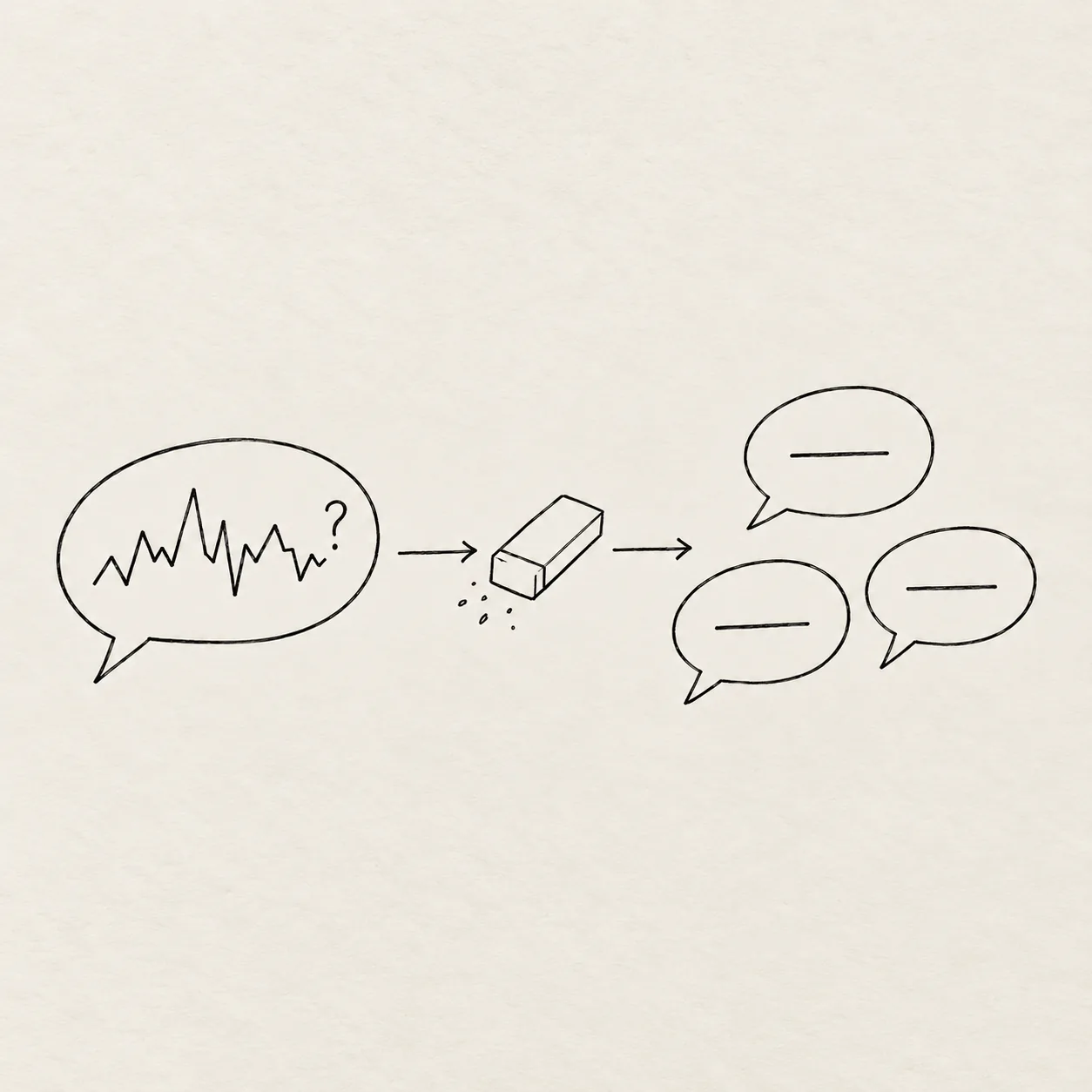
Once the action and explanation are ready, combine the required shots in one plan and name the reviewer for each claim. The Dubai video production service describes a defined recording project. Speaker preparation can be discussed through camera coaching.
Give the episode a clear promise
Frame the title around the question the episode answers: “How to choose a size for a small kitchen” or “What difference are you paying for between these models?” Check the recording plan against that promise. It should include both the answer and the conditions that make the comparison useful.
Choose a thumbnail detail from the explanation: visible dimensions, two product positions or an important component. Capture it so the difference remains readable on a small screen. Packaging text only helps if viewers can read it and understand what is being compared.
Prepare the title and principal visual before filming so the team can capture an angle that makes the difference readable. Otherwise the designer is limited to whatever happens to exist in the footage. Read the guide to packaging before the script for the preparation process.
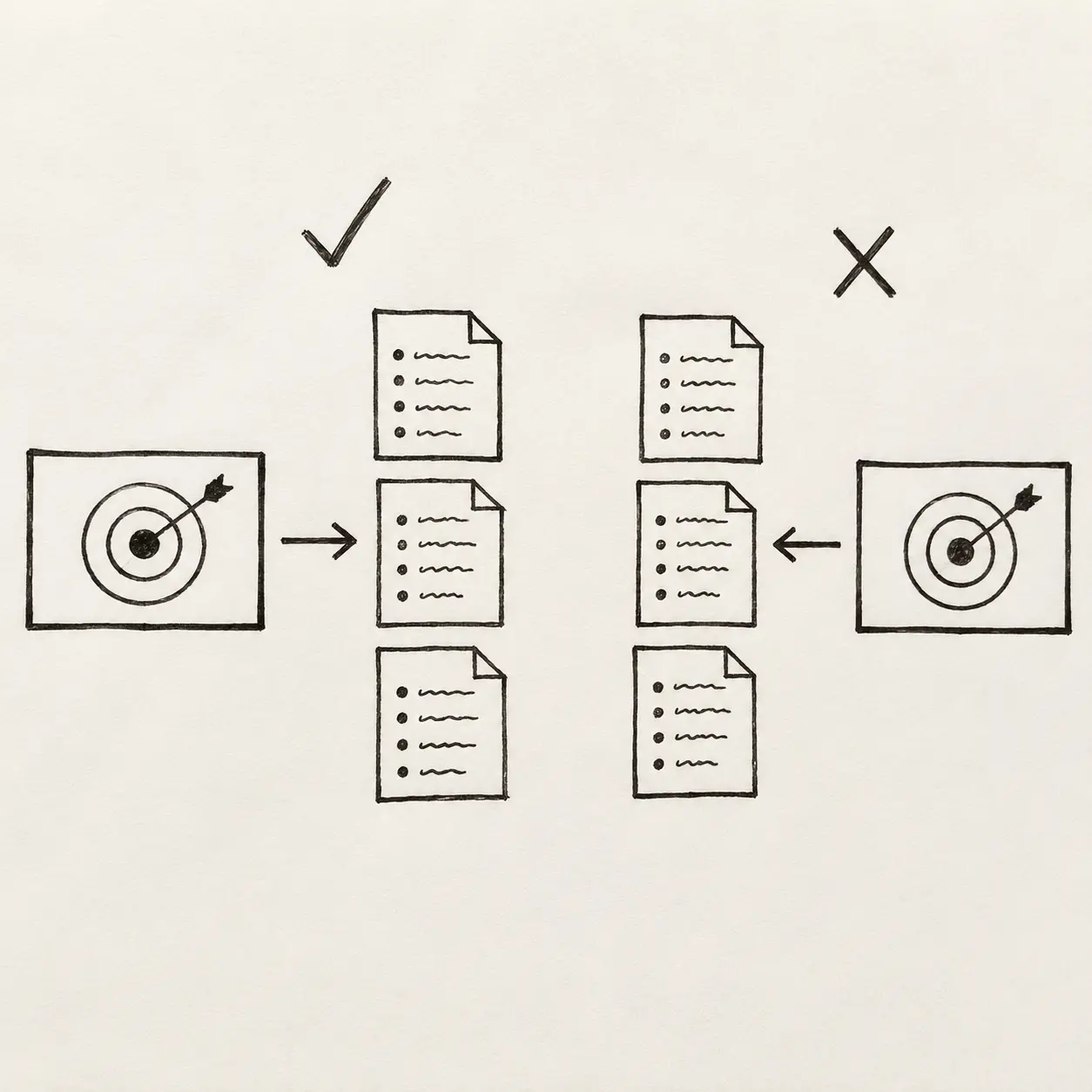
For search, the spoken explanation, title and description should address the viewer's actual question. YouTube describes relevance to a search and audience response in its search and discovery guidance. This supports precise naming of the subject and task. A long list of loosely related keywords adds little clarity for the viewer.
Organise the shoot around actions
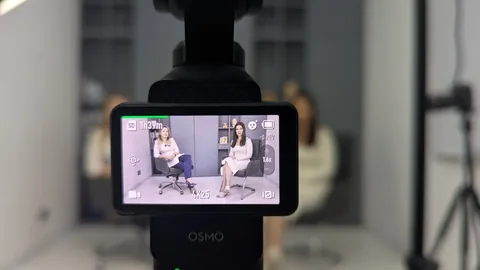
For a Dubai series, allocate work between the local crew and any remote editorial team. The location needs products, prepared samples, someone who can demonstrate them and the technical crew appropriate to the format. An editor can prepare questions remotely; a remote video editor needs a clear structure for the recorded materials.
Batch actions that use the same setup. You might record the main conversation first, then hand movements, close details and supplementary explanations. Each episode still needs its own complete shot list. Label the sample and topic so footage is easy to identify afterwards.
Start the list with evidence: which actions and outcomes must be visible for the conclusion to make sense? Add transitions and beauty shots afterwards. If changing a setting matters to the explanation, record that change. Otherwise the editor may have to cover a crucial step with a generic product shot and the viewer loses the reasoning.
Plan sound for the material. A mechanism's click or operating noise may explain an action. Conversation needs intelligible speech. Loud music can obscure both. Check the edit on a phone, where many viewers will first experience the video.
Before booking, agree the location conditions, required permissions and people’s participation with the owner and person responsible for production. Requirements depend on the venue and format. Record any restrictions that affect the planned actions or recording schedule.
Turn one topic into several standalone pieces of content
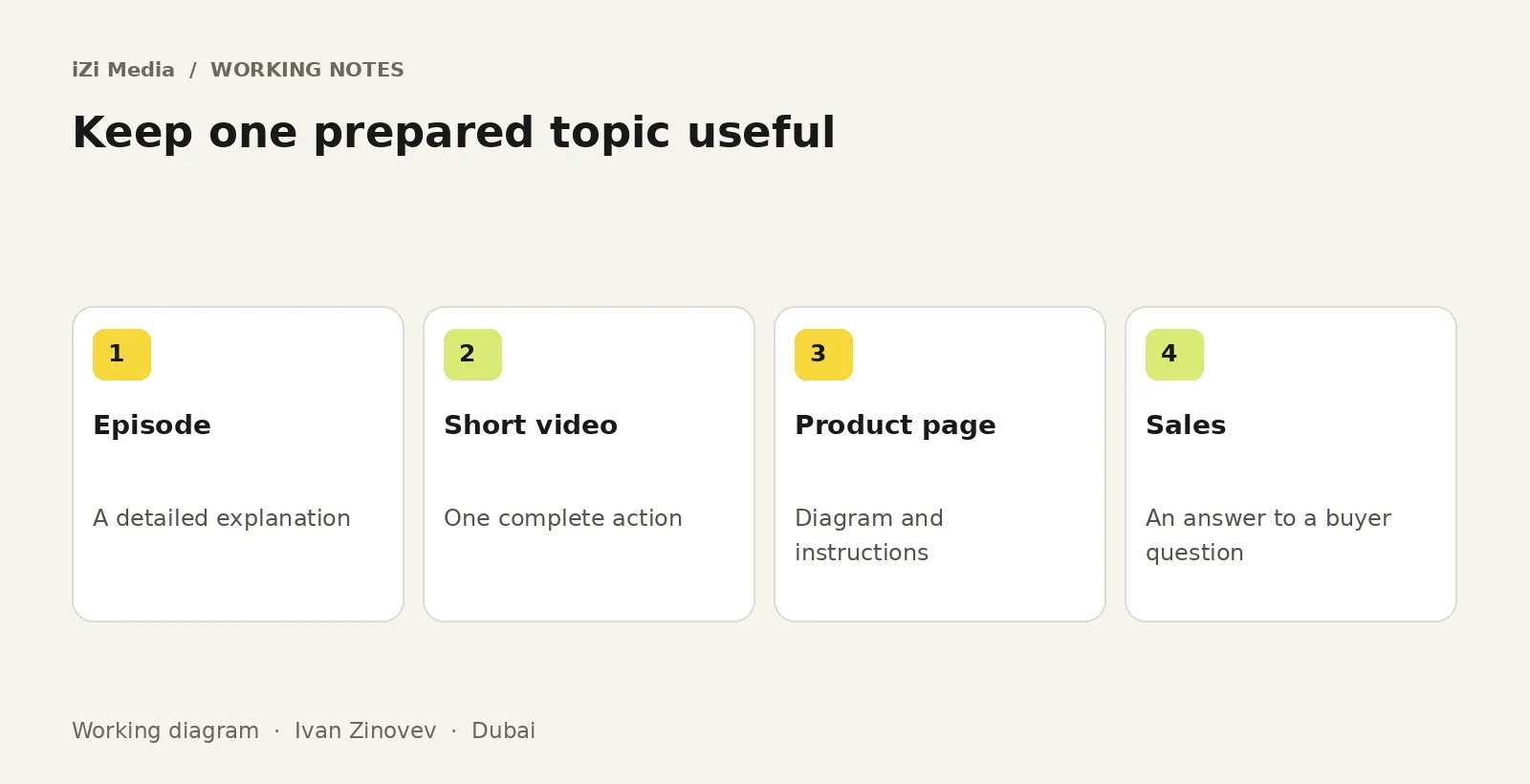
A detailed episode can provide material for a Short, a product-page visual or a sales instruction. Review each separately: does the action and conclusion make sense without the full video? Are the conditions behind the result still clear? Shortening a comparison can easily remove information the buyer needs to interpret it.
As a hypothetical example, a long episode explains size selection. A short video shows the measurement method, and the product page uses a dimensions diagram. The salesperson can send a buyer the relevant chapter. Each version should contain enough context for the situation in which it will be used.
When a product changes, review the connected videos and instructions. Clarify explanations that no longer apply to the current model. Keep a register with the product name, version, recording date, stated properties and publication links. Use it to locate every item affected by the correction.
Use AI with a defined editorial task
AI can group anonymised customer questions, propose an interview structure and turn an approved transcript into draft material for another format. Provide the product documentation, agreed terminology and evidence available. Ask it to flag statements requiring confirmation rather than fill gaps with plausible details.
A useful instruction is: “Using these buyer questions and approved product notes, suggest episode subjects. For each, list the action to demonstrate, evidence required and limits of the conclusion. Keep unverified claims in a separate review list. Preserve the model name and version.” Compare suggestions with the source documents before planning a shoot.
After drafting, check dimensions, units, materials, names and operating conditions. Check the video itself too: a correct transcript cannot catch an incorrect label or the wrong sample in a close-up. The person responsible for the product should approve factual content, and the editor should check that shortened versions preserve it.
Clearly labelled generative graphics can illustrate an idea or mechanism. Evidence of a product property needs an actual photograph or a technically correct drawing based on verified data. Viewers should understand what they are seeing. Check YouTube’s altered and synthetic content guidance when publishing realistic AI content.
Assess usefulness after publication
Ask sales staff to record which video they shared and what the buyer understood afterwards. Did it help them compare models or explain their intended use? Which questions remained? These observations can guide the next episode even before there is enough evidence to assess revenue.
Purchases may happen in a shop or marketplace where the link to viewing is limited. A tagged visit and a buyer’s account provide different evidence. A sales increase can coincide with a promotion, availability changes or advertising; consider those events when comparing periods or groups.
Use retention data to find moments worth watching again, then compare those segments with customer questions. For example, a recurring misunderstanding about size gives you a reason to review the measurement explanation. Keep your own records connecting enquiries and purchases to material buyers mention. The YouTube lead-generation guide explains how to record contact clicks, conversations and qualified enquiries separately.
Plan a pilot around available evidence
Choose one repeated buyer question, identify the samples and supporting documentation, and prepare a demonstration plan. Agree the founder's position, title, key visual and acceptance criteria. Record the pilot and its necessary close-ups. Review the finished explanation on a phone with the product specialist.
Publish it with a relevant destination: the correct product page, an instruction or an enquiry route. Ask sales staff what they learned from sharing it. Use those observations to choose the next topic and refine the production process. If buyers speak different languages, prepare the language adaptation plan before duplicating the series.
Frequently asked questions
Can one product sustain a channel?
Yes, if buyers have distinct questions about choosing, setting up, using or caring for it. Each episode needs an answer supported by a demonstration or reliable source. Collect buyer conversations first to see how much useful material is available.
Does the founder need to appear in every episode?
No. Invite the founder when the subject concerns a decision they made. A trained demonstrator or product specialist may be better placed to explain an instruction. Agree who can substantiate the answer before choosing the speaker.
Can we compare our product with a competitor?
Define the subject and comparable conditions, collect supporting evidence and have the brand’s legal reviewer check the wording. Keep the context and limits behind the conclusion visible in the demonstration.
What budget does a product channel need?
The quote depends on demonstrations, samples, location, setups, crew, graphics and deliverables. Plan one pilot and compare proposals with the same scope. The Dubai YouTube producer guide helps define the work before selecting a team.
Continue the work
Use the content team guide to allocate preparation and publishing, and the editor briefing guide to make post-production expectations clear.
To discuss product-focused YouTube production in Dubai, send buyer questions and examples of the products. Note which samples are available locally and who can demonstrate them. Discuss the project with iZi Media using those details to scope the first recording.