Why experts start sounding like everyone else on YouTube
Keep an expert's viewpoint when scripting and editing. Worked examples show how to shorten long answers, tell a specific story and retain key qualifications.
In this article (5)
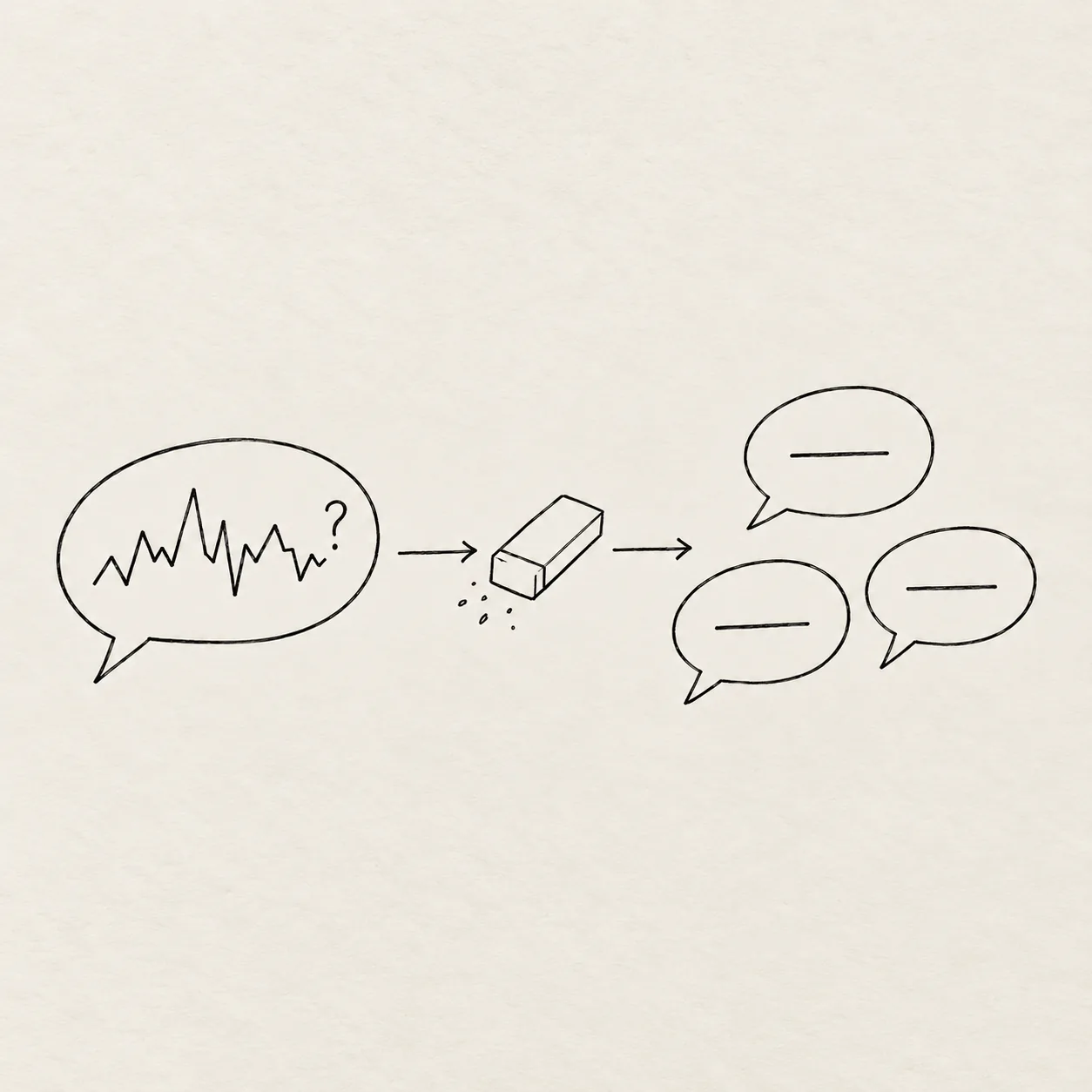
Take two versions of the same idea.
“We care about reach and business results.”
“I won’t call 100,000 views a success until I know who watched the video and whether it led to conversations with potential clients.”
The first line is polished. It could sit on almost any production company’s website. The second shows how someone makes a decision. You can agree or disagree, but you know what they consider good work.
That difference often disappears between the first conversation with an expert and the finished video.
A script replaces a specific opinion with a statement nobody could object to. During filming, a broad answer gets a nod even though the person was about to describe something that actually happened. In the edit, the explanation behind their conclusion gets cut along with the repetition. The video becomes tidier. It also becomes harder to tell this expert from anyone else.
When I prepare a founder-led YouTube channel, a list of topics isn’t enough. I want to know what decisions this person makes in their work. Which popular advice would they refuse to give a client? When would they say, “That video got views, but it didn’t solve the problem”? What happened that taught them to think that way?
Those answers give us something to write a script around. On set, they tell me when to ask for an example instead of accepting a rehearsed line. In the edit, they help us cut the detours while keeping the reasoning intact.
A strong voice doesn’t depend on swearing or sounding provocative. It comes through in a precise judgment backed by experience.
That matters for a business channel. Viewers are learning about the topic, but they’re also working out whether they would trust this person with their own problem. A video gives them something to judge when it shows how the expert thinks through a real decision.
Before building the content plan, I discuss those decisions with the expert. They help us choose topics the person can explain using material from their own work.
How to assess the expert’s judgement
Choose one recommendation and ask when the author would depart from it. If it could be attributed unchanged to almost any specialist, look for its basis: what does this person check, which option do they reject and why? An example should let viewers assess the decision.
The examples below illustrate editing techniques. They do not describe iZi Media client results.
General version: “You need to publish quality content regularly.”
More specific: “I’d first check why the team is delaying videos already recorded. If an episode waits a week for factual approval, another shoot will add material to the same queue.”
The second version has a situation you can check and a reason for the recommendation. The writer still needs to ask whether the author actually holds that view. A convincing sentence written on someone’s behalf does not automatically become their position.
Telling a story rather than describing yourself
A self-description lists the author’s qualities. A story gives viewers material from which to draw their own conclusion. In this illustrative example, “I delegate well and trust my team” states an assessment. “The project lead and I preferred different options. I asked him to show what he would check in a trial, then left the decision with him” describes an action.
To complete the story, find out what happened next. If the result is not known, say so. If the trial exposed an error, keep it in the account along with the next decision. Do not invent a successful ending because the story feels unfinished.
Follow-up questions draw out this material. The entrepreneur interview guide shows how to move from general answers to events and decisions. For a founder-led series, use topic cards drawn from everyday work.
How to shorten a long answer
First recover its structure: the question being addressed, the conclusion, its basis and the conditions under which it stops applying. Then decide which detours can go. An answer covering two separate tasks may need two separate clips.
Illustrative source answer: “Well, I’d probably start by looking at what we’ve already filmed. Say we have four conversations, and before scheduling another shoot I’d check where the material got stuck. If nobody has even reviewed those conversations yet, I wouldn’t book another recording just now.”
Shortened version: “Before the next shoot, I’d check what is happening with the four conversations already recorded. If they haven’t been reviewed yet, I wouldn’t schedule another recording just now.”
The repetition is gone; the reasoning and condition remain. “We don’t need any more shoots” changes the meaning. The author was discussing a specific backlog of unprocessed material. The edit must not attribute a general prohibition to them.
In a script, move the conclusion earlier and use the author’s familiar words. The needed phrase may be absent from an existing recording. Ask a follow-up question or arrange a pickup; joining separate words must not create advice the person never gave.
Which qualifications to keep
Some words only delay the point: “I’d like to, perhaps, talk about…” Others determine its accuracy: “based on these data”, “for this volume”, “if the team has capacity”. Decide whether to cut a phrase according to its role in the answer.
In the illustrative sentence “After just two episodes, it is too early to choose a permanent format”, both the number of episodes and the caution matter. Replacing it with “This format doesn’t work” adds certainty the speaker never expressed. “May help” and “will deliver results” are not interchangeable either.
Mark important conditions in the video editor’s brief and keep a reference to the source answer. At review, listen without the interviewer’s question. Is it clear what the conclusion concerns, whom it is for and where its limits lie?
What to check before publication
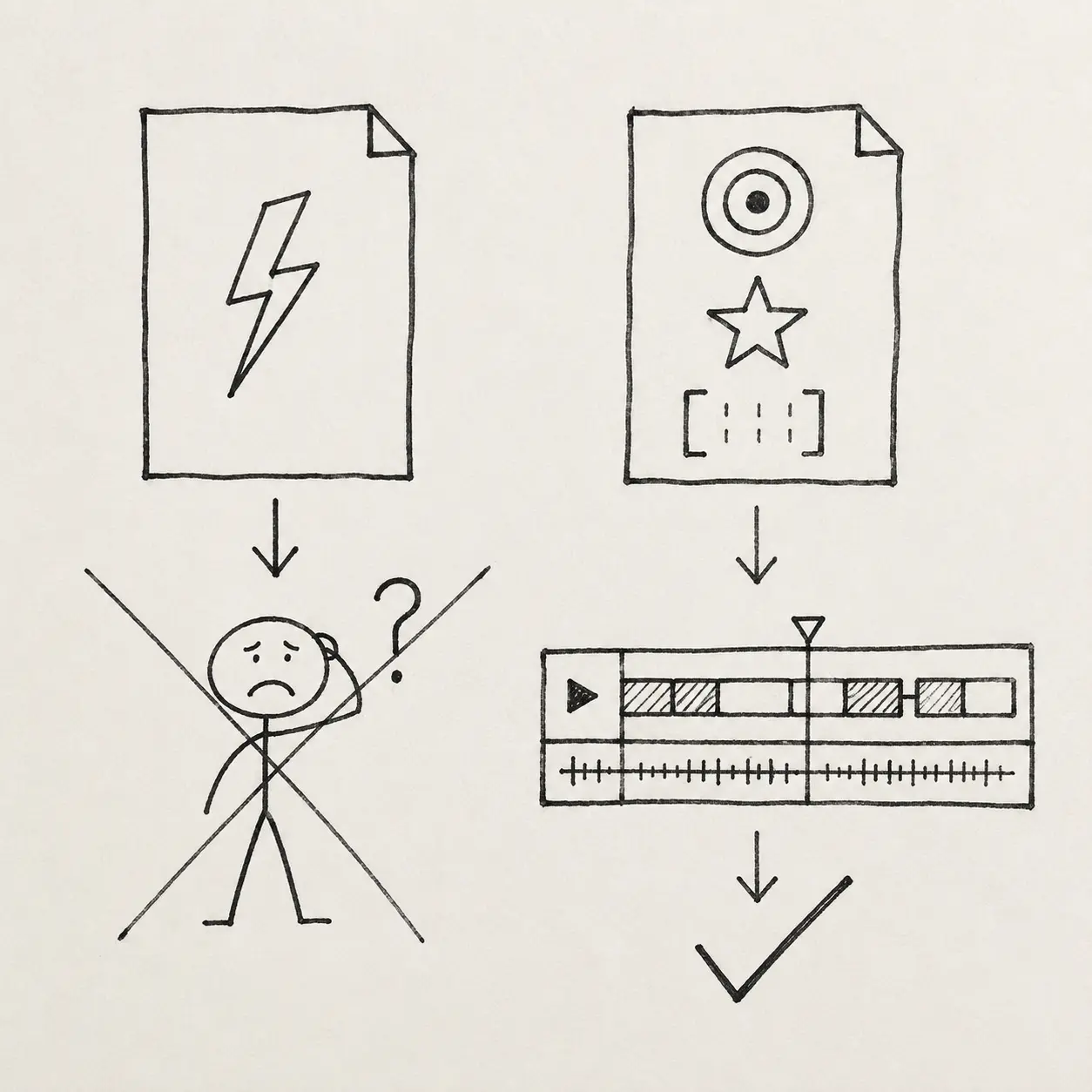
Read the title and listen to the first answers. Does the presentation promise a conclusion the author is willing to defend? Then check passages where figures, the order of events or the degree of certainty changed against the recording. Return a disputed passage to the speaker for clarification before publication.
Keep the same checks when using AI. Ask it to extract the author’s claim, example and conditions separately, with transcript references. Verify them yourself: a model may smooth over disagreement or turn a context-specific conclusion into general advice.
If the speech already sounds unfamiliar before recording, try a short camera rehearsal. For ongoing work on topics and videos, consider YouTube production; for a particular recording, see speaker preparation.
From a project: Working with a speaker’s reasoning in long-form video.