ArticlesSpeaker
What keeps a smart person from sounding convincing on camera
Experts often worry about leaving out an important detail and try to explain everything at once. The listener is still getting to grips with the topic while already having to remember caveats and unfamiliar terms.
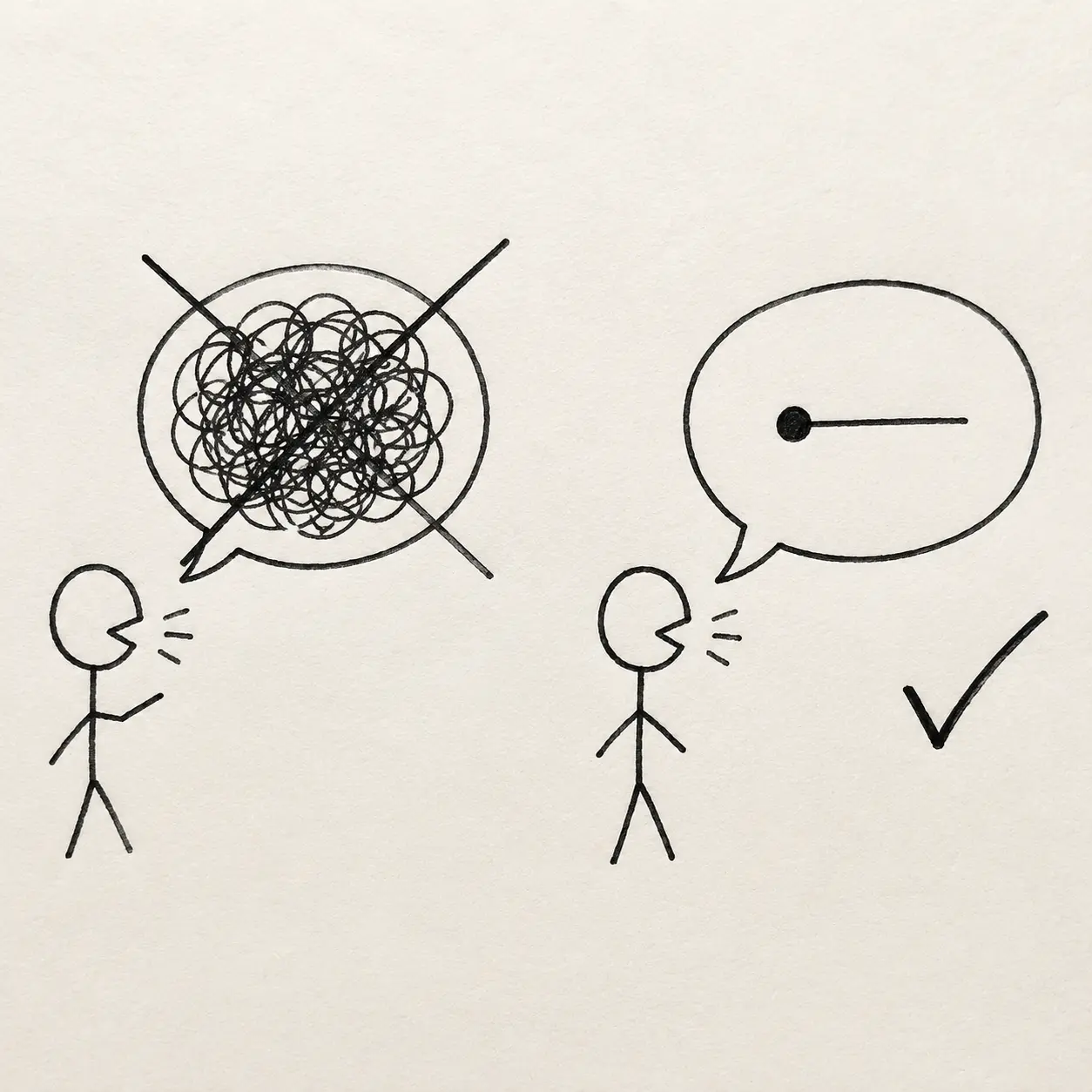
A conversation partner helps us stay clear. They nod, ask for an example, challenge a term or bring us back to the point. A camera stays silent, so an expert tries to answer every possible follow-up in advance.
That creates long introductions, five disclaimers in a row and specialist language that feels ordinary inside the profession. The knowledge is real. The listener simply cannot tell which idea to hold on to.
What I do before recording
First we write the one sentence the viewer should carry away. Then we add a familiar situation, one precise example and a useful next action. Detail comes in where removing it would change the meaning.
During the shoot I listen beyond the words. When the speaker slips into corporate language, I ask them to explain the same point to one real person: a client after a meeting, a new colleague or a friend over dinner. Their voice usually becomes natural again within seconds.
Preparation does not turn a person into a presenter. It frees their attention. The speaker no longer has to hold the whole structure, sequence and timing in their head. They can focus on the person and the point.
Read the opening aloud. If you cannot say the sentence in one breath, or would never say it to someone across the table, it will sound borrowed on camera too.