Founder personal branding in Dubai
Show a founder’s expertise through real work examples. Turn client questions into videos with supporting evidence and a relevant next step. Production in Dubai.
In this article (13)
Producing a founder’s personal brand means developing topics from their experience, preparing them for recording and organising publication. Project decisions, negotiations and product explanations can all provide material. The producer helps select what a defined audience needs, verify examples and fit recording around the founder’s work.
I’m Ivan Zinovev, producer at iZi Media in Dubai. I work with experts and business leaders on topics and video recording. This guide covers a first series: gathering material through an interview, choosing a workable format and dividing filming and approvals between the founder and team.
Decide what your personal brand should achieve
Decide which business task the content should support. For prospective clients, explain working methods and decisions. For recruitment, show employee responsibilities and working conditions. To explain a complex product to partners, prepare a demonstration or an example of its use. The purpose also determines what to invite viewers to do next.
Start with the people you want to have more conversations with. What do they need to understand about you? An agency owner could show how the team selects properties and discusses trade-offs. An education founder could explain how they assess programme quality. These are proposed directions to check against the speaker’s actual experience.
| Purpose | Content to explore | Signal to track |
|---|---|---|
| Conversations with potential clients | Working methods and decisions | Relevant, substantial enquiries |
| Recruitment | Responsibilities, conditions and work examples | Suitable applicants and their questions |
| Partnerships | The founder’s position and business capabilities | Specific collaboration proposals |
| Recognition within a niche | Recurring topics and original explanations | Returning viewers and mentions |
Choose one main purpose for the first cycle. Also agree what can be public: decisions you can discuss, project material you can show and details that remain within the company.
What should people remember you for?
After choosing the business objective, define the reputation that could support it. “I want more clients” does not yet tell you what to discuss. A founder offering a complex service might want to be known for understanding the conditions of a problem and explaining trade-offs. The series then needs examples of investigation and choice.
Write a short brief. For each intended association, record an observable action and material that can show it. The following is a teaching example for a service-business founder, not an account of my client work.
| What people should remember | What the person actually does | Material for an episode |
|---|---|---|
| Clarifies the problem | Establishes constraints and decision criteria before proposing work | Walk through first-meeting questions using a prepared example |
| Explains the scope | Shows what the order includes and what changes the workload | Compare two illustrative estimates for the same assignment |
| Takes responsibility for decisions | Returns to the review and explains changes | A decision story with a known outcome or an explicitly open status |
Read the brief in reverse. If supporting material is missing, narrow the claim or do the necessary work first. A video series can make experience easier to understand; confident wording cannot supply the experience itself.
Also name an impression you want to avoid. A categorical title might imply universal advice when your actual method always begins with examining the conditions. Check the title, opening answer and edit for that unintended association. This gives the editor a specific pre-publication task.
Find your own perspective on a familiar topic
Choose a common recommendation in your field. Explain when you support it and when you would take a different step. Find an event, demonstration or document that lets viewers assess your explanation. Your distinction might be a decision criterion or the order of checks; it does not require provocation.
Illustrative starting point: “Before expanding the team, I check why the current team’s tasks are delayed.” An episode needs signs of delay, a way to investigate and an explanation of when hiring is justified. If the founder holds a different view, change the script. The position comes from the person’s reasoning and work.
Define one main area in which you want to be useful and several related questions. How a service works can lead naturally to team selection and quality review. A personal story belongs when it helps explain a decision and you are comfortable sharing it. Private-life detail is optional.
For public roles, see the founder’s personal brand and the company brand. Employed leaders have a separate guide to executive personal branding and professional visibility.
This section draws on Caleb Ralston’s ideas about connecting objectives, reputation and actions, and supporting a position with real material. The brief and examples are my editorial adaptation for business-video preparation. Relevant course sections are listed in the sources.
How video helps someone assess your company’s expertise
Connect the episode to a decision the viewer needs to make. What must they understand before continuing a conversation with the company? One person needs to see the checking process; another needs the service scope; a third needs to know when your approach suits their task. That question gives you a criterion for selecting material.
“We have extensive experience” states your own assessment. A working example lets viewers reach their own conclusion: what information you requested, what you checked and why you chose the next step. Evidence might be an approved work sample, a prepared demonstration or a clear explanation of a decision. An illustrative example shows a method; a project result needs its own supporting evidence.
These are illustrative topic prompts, not accounts of completed projects.
| What the person wants to understand | What to show | Suitable format | Next step |
|---|---|---|---|
| Why a lawyer requests details first | Questions that change how a request is examined | An interview with follow-up questions | Prepare information for the first meeting |
| What supports a financial expert’s conclusion | Source, comparison conditions and remaining questions | A screen-based explanation | Read the next explanation or formulate a question |
| What the founder is responsible for in the business | A specific decision and its reasoning | A discussion of an actual working situation | Discuss a similar task |
Check the connection between the example and your offer. If the episode explains how the team investigates a request, invite viewers to describe their situation. If it introduces a complex subject, offer a useful continuation first. The next step should match what the person has learned.
For one pilot episode, complete four lines: the viewer’s question, material to show, the point they should understand and the next step. At review, ask someone outside the company to explain that point back to you. Their answer will help identify where you showed the work clearly and where you relied on language familiar only to your team.
Sector guides: video content for law firms and financial expert video content. They cover examples, content review and pilot scope in more detail.
Use an interview to uncover the story
Start the interview with a specific case. If the founder says, “We listen carefully to clients”, ask about a conversation: what did they ask, which option did they suggest and why did their recommendation change? Follow the actions until a viewer could understand how the work is done.
Bring several recent situations: a disagreement about the approach, a corrected error, a difficult client question or a hiring decision. Reconstruct the circumstances and the choice made. If the outcome is known, collect evidence for it. If work continues, explain what you are checking next without presenting an unfinished case as a settled lesson.
Useful opening questions include:
- Which decision did you have to explain several times this week?
- Where did a client or colleague initially see things differently?
- Which evidence changed your mind?
- What do you now do differently?
- What would you ask someone before giving advice?
After the interview, the editor proposes topics with concise points and examples, and flags facts to verify. The founder clarifies their position and approves the details for publication. Keep wording from the recording where it expresses the idea clearly for the intended viewer.
Suppose a founder says, “We turned down a project that looked profitable.” I would ask which conditions the team examined, what decided the matter and how the founder explained the refusal. That could become an episode about choosing projects, using an actual case cleared for publication.
If you have already told the company story
For the next episode, take a recent decision. What did you stop doing, whom did you turn down, or which condition changed after a conversation with the team? New situations reveal the same professional judgement without repeating the founder’s biography.
Keep a short topic card: the viewer’s situation, the founder’s decision, the reason for it, material to show and the limits of the conclusion. The following are illustrative prompts. Turn them into actual stories only after interviewing the speaker and checking the facts.
| Situation at work | Question for an episode | Material needed |
|---|---|---|
| The team declined part of an order | When would you advise a client to reduce the scope? | Reasons, alternatives considered and relevant task details cleared for publication |
| A routine process had to change | What showed that the usual method no longer suited the task? | The difference between the old and new process; verified consequences, if known |
| The founder disagreed with a capable colleague | What evidence did you use to compare the two options? | Both arguments, the decision made and what remains untested |
“Why did you turn it down?” may produce one conversation; “How do you choose clients?” may produce another. The entrepreneur interview questions guide explains how to prepare follow-up questions. A topic card only needs the actual incident and a reference to its supporting material.
Find a recording format that fits the person
Record a few short explanations of the same topic before a full shoot. Try a producer interview, an answer from talking points or a board if the example needs it. Review where the explanation is clearest and the speaker can comfortably continue. Use that format for the pilot.
An episode can begin with a compact plan: the viewer’s question, the answer, an example, an important condition and the next step. Write numbers, terms and essential wording precisely. Questions from the producer can draw out the rest.
In my Dubai property channel case, the speaker became particularly engaged when trying to convince me. He calculated, drew and defended his position. I let those moments develop, then shaped the episode around reasoning viewers could follow. This suits someone who enjoys explaining and debating. Another speaker may need different conditions. I develop that approach in YouTube for Dubai property agents.

If the camera creates tension, record an answer to a familiar person, then repeat it for the camera. Choose one specific revision after watching, such as a shorter opening or an added example. The next recording will show whether it makes the explanation clearer. See speaker coaching for preparation.

When to speak directly to the camera
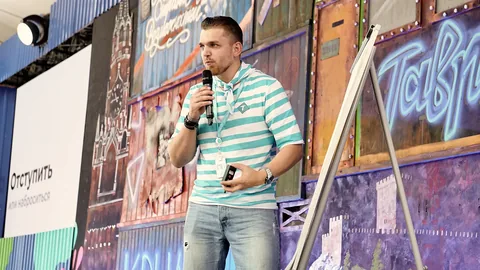
Direct delivery works when the point is already clear: the founder explains a company decision, addresses a familiar question or speaks to a defined group of clients. A producer interview helps when the material still needs to be drawn out: reconstructing a disagreement, clarifying a refusal or comparing alternatives. Keep the interviewer in the frame or shape the recording into self-contained answers.
Try both methods on the same topic. Compare where the viewer can follow the decision and where less time goes into explaining the starting conditions. A series can combine interviews with short direct addresses. See the camera preparation guide for a fuller comparison.

What to check before sharing a story publicly
Mark on the topic card what can be used immediately, what requires approval and what stays in the working conversation. Name the person who will clear documents, names and wording before recording. Permission to describe a decision does not automatically cover showing an entire message thread or contract.
For example, you may be able to explain why you declined a project while removing incidental client details. But a combination of role, date and circumstances can still identify someone. If removing those details destroys the point or you cannot obtain approval, choose another example. Label an illustrative situation clearly; an invented episode must not become part of the founder’s personal history.
Before publication, review the complete version: the edit, captions, inserts and thumbnail. A shot may reveal something absent from the script. Hold disputed passages for separate approval; the editor needs to know which outstanding answer blocks publication.
Divide responsibility before filming
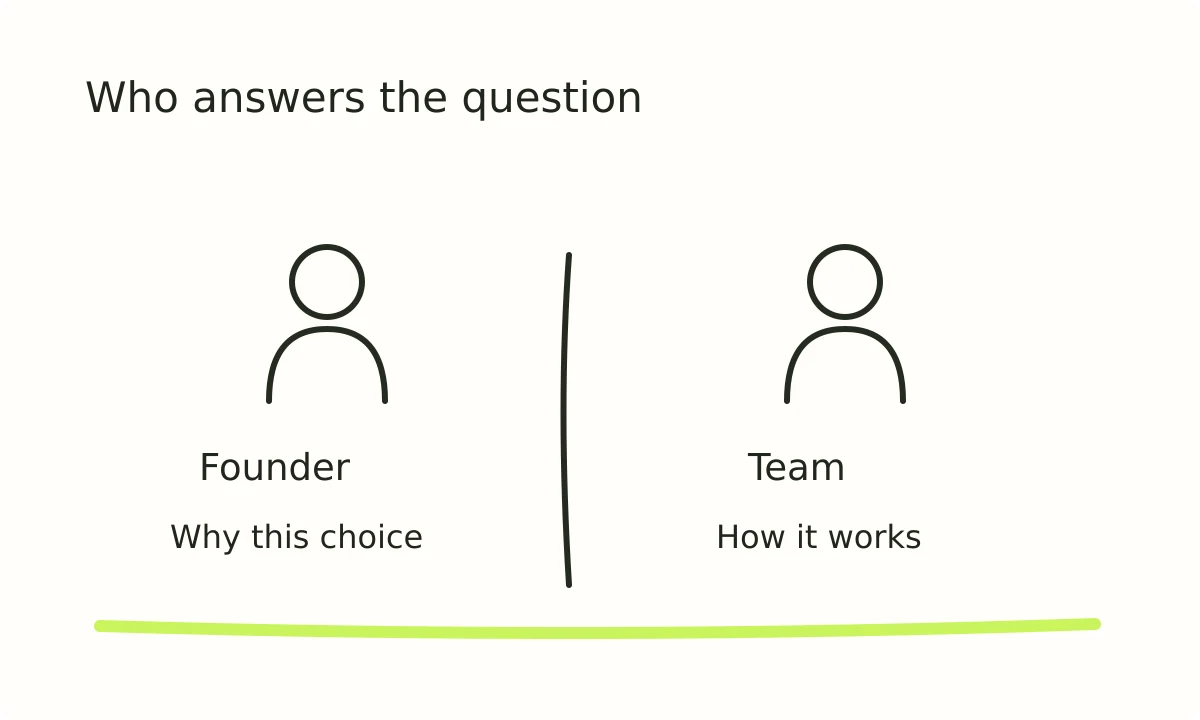
Allocate the checks before filming. The founder confirms their position and the facts in examples. The producer chooses audience questions and plans the series. The editorial lead helps structure the explanation and the video editor assembles it. Name the final approver, particularly where several departments review the material.
| Role | Responsibility | Handover |
|---|---|---|
| Founder | Position, facts and publishable stories | Examples and checked points |
| Producer | Topics, questions, format and calendar | An agreed episode plan |
| Editorial lead | Clarity and source review | Structure and factual notes |
| Video editor | Assembly and technical quality | A review version |
| Publishing lead | Presentation and publishing | Links and data for review |
One person can hold several roles, but each stage still needs an owner and response deadline. Specify who resolves disputed points. Otherwise the team may continue recording while finished episodes wait for approval.
Have the speaker check meaning, facts and publishable details before the team finishes presentation. Agree which later changes require another founder review and which the editor may approve. This avoids restarting a company-wide review for every wording change.
Fit content into the founder’s calendar
Start with a volume both the founder and team can sustain: perhaps one longer conversation and several complete short answers. Measure preparation, recording and approval time during the pilot before planning the next cycle.
The table below is an example working month. Timing depends on the founder’s availability and the scope of the series.
| Stage | Founder’s participation | Team’s work |
|---|---|---|
| Topics | A short interview and story selection | Questions, research and an outline |
| Preparation | Checking points and examples | Episode structure and filming plan |
| Recording | An agreed calendar window | Filming and gathering materials |
| Publishing | Content review | Editing, presentation and publication |
| Review | A decision on the next cycle | Data and editorial observations |
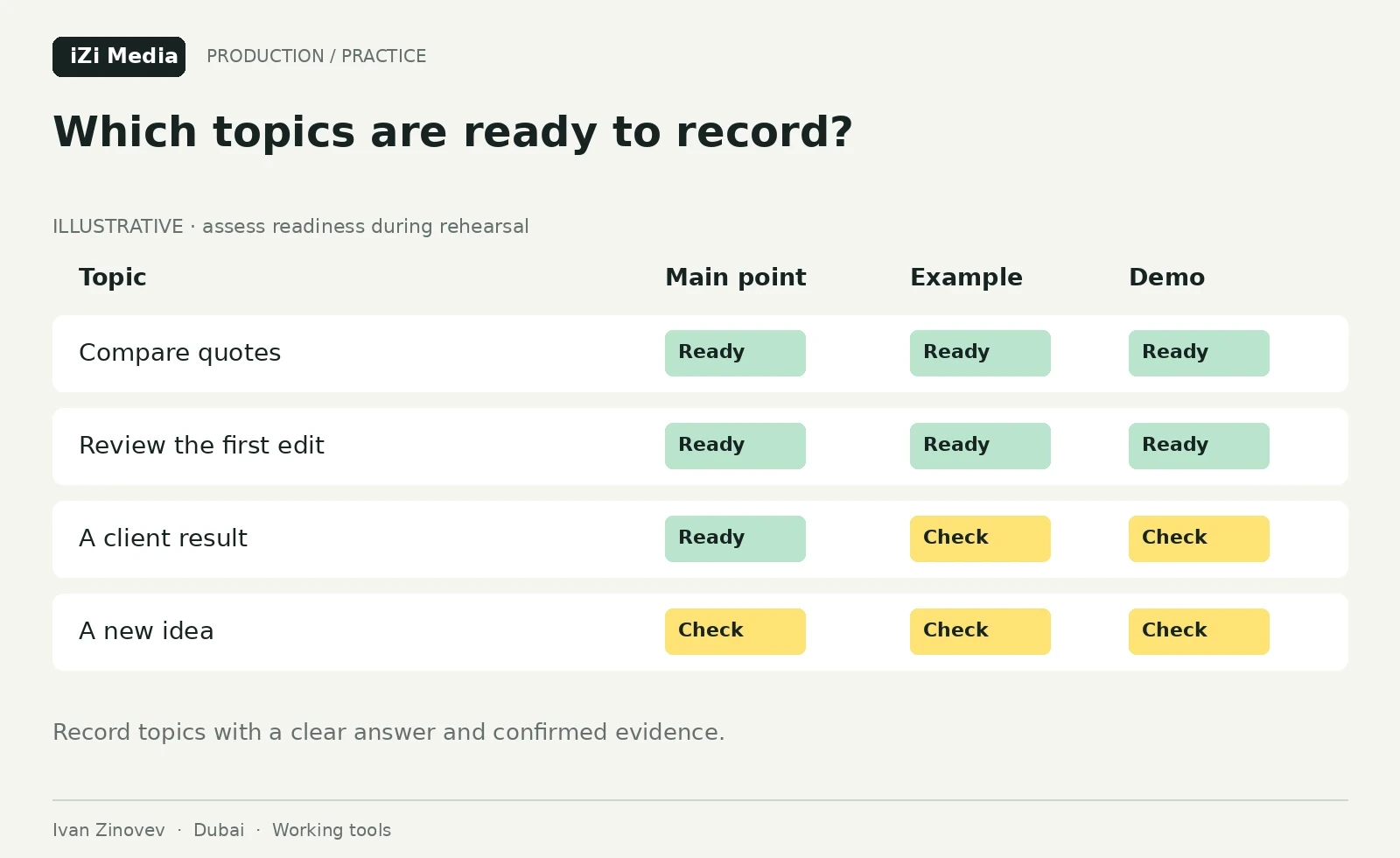
Store ready-to-record topics with their question, example and source material. That makes an unexpected recording window usable without starting research again. Mark topics that still need figures checked or permission obtained before recording.
In the Dubai founder personal brand project, work included a dedicated CRM, a calendar, operator searches, shoot-day plans and scripts for available windows. This organisation allowed production to fit the person’s schedule. It belongs in the budget alongside filming and editing.

Prepared topic cards and examples help organise several recordings in one filming day. Choose volume according to the difficulty of the material and the founder’s available time. With ongoing YouTube production, viewer questions and the results of released videos can inform subsequent topics.
Make your topics and way of explaining recognisable
Recurring formats tell viewers what they can expect from the channel. You might examine a decision, answer a client question or test common advice against a specific example. Keep an explanation structure where it works and use new situations from the business for subsequent episodes.
Give each episode a specific reason to exist. In a hiring story, show the task the employee needed to solve and how you assessed their work. In an account of a mistake, explain what changed. When commenting on an event, name the evidence behind your view and what remains uncertain.
How to assess the producer’s work
In the first cycle, review the process: time spent preparing and approving, whether planned episodes were released and whether the edit accurately conveys the founder’s position. Then examine responses from the intended audience. Questions and enquiries show what viewers understood and what needs further explanation.
Record which episode a client or candidate mentions and what caught their attention. This adds context to viewing data and shows which subjects feature in later conversations. Use evidence from several episodes, with the business cycle in mind, when deciding future scope.
Ask the producer to explain the observation behind each proposed change. If viewers leave during the introduction, watch that passage. A recurring question may justify another episode. Enquiries for a different service are a reason to check the expectations created by the topic and invitation.
Questions founders ask
How much of my time will this take?
It depends on volume and recording format. We agree time for interviews, preparation, filming and review before starting. The pilot shows the actual workload so we can choose a sustainable calendar.
Must I talk about my private life?
No. The content can focus on your work, decisions and professional position. Agree which subjects remain private before recording. Include a personal story only when it helps explain the point and you want to publish it.
Can AI prepare the text?
AI can organise an interview transcript, suggest a structure and draft short descriptions. Give it verified material and check the result against the recording. The speaker confirms that it preserves their position; the editor checks that it has not added facts or experiences absent from the interview.
How do we discuss cost?
Start with the purpose, platforms, volume and available time. Then decide whether you need production management with an existing team, complete production or speaker preparation. The YouTube production page provides production price guides; personal branding scope is agreed separately.
Send examples that accurately express your position, the audience you want to reach and the time available for recording and approvals. We can use those details to discuss topics and a pilot format: founder content and speaker preparation.
When the founder is responsible for a physical product, build the conversation around design and use. The product brand YouTube guide covers demonstrations, comparisons and questions for the founder.
From a project: Founder personal branding and filming around the founder’s schedule.