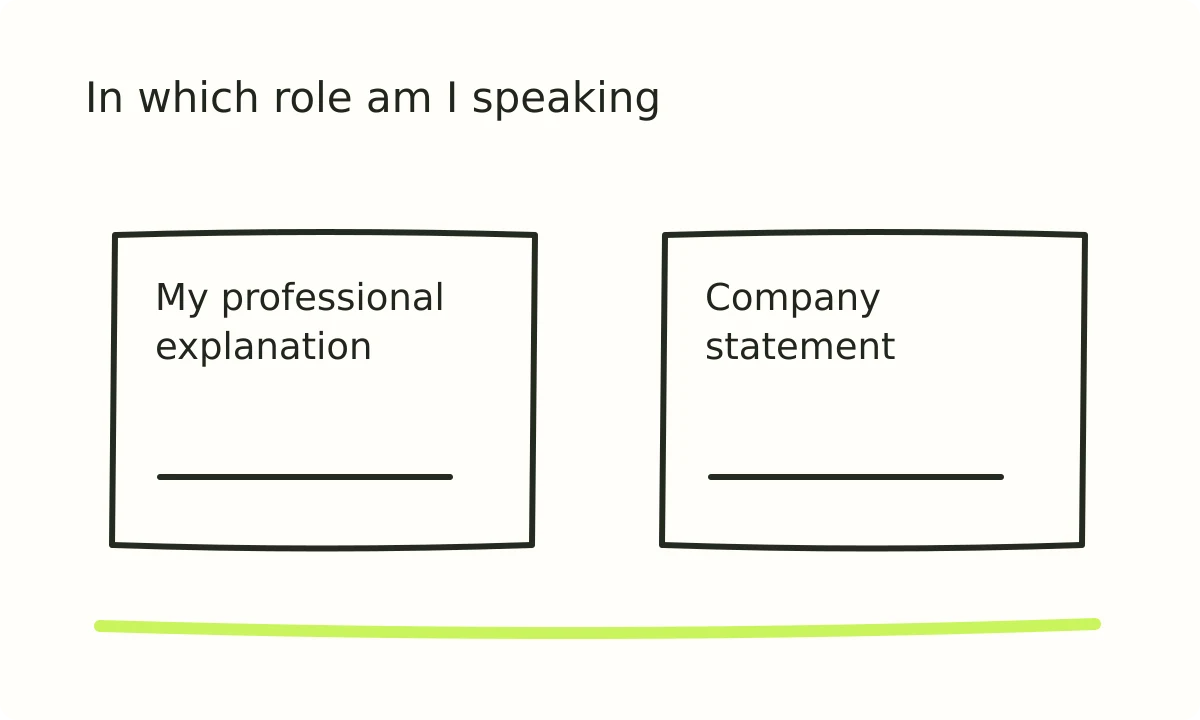
Founder personal brand vs company brand: how to divide the roles
Divide topics between the founder and team, choose channels, connect videos to the website and plan production around the founder’s availability.
In this article (8)
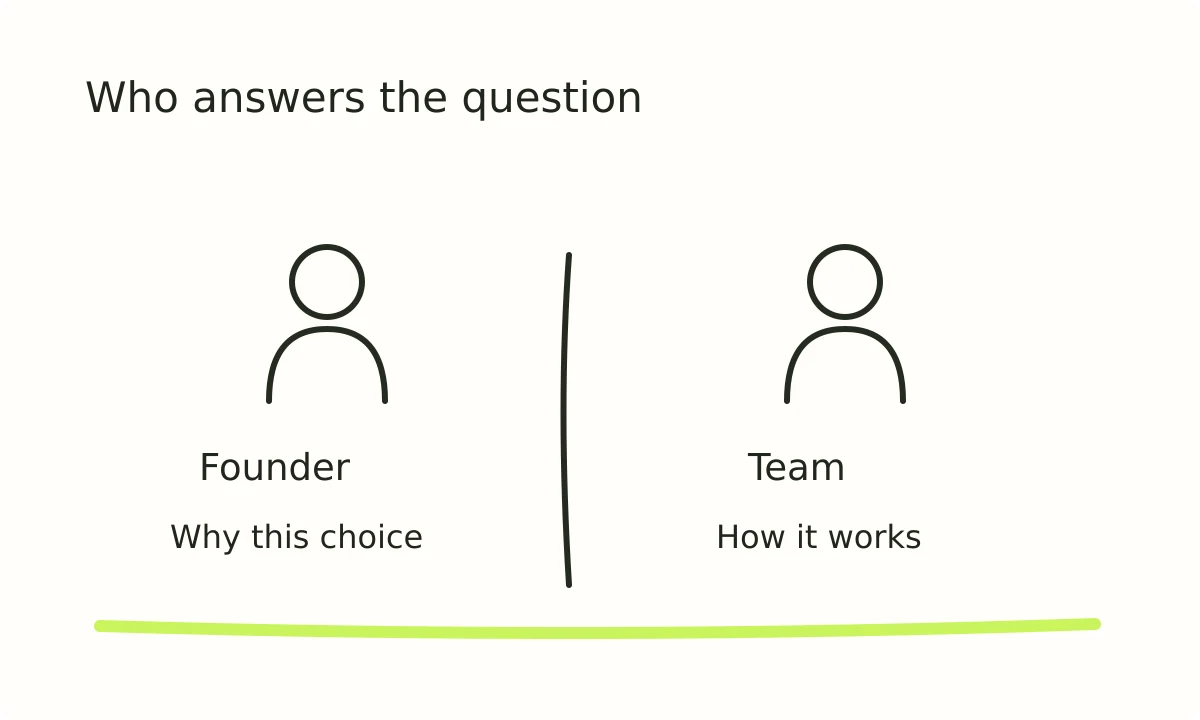
The founder explains the product well, so the team proposes filming more with them. The company also has material of its own: specialists’ work, demonstrations and support answers. Before allocating time, identify what viewers need to understand about the person and about the business.
I’m Ivan Zinovev, YouTube producer and content strategist at iZi Media in Dubai. This guide offers a way to distribute content between the founder and company. It is a planning model; the teaching examples do not describe a particular client’s outcomes.
Start with the buyer’s questions
List the questions people ask before contacting you. “Why did you choose this approach?” may call for the founder’s answer. “How will my order work and who will I work with?” requires showing the company. One viewer may ask both questions at different stages of their decision.
Where the expert’s personal involvement defines the service, show their reasoning and responsibilities. Where several specialists deliver the work, show their contribution and handoffs. Check that the video does not imply that the founder personally completes the entire order when that is not the case.
| Viewer’s question | Who can give a useful answer | Material |
|---|---|---|
| Why was this approach chosen | The founder or decision owner | A decision story with conditions and examples |
| What will working with you involve | The people delivering the process | A demonstration of stages and responsibilities |
| Who will understand my problem | The relevant specialist | A question explored within their expertise |
| How can I check the promise | The person responsible for the evidence | A genuine case, permitted document or demonstration |
Define the founder’s role
The founder can explain the business’s position, the product and difficult decisions. Every answer need not revisit the company’s origin story. Choose questions where their involvement adds knowledge beyond a standard service description.
Teaching example: a service company decided to exclude a particular task from its base package. The founder explains the constraint behind that decision and whom the package suits. The team shows what the agreed scope delivers. Each piece has a different subject, so they can complement one another.
Check personal promises. “I review every episode” must match the process. If an editor leads the review, name that role and explain when the founder becomes involved. Precise responsibilities help viewers understand the service.
Give the company material of its own
The company can show the product, working process and people delivering it. Useful material includes demonstrations, specialist answers, a particular stage and order conditions. Choose what helps someone decide in their own circumstances.
The founder and company may share a topic and facts while answering different questions. A founder conversation explains the reason for a decision. Company material shows its implementation. Repeating the same video does not provide that second explanation.
To involve employees, establish who wants to participate, which topics are available and who reviews the content. The employee-generated content guide covers organisation. Team participation does not require every specialist to speak in an identical style.

Decide whether to share or separate channels
Discuss separate accounts when audiences, objectives and a sufficient supply of independent material differ. The founder’s professional position might interest peers, while product demonstrations serve buyers. A second channel still needs its own calendar, presentation and review.
If the relevant people and topics currently overlap, begin with clear series on an existing channel. Viewers should know who is speaking and what the episode covers. Revisit separation after a pilot, using audience questions and the team’s capacity to sustain both directions.
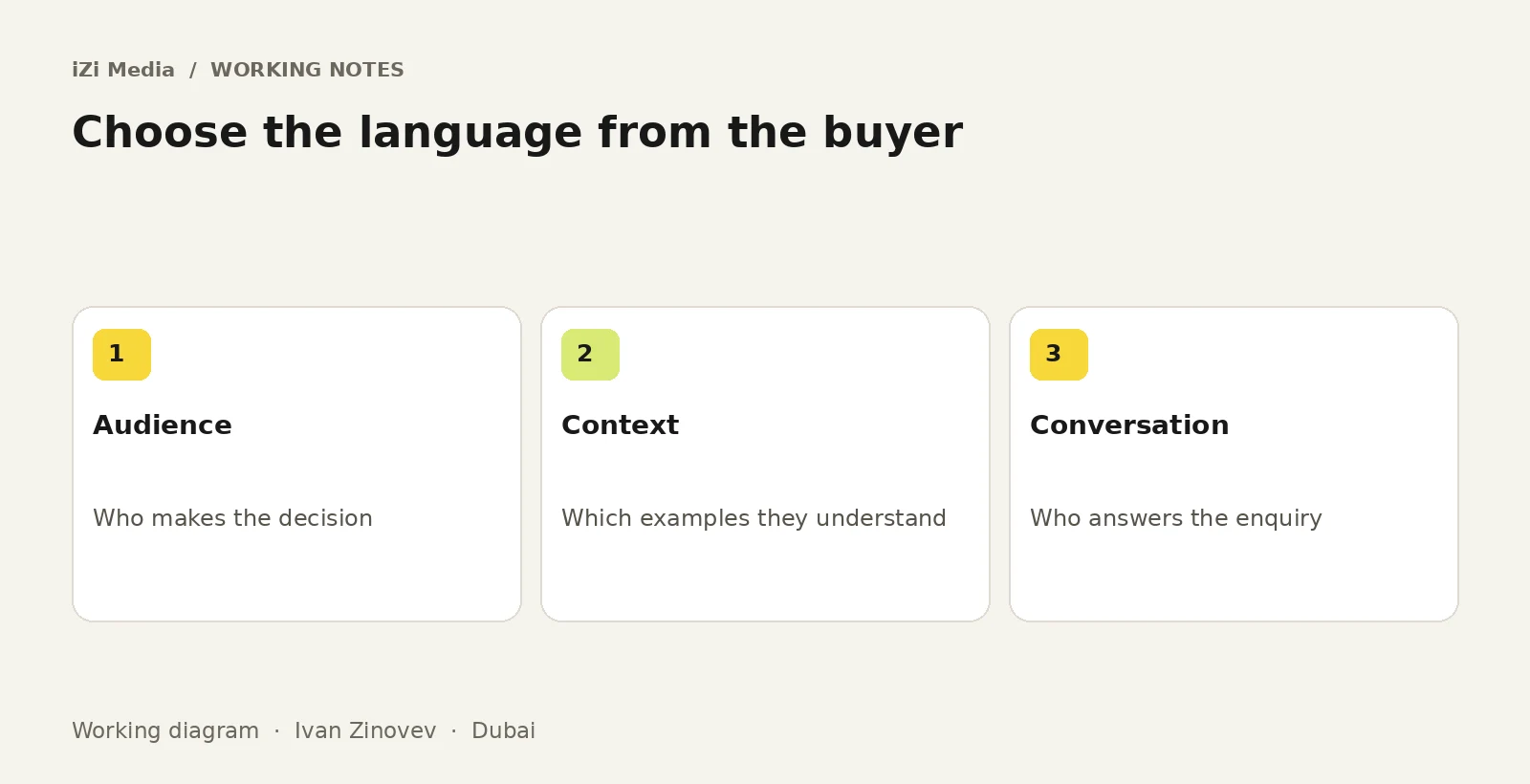
Check language before creating more channels, too. Dubai’s English-speaking market and a Russian-speaking audience may understand context, terminology and examples differently. The Russian and English YouTube guide discusses ways to separate versions.
Connect the piece to a useful next step
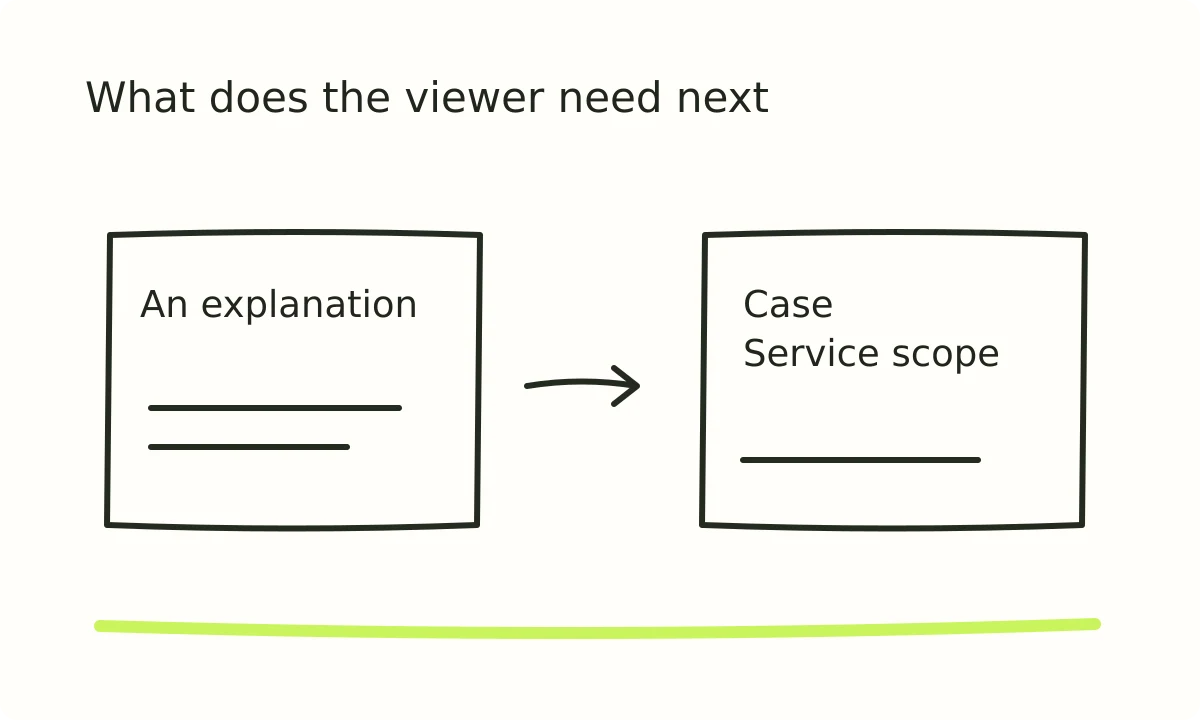
After the founder’s explanation, a viewer might need the service scope, a demonstration or a case. Offer that continuation and name what it covers: for example, “how the first recording works” or “what episode preparation includes”. The destination should have a clear purpose.
Give website pages distinct roles. A biography introduces the author’s experience; a case supports assessment of particular work; a service page explains the order and next step. State whom the person is contacting and who will handle the task. The homepage is not the best destination for every question.
The Dubai founder personal brand case describes short-video formats, the speaker’s position and filming organisation. It helps assess that part of my work. It does not establish that a personal brand outperforms a company channel or compare their sales.
Reduce dependence on the founder’s calendar
Mark the topics requiring a personal answer and the material the team can prepare. Keep the source interview, checked points, permitted examples and approval status together. Before the next recording, you can see what is ready and where the author is still needed.
You can record answers to stable questions in advance, but check conditions and promises before reusing them. New decisions and changed positions require a new answer. An editor must not assemble old fragments into a statement the person never made.
Agree which accounts, source files and publication materials belong to the company, who has access and what happens if the speaker’s role changes. A rights dispute requires review of the actual agreements. Preparation cannot guarantee independence from the person, but it helps organise continuity.
Test the division of roles with a short series
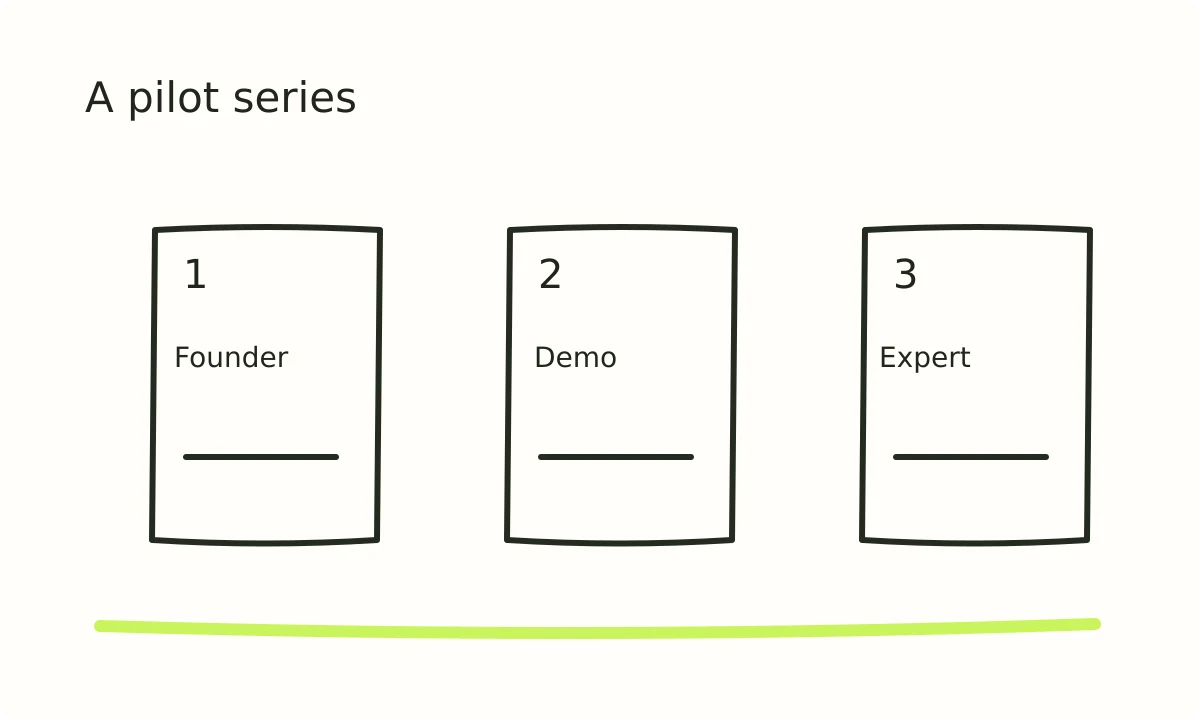
Create a teaching plan of three pieces: a founder explaining a decision, the team demonstrating delivery and a specialist answering a buyer’s question. This is an example pilot, not a mandatory cadence or an iZi Media package.
For each piece, record the audience question, speaker, supporting material and next step. After publication, assess whether the roles are understood, what follow-up questions arrive and where interested viewers go. Compare preparation and approval effort. One video is insufficient for a sales conclusion.
Questions from founders
Should I start with two channels?
First check the difference in audiences and material. If independent material is scarce, distinct series on an existing channel may be more practical for the first cycle. The account count does not itself determine usefulness.
What if buyers only want to work with me?
Show where your involvement is included and what colleagues handle. If personal work is restricted to a particular format, explain that before an enquiry. A video must not promise the founder’s continuous involvement in place of the team’s actual work.
Can one piece appear under both names?
Establish whether it suits both audiences, who created it and on whose behalf the answer is given. If different explanations are needed, prepare different introductions and next steps. Count placements separately from independent pieces.
Where should I start preparing?
Send client questions, examples of current material and a description of the founder’s involvement. Through YouTube production, we can discuss topics, roles and an initial series. The founder personal branding guide covers preparing personal answers in more detail.
This guide draws on Caleb Ralston’s ideas about reputation, evidence for a position and useful content continuation. The distribution of founder and company roles, comparison table and pilot are my editorial model for discussing a project.