Personal branding for executives in Dubai: showing your leadership experience
Choose topics, distinguish your own views from the company’s position, prepare an interview and assess the responses you receive as an executive.
In this article (7)
An executive may be well known inside a company and barely known beyond it. Yet their work already contains material for a professional conversation: decisions, methods, explanations and questions from the team. Start with one question and a useful answer for a defined audience.
I’m Ivan Zinovev, YouTube producer and content strategist at iZi Media in Dubai. I help prepare topics, interviews and delivery for recording. This guide explains how an employed leader can choose public material, establish boundaries and prepare a pilot. The examples are illustrative and do not describe client outcomes.
Decide who would benefit from your experience
Choose the people with whom you want more professional conversations. They might be peers in your discipline, prospective employees, partners or organisers of industry events. Each group has different questions. “Share leadership experience” is still too broad to select the first episode.
An operations director might explain a handoff between departments. A finance leader might show how to explain a finding to a decision-maker. A technical lead might compare options when there are insufficient resources for every idea. Check each direction against the individual speaker’s real experience.
Write a working sentence: “I want these people to approach me about these questions because my work includes this experience.” It is an editorial guide, not a promise of invitations, employment or career progression.
Separate your professional view from speaking for the company
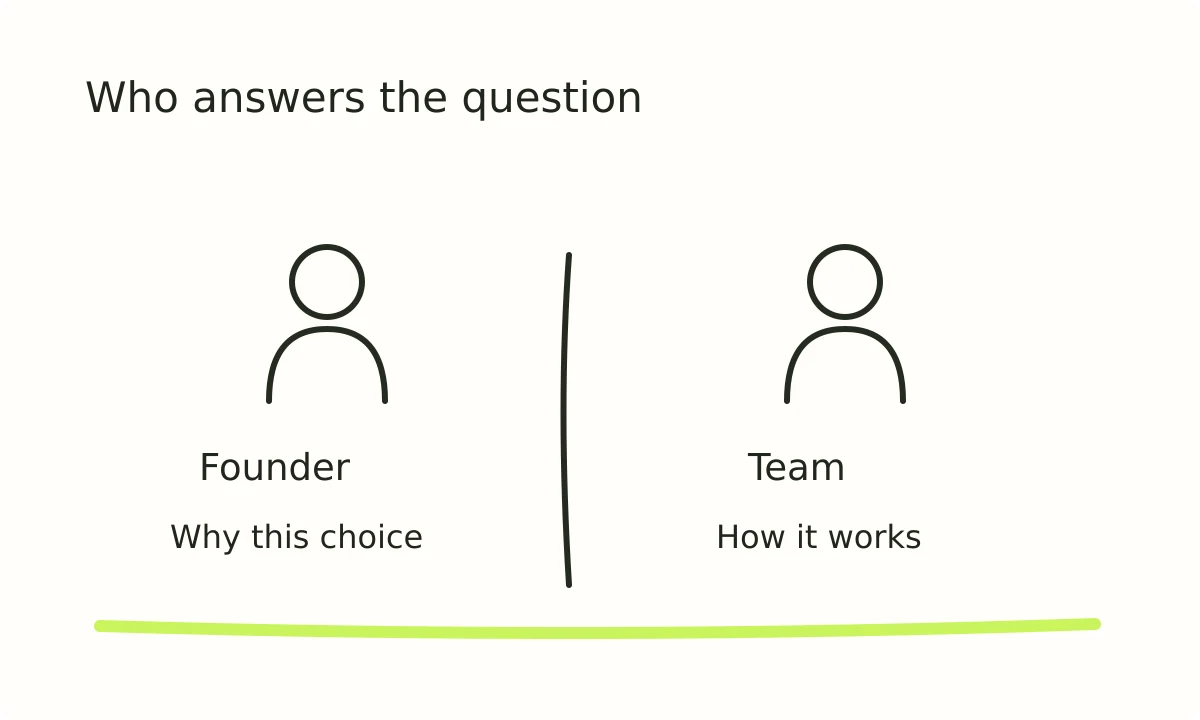
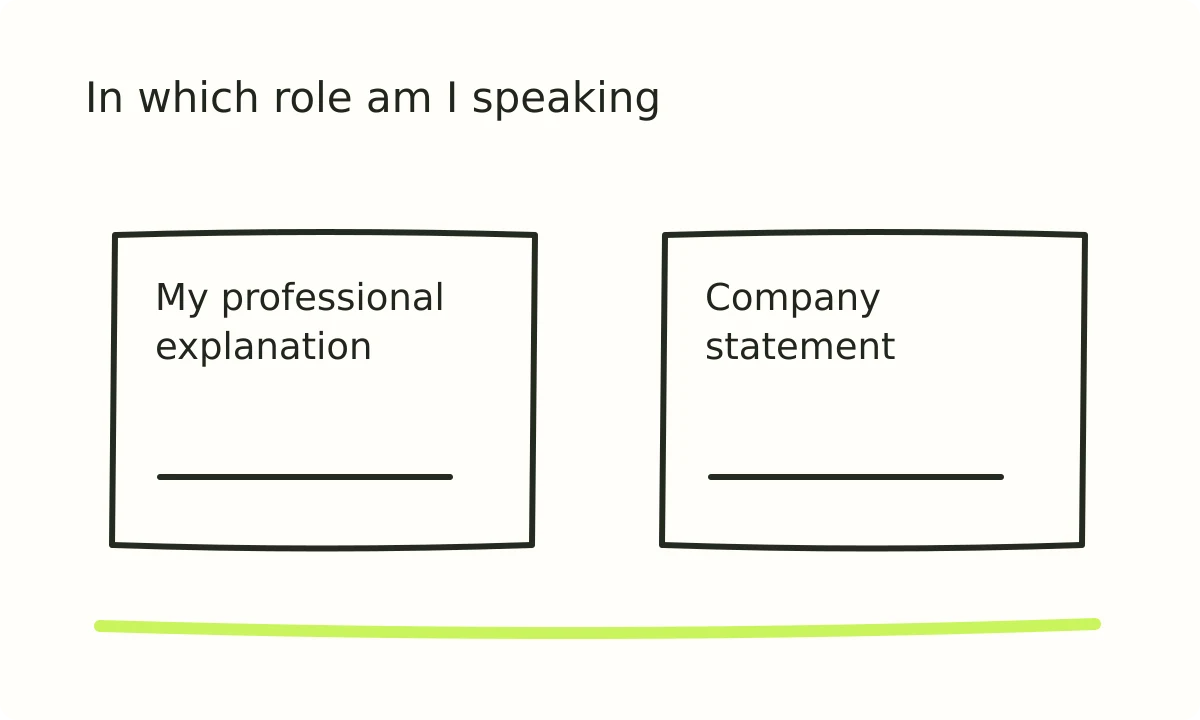
Before drafting a script, establish the capacity in which you are speaking. A personal explanation of your method, an interview representing your employer and an official company statement may need different preparation and approval. A “personal views” label does not itself authorise disclosure of internal information.
Discuss permitted topics, use of the company name and logo, client stories, office filming and team material with the responsible people. Check the agreements and policies applicable to your role. An authorised person should resolve a disputed issue; the video editor cannot grant that permission.
| Material | Establish before recording | A workable alternative |
|---|---|---|
| A project story | Which details, figures and participant references may be used | An approved extract or clearly labelled teaching example |
| A company decision | Who may explain it publicly and who reviews the answer | A general explanation of the method within your authority |
| Team material | Permission, attribution and visible information | A version prepared for publication |
| Your professional position | Whether the presentation implies an official statement | A clear introduction of your role and the answer’s scope |
Removing names also needs review: a combination of role, date and circumstances can identify participants. If the story loses its meaning without those details, choose other material. An invented example must retain its explicit label, including in a short version.
Show the details of a management decision
“I build effective processes” gives viewers little to assess. Explain the signs you noticed, the alternatives you considered and the reason for the next step. If the outcome is known, show its supporting evidence. If the investigation continues, finish with what remains to be established.
Teaching situation: a monthly report repeatedly arrives late. The leader first establishes where waiting occurs: data collection, review or approval. A video can show a blank handoff template and questions for each stage. This demonstrates an investigative method. It does not establish savings or delivery improvements in a real project.
Ask the producer to clarify what was known at the time, which option you rejected, what changed your view and where the recommendation stops applying. Those questions produce material beyond a list of personal qualities. See the interview question guide for preparation.
Choose a format that fits your calendar
The first piece could be an article with a worked example, a short screen explanation or an interview with follow-up questions. Choose according to the material and where you already reach relevant people. Having several social profiles does not require separate production for each one.
If conversation helps you formulate a point, record a preparation interview first. An editor can build the text or video outline from it, then you review the position and facts. For a precise table or diagram explanation, prepare a demonstration without confidential information.
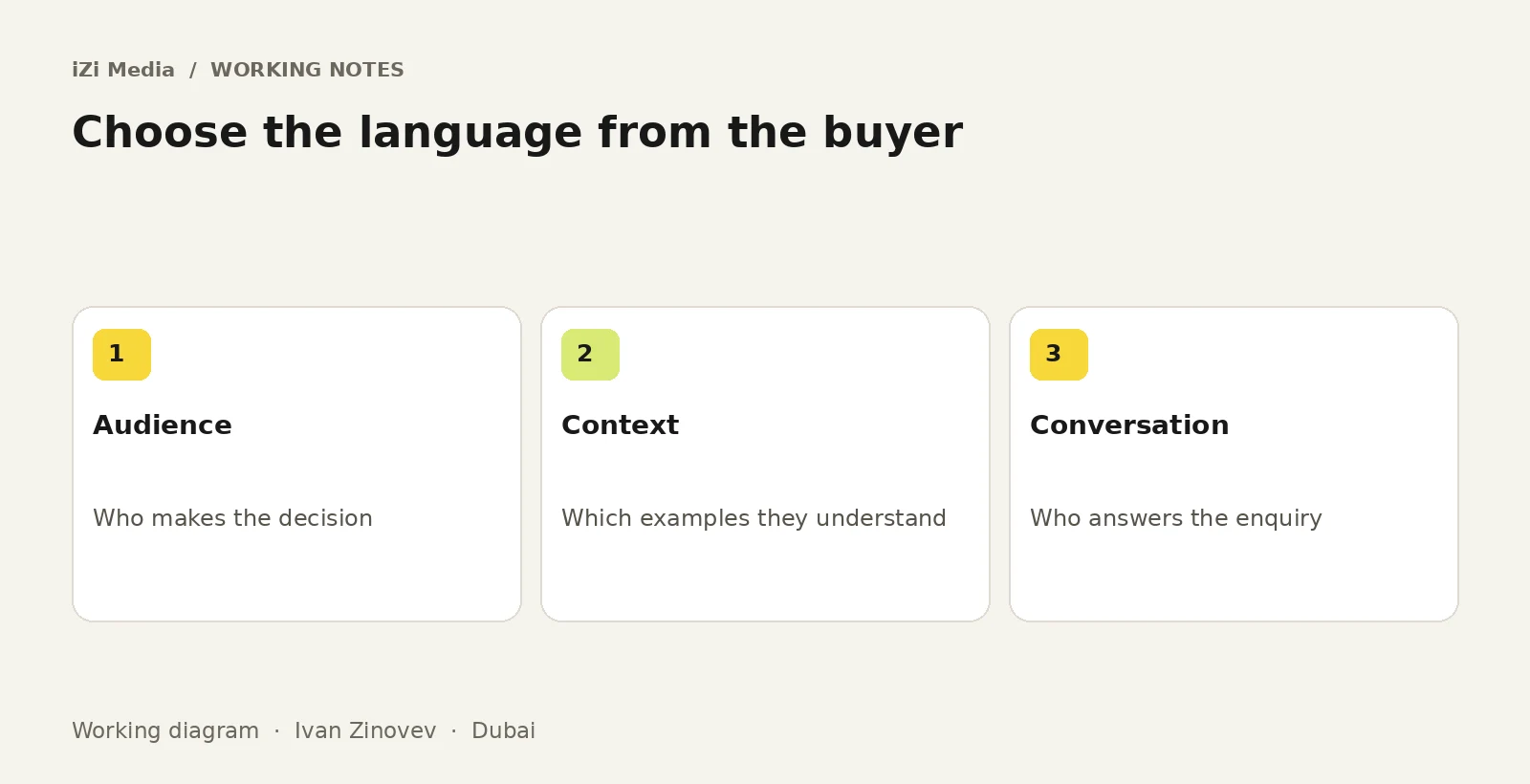
For a Dubai audience, decide the language and consider your speaking comfort separately. Russian and English versions may need different introductions and examples. After translation, check the job title, terminology and degree of certainty. See the Russian and English content guide for choosing a version.
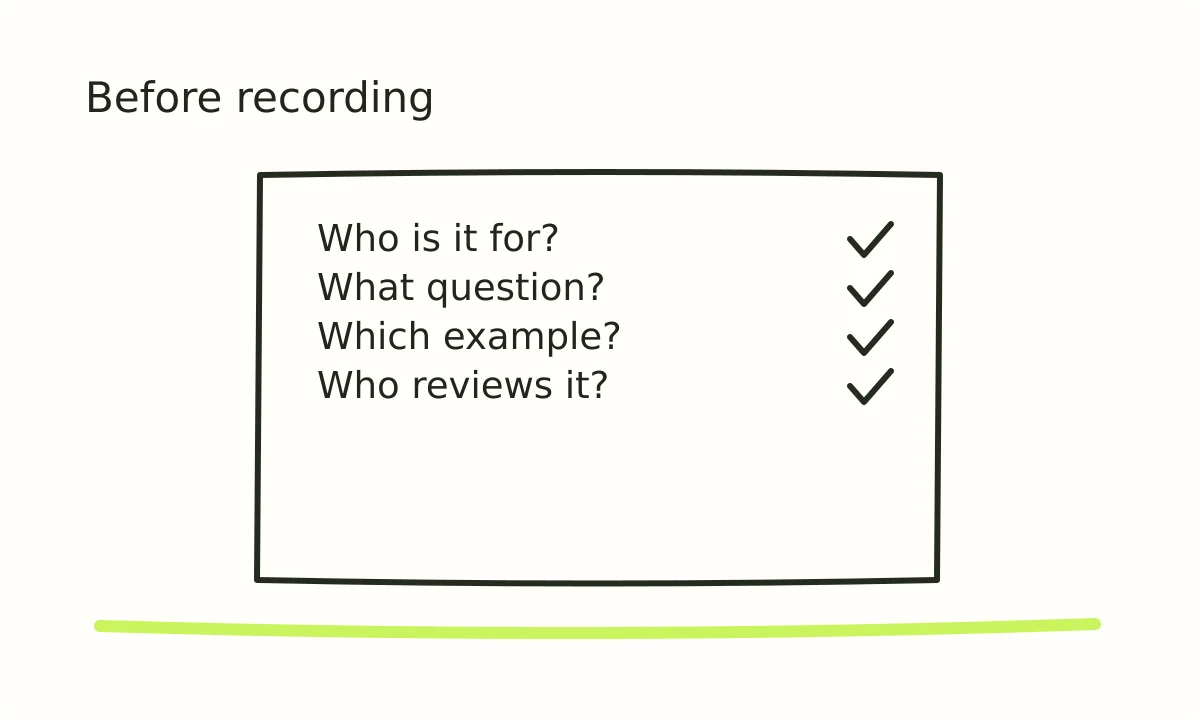
Begin with a volume that allows time for preparation and review. Even a short recording will remain unpublished if nobody can approve it. Name the reviewer, response deadline and process for disputed passages in advance.
Prepare one pilot piece
Assemble one page covering the audience, its question, your main conclusion, a permitted example, factual sources and a useful next step. Mark what is ready to publish and what needs a company decision. This package can be assessed before booking a shoot.
Run a short rehearsal. Ask someone outside your team to explain the conclusion and identify what remains unclear. Review whether the recording answers the chosen audience, makes your role clear and retains important conditions after shortening. Decide on the future volume after this check.
For recording support, consider speaker preparation. For team presentations and answering questions, see the corporate training programmes. This article cannot replace agreement on your public role within the company.

Look at the quality of the response
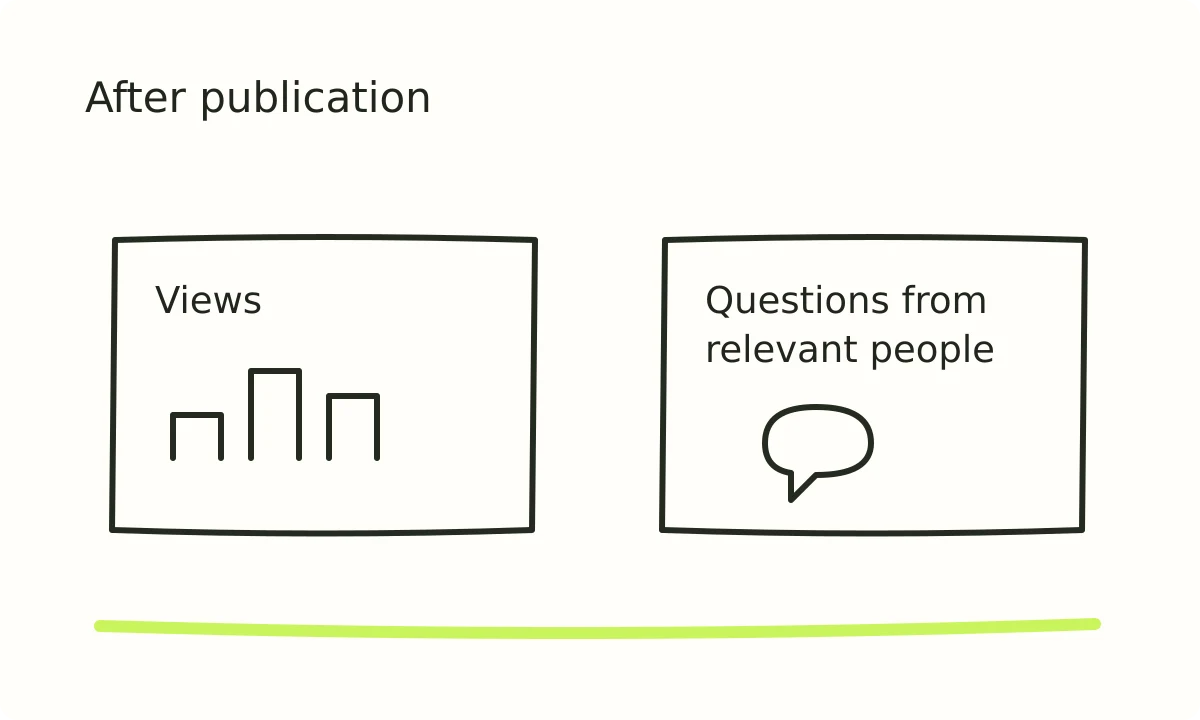
Observe the questions people in your target discipline ask, whether they can accurately describe your area of work and whether conversations concern the chosen topic. Views help assess distribution; professional interest needs separate observation.
Record where enquiries came from and which piece a person mentioned. Do not attribute an outcome to publication when the connection is unknown. Review the time required as well: approval effort, ease of preparing examples and accuracy after editing.
Questions from executives
Do I need to discuss my private life?
You can build professional visibility around decisions, explanations and work experience. Personal details are your choice; the material can remain useful without them.
Can I delegate the writing?
An editor can develop a structure from your interview and approved material. Check that the conclusions are yours and the examples may be published. AI can assist with draft processing under the same checks; confidential material must only be handled within your company’s permitted process.
Will this help me get a new position?
Public material can give people an opportunity to assess your experience. The outcome depends on many conditions; a publishing volume cannot guarantee a role. Begin by deciding what a relevant reader should understand about your work.
How do I start working with a producer?
Send a topic, an example of material you may use and a description of the audience. Initial preparation can establish the recording method, follow-up questions and review scope. Ongoing production is agreed separately according to volume.
This guide draws on Caleb Ralston’s ideas about objectives and reputation, evidence for a position and a sustainable process. The application to employed leaders, boundaries table and teaching situation are iZi Media’s editorial work.