How to prepare an expert for the camera: interviews and filming in Dubai
Prepare for filming with a teleprompter, talking points or an interview. Compare one task in two formats, rehearse difficult passages and preserve meaning.
In this article (12)
To prepare for camera, choose one client question and record a short answer with an example. Listen for a clear conclusion and the reasoning behind it, then repeat the difficult passage. This test helps you choose between a full script, short prompts and a producer’s questions.
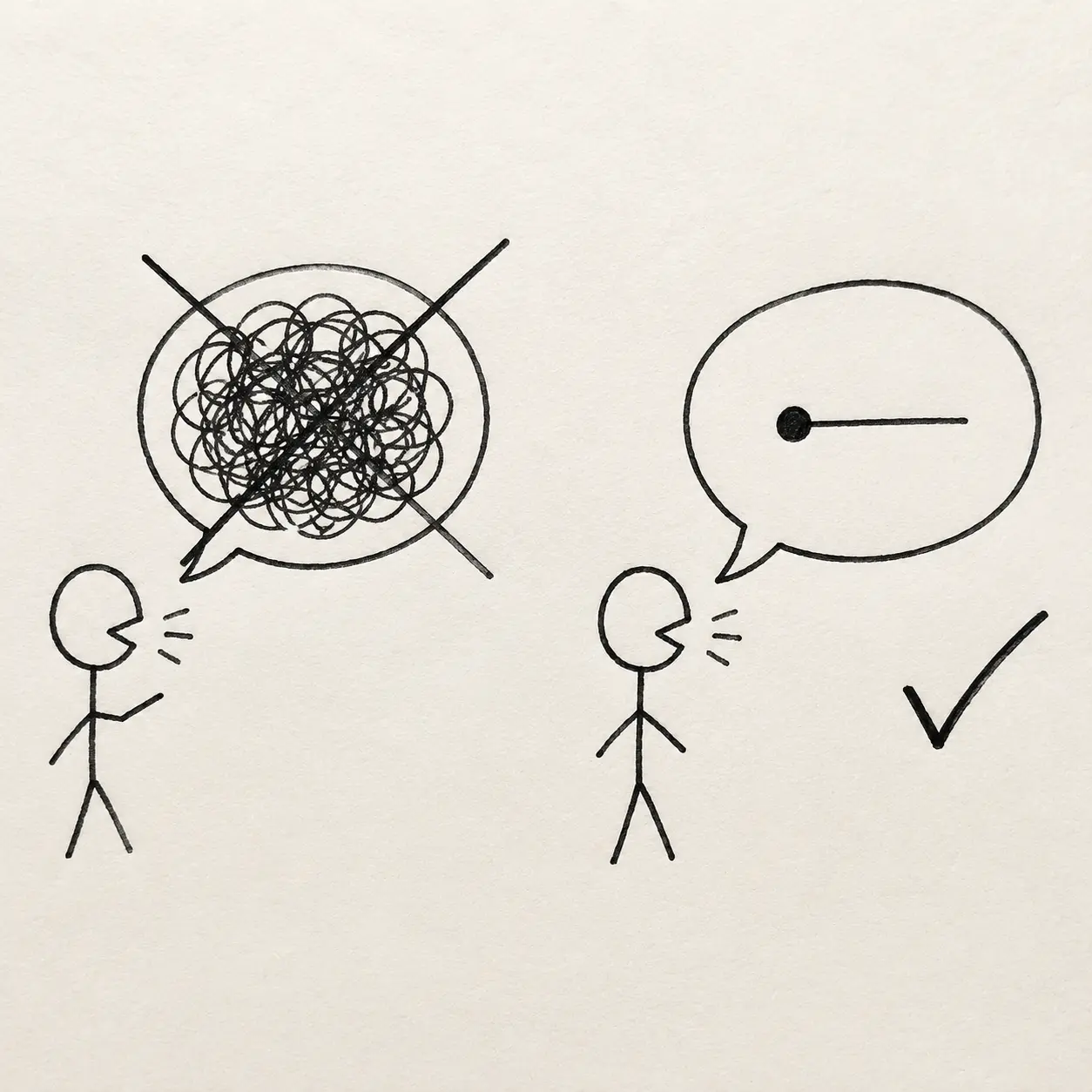
On camera, a familiar explanation can become longer and more formal. Bring back a specific listener: picture the client, their situation and the decision they need to make. You can then remove the general company presentation and keep the details that person needs.
At iZi Media, I prepare speakers for YouTube, interviews and presentations. In Dubai, these are often owners and specialists working with people in several languages. Filming should preserve how they think and make it understandable to a viewer meeting them for the first time.
What should viewers understand from one answer?
Consider an illustrative expert who helps companies choose offices. A viewer is comparing two spaces: one has lower rent, the other works better for employees and clients. The speaker needs to show which additional costs and conditions to compare. The conversation now has a specific task.
An answer can begin with the conclusion, explain the situation, identify two or three factors and finish with the next step. For example: “Compare the full cost of operating your team in each office. Include rent, preparation of the space and expenses linked to the location. You will need a requirements list and a calculation for both options.”
Then add the expert’s actual material: what they include in the calculation, which terms they check and which document they show. Here, the example teaches delivery. A qualified specialist should draw conclusions about a particular lease from current documents.
Before recording, decide what someone should be able to do after the answer: compare options, prepare information or check an important condition. If the explanation moves into a different task, give that its own section. This helps determine where the answer should end.
Collect the material before writing the script
Begin with a short interview before involving the filming crew. With participants’ consent, record the conversation on a phone. The producer asks about the work, requests examples and checks details. Use the recording to build an outline and identify where the speaker explains the subject clearly.
For preparation, you could collect three situations: a frequent client problem, a choice between options and a decision that needed revision. These are ways to find material, rather than a required structure for every answer. Each story needs starting conditions and reasons for the specialist’s actions. Label an unknown outcome as still open.
Find something to show alongside the story: an anonymised table, process extract, model, list of stages or calculation with stated assumptions. Agree permission to use client material. Keep the source and verification date for precise numbers in the working file.
| Producer’s question | Material to find | Follow-up for a stronger answer |
|---|---|---|
| What brought the person to you? | A specific client situation | What had they tried and hoped to achieve? |
| Which options did they consider? | Two real alternatives | Which conditions influenced the choice? |
| What did you do first? | The specialist’s working process | Which document or example can you show? |
| Where did the decision need revision? | An important process detail | What changed after checking? |
| What was the outcome? | A verified result | How was it measured and what remains open? |
Use the table’s questions to gather material. The finished interview may follow a different order: bring forward an example that makes the problem clear. Keep internal details that viewers do not need in the working file.
The speaker’s notes for filming
Prepare one sheet with the audience, situation and main conclusion. It might contain three talking points, each with an example and something to show. List exact wording and numbers separately, along with conditions that could change the conclusion. Choose the number of prompts to suit the answer.
Imagine an interview about hiring a sales director. The speaker could cover the role’s responsibilities, candidate assessment and the first month. Find a separate example or document for each section so viewers can see how the explanation relates to practice.
A full script helps with introductions, definitions and exact statements. Short prompts often work better for the remaining sections. The person sees what to explain and chooses familiar words. Read unfamiliar wording aloud and rewrite it before filming.
Mark what can be discussed publicly. Selection criteria may be suitable for the conversation, while information about a particular candidate stays in a private archive. The speaker understands the boundaries in advance and can talk more comfortably about their work.
Prepare the opening
The title and thumbnail have created an expectation. Begin with the situation viewers opened the video to understand. If the title promises project costs, show the cost breakdown and an example. If it promises team operations, show a specific part of the process.
Here is an illustrative topic: a company is choosing between employee filming and hiring a production team. The opening could be: “You have three specialists who can answer clients’ questions, and you want short videos every week. Let’s calculate their time and decide which parts the team can handle internally.”
Continue the example with a time calculation and explanation of the work. Introduce the expert alongside it: which part of this preparation do they handle, and which decisions are theirs? Use only experience they actually have.
In the article about an expert’s voice, I discuss preserving their judgement through writing and editing. Check the opening for a specific conclusion or example that lets viewers understand the author’s position.
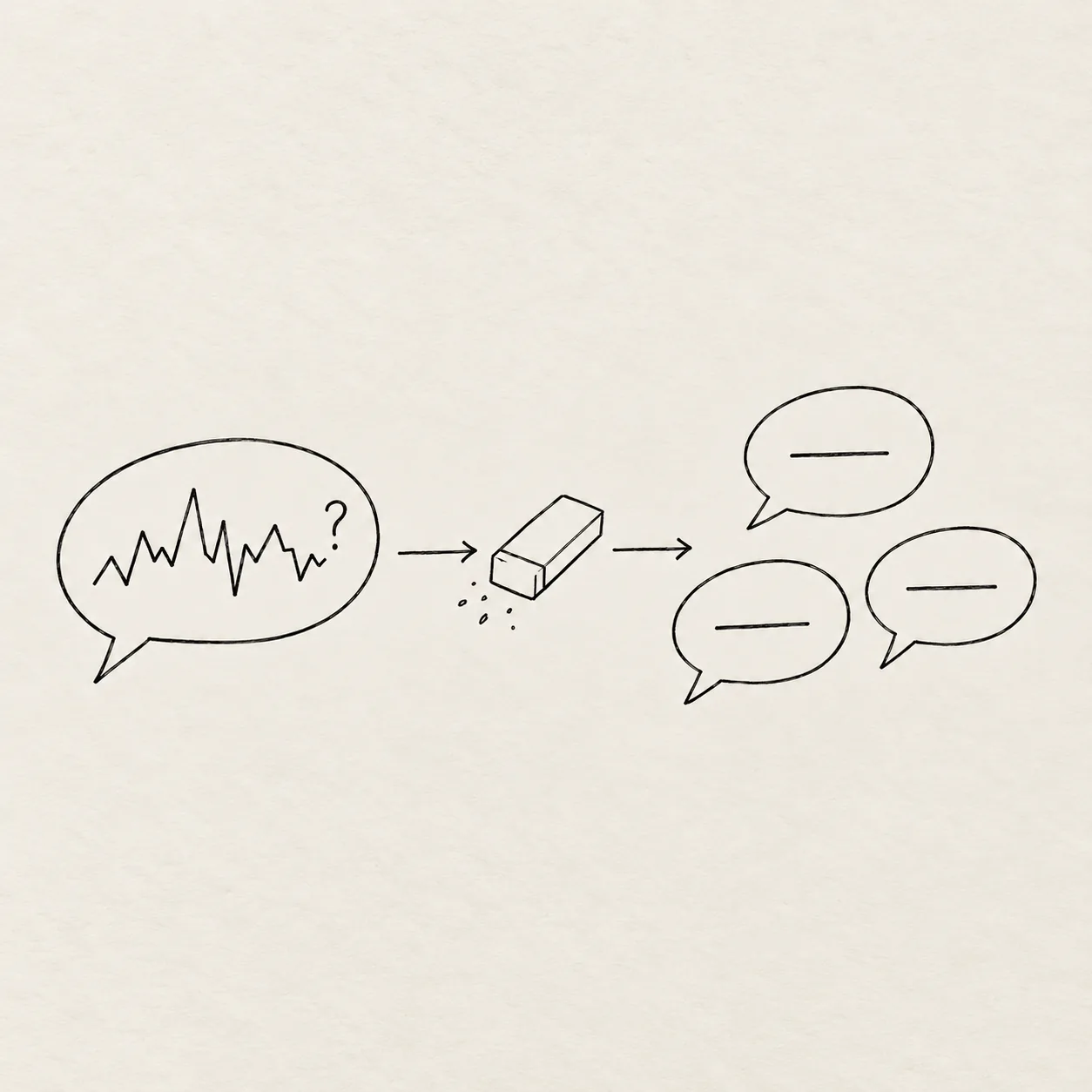
A thirty-minute rehearsal
Allow thirty minutes to try one answer. This is an illustrative plan; a long interview or several speakers need more time. Use the trial to identify which parts of the explanation still need preparation.
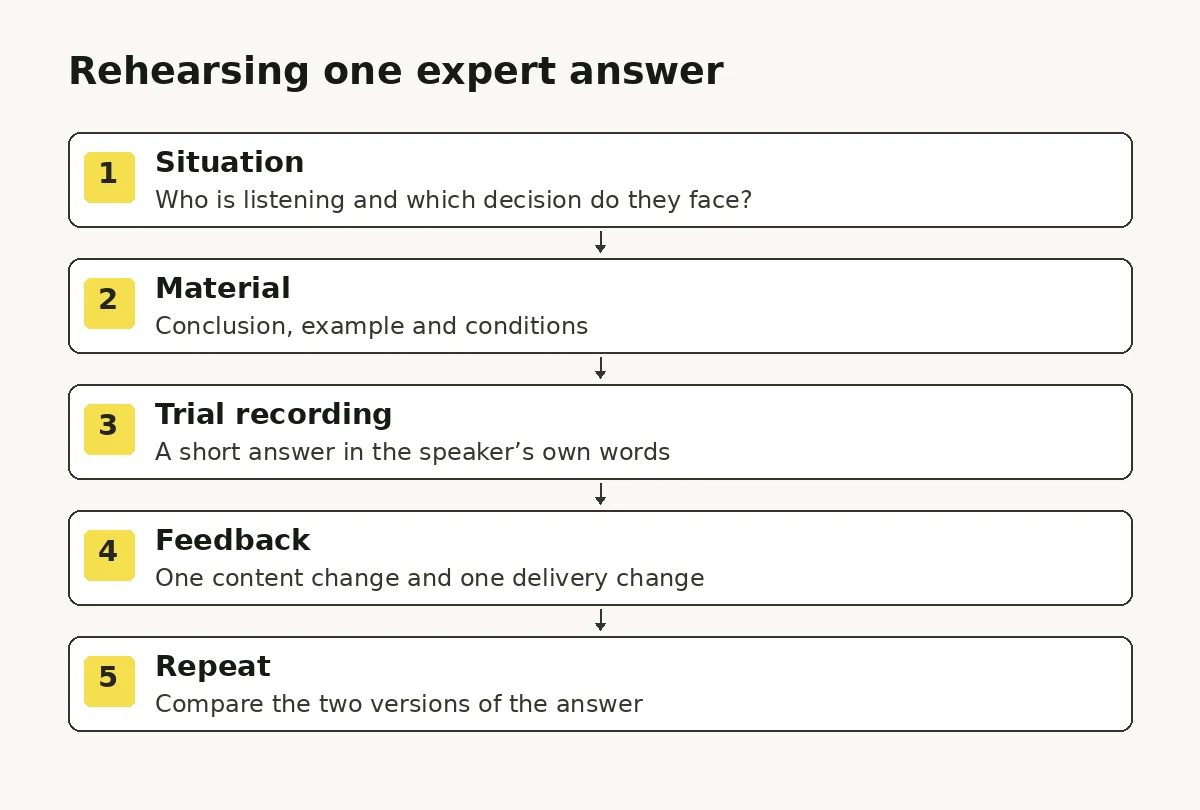
Spend five minutes on the audience and the answer’s outcome, then five on a real example. Record a two-minute answer and watch it together. Use another ten minutes to repeat the difficult passage. Spend the remaining time adjusting the prompts and producer’s questions.
After watching, I would choose one content change and one delivery change. For example, put the conclusion first and pause before a list. Following ten instructions at once makes it harder to think about the explanation.
First listen without the picture: can you follow the subject and the decision? Then check the image. If the speaker says “this point here” or uses their hands to show a difference, viewers need to see what they mean.
Give one action for the next take: “Name the three conditions first, then we will explain the first one” or “Show the table while explaining the difference.” Compare the recordings. The speaker can hear the improvement in their own material.
Ask useful interview questions
Start with a client situation. For example: “What brings people to you after they have already tried solving the problem themselves?” This gives the answer a direction. A general “Tell us about your company” leaves the speaker with too many possible starting points.
Follow up on what you hear. After “It became faster,” ask about timing and the comparison. After a decision, ask which options were considered. If a client is mentioned, remind the speaker of the agreed limits on public detail.
Prepare a few phrases for returning to the subject: “Let’s show that through one example,” “How could someone check that sign?” and “What should they do after watching?” Use them even when the interviewer stays off camera.
Agree whether the finished video includes the question. When it is cut, the answer needs its own context. Instead of “Yes, exactly,” the speaker gives a complete thought: “For this project, we chose…” The producer checks that the answer remains meaningful on its own.
Help the person settle into the studio
Begin with a short conversation on a familiar subject, check sound and play back a trial recording. Before the main take, explain where the speaker can stop and how to ask for a repeat. They will not have to work this out during a difficult answer.
For a direct address, choose the lens as the eyeline. For an interview, place the listener beside the camera and agree that the speaker looks at them. Explain any format changes separately. One clear way of speaking is easier to maintain through each section.
Let hands support the explanation: holding an object, showing stages or indicating options. The operator frames the gestures. During the technical check, review the seat, clothes, microphone and noise. Then return the speaker’s attention to the content.
In Dubai, assess the location at the intended recording time: window light, air-conditioning noise, background conversations and space for several takes. Agree the room and other people’s participation for office filming. Check access and filming conditions with the owner or venue operator for the particular project.
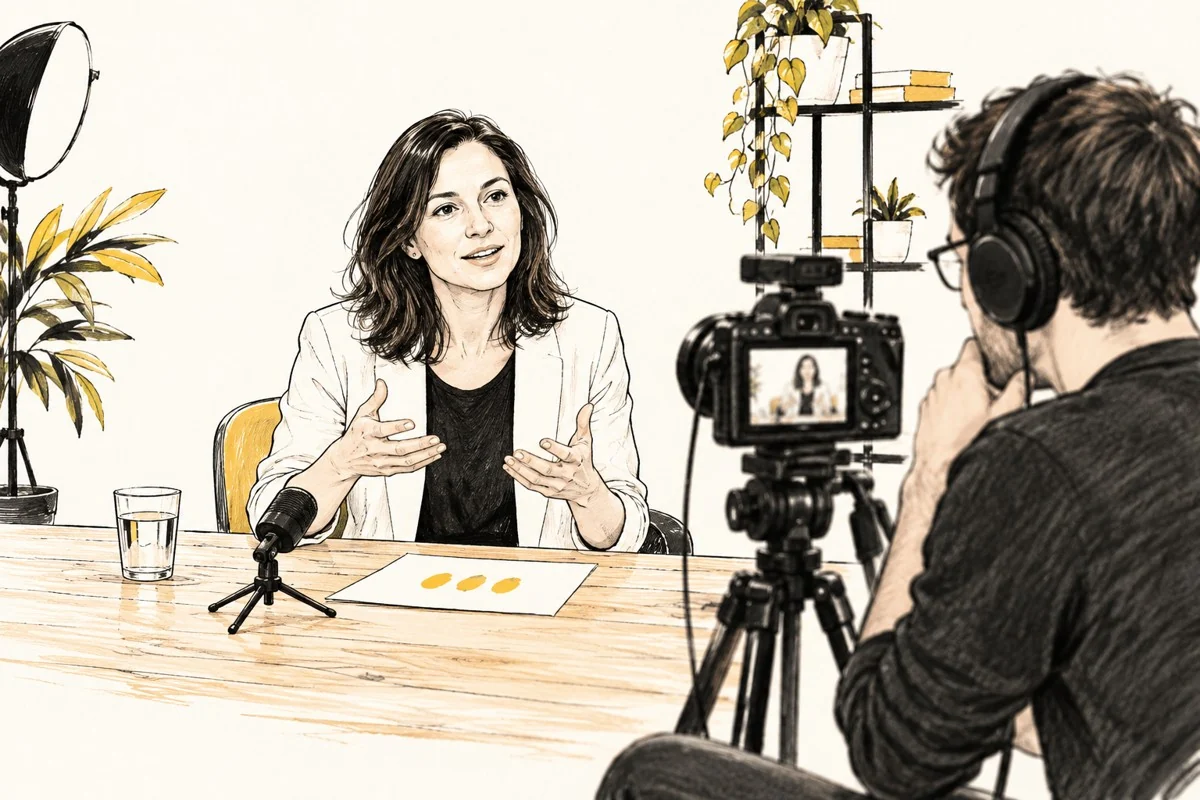
Teleprompter, prompts or a producer-led conversation?
Use a teleprompter for a precisely worded introduction and short prompts with follow-up questions for an explanation from experience. Prepare the object and action sequence for a product demonstration. Combine these methods when each helps explain a particular section.
| Preparation method | Useful for | Check before recording |
|---|---|---|
| Full teleprompter script | Introduction, definition or exact announcement | Familiar wording and a natural pace |
| Short talking points | Experience and comparisons | An example and clear conclusion for every point |
| Interview with a producer | First camera experience or a long conversation | Whether answers stand alone |
| Object demonstration | Product, process or document | Visibility and permission to show it |
Read the teleprompter script aloud and break it into short, complete thoughts. Match the scrolling speed to the speaker’s pace and adjust it if they keep rushing to catch up. Review their eye contact and delivery throughout the test recording.
After speaker preparation, distribute the workload with the one-day expert video filming plan.
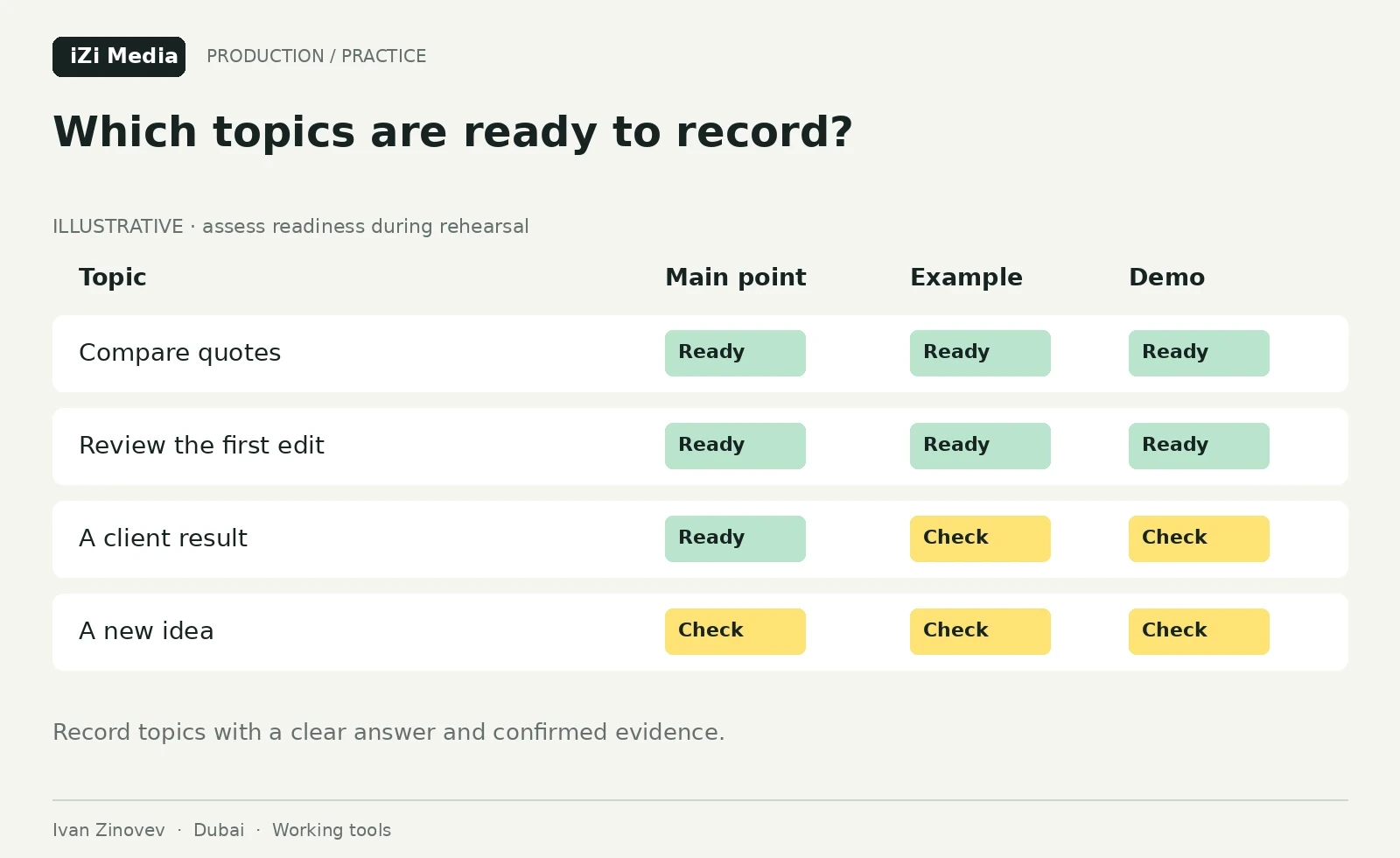
One task, two ways of recording
Take an illustrative example: a specialist explains what to prepare for a first meeting with a video production team. Both versions cover the same material: the purpose of the video, its viewer, available examples and time constraints. We are comparing delivery while keeping the advice consistent.
Teleprompter script: “Before the meeting, write down whom the video is for and which question it should answer. Choose an example you can show. Separately, note who will appear on camera and how much recording time is available.”
In an interview, the producer asks: “What should a client bring to the first meeting so you can suggest a format?”
Illustrative answer: “I’d start with two things: whom you want to show this to and which client question you want to explore. Then we’ll look at an example you already have. I also need to know who will appear on camera and how much time they can give to recording.”
The content matches the teleprompter version, but a question draws out a conversational answer. The producer can ask for a fuller explanation of one point. If those follow-ups remain in the finished video, account for that additional material when comparing the versions.
| What to compare | Teleprompter version | Interview version |
|---|---|---|
| Accuracy | Do the spoken words convey the agreed meaning? | Are all necessary conditions and steps still present? |
| Clarity | Can the viewer hear where one point ends and another begins? | Does the answer make sense without the producer’s question if it is cut? |
| Speaker’s workload | Can the person read, pause and maintain their own pace comfortably? | Do follow-ups help, or do they lead into unnecessary detail? |
| Preparation and editing | How long did script revision, setup and recording take? | How long did question preparation, recording and selection of a complete answer take? |
Watch both recordings without telling the reviewer which one you prefer. If possible, ask someone from the intended audience to explain what they understood and what they would do next. This trial can reveal an unclear passage; it does not predict the reach of the finished episode.
A teleprompter can suit wording that needs prior approval. An interview can suit experience-based explanations and unexpected follow-up questions. A relaxed conversation still needs preparation and editing; teleprompter delivery can also sound natural. Choose through a trial with the actual speaker.
Memorising the script and dealing with tension
If someone remembers the opening line but restarts the whole answer after a small stumble, try recording in meaningful sections. Keep the question, an example and exact figures in front of them. In the next take, practise one difficult transition instead of repeating the entire speech.
A speaker may struggle because the studio is unfamiliar, the text is overloaded or the underlying material is not clear enough. These call for different actions. A familiar conversation partner and short trial can help with the first; editing and narrowing the task with the second; checking the facts before paid recording with the third. A difficult take does not by itself show a lack of charisma.
Prepare interview questions with the entrepreneur interview guide. If preparation still leaves you wanting to replace the expert’s speech with polished generalities, check whether their own position is getting lost.
Prepare Russian and English versions
Build accurate content in the language the expert uses most comfortably for complex ideas. Then prepare the other version: preserve the position and examples, clarify terms and check names and numbers. The person should understand every statement made in their name.
Different audiences may need different introductory context. If one group knows the industry and another is encountering the service for the first time, explain terms and professional roles for the latter. This depends on subject knowledge as well as language. Ask the expert to retell the prepared section in their own words to check the adaptation.
Record languages in separate blocks and allow time to switch. Check subtitles against speech afterwards, especially names, numbers and technical terms. A translator or editor comfortable with the language reviews meaning before publication.
Where AI helps with speaker preparation
Use AI to help review the preliminary interview. Ask it to find examples, repetitions and passages needing clarification, with a source passage for each. The editor checks the recording and selects material for the outline. Include that checking time when assessing any time saved.
Another instruction is: “Prepare buyer questions from this service description. Group them into selection, process, timing and cost. Mark questions the material does not yet answer.” This reveals gaps before the studio. The specialist supplies the answers.
AI can also draft translations, subtitles and opening alternatives. People who know the subject and language check the result. Review promises, figures and conditions carefully. If “may help” becomes “ensures,” restore the original degree of confidence.
For realistic changes to images or speech, check YouTube’s AI disclosure requirements. Review whether a disclosure is required before uploading. Script assistance and creating a realistic event are different uses.
Preserve the point when editing
Give the editor the outline and exact conditions attached to important conclusions. If a recommendation applies at a particular budget and deadline, keep those conditions beside it. The shortened passage can then preserve its meaning.
Before approval, check that each story can be followed: what happened, why the specialist made the decision and how it ended. Figures and captions should accompany the relevant passage. For Shorts, check context and the conditions behind the conclusion; record a short introduction if needed.
After publication, compare the speaker’s impression with viewer behaviour. Moment-by-moment retention identifies passages to inspect. Listen to the question and answer, then decide what to move earlier or explain through an example. See the fuller process in the business channel audit.

Questions before the first shoot
How much preparation time do we need?
Begin with a short trial recording for one familiar answer. A substantial interview needs examples, verification and rehearsal of difficult sections. Agree the time after reviewing the brief and meeting the speaker.
Can we film an owner with a full schedule?
Yes. Collect the material with a producer beforehand, agree prompts and combine prepared sections into one filming period. Allow time for sound, a trial and important retakes. Plan around the actual scope.
Does the speaker need acting experience?
Acting experience is optional. An expert video needs subject knowledge and prepared explanations. Rehearsal develops particular answers; the director helps with recording, while the speaker checks the content.
Should they memorise the script?
Prepare exact statements fully. Keep the remaining material in short prompts and practise it several times. A trial shows which approach suits the person and format.
What should we send the producer?
The topic, audience description, an example presentation or conversation, visual material and time constraints. The iZi Media speaker coaching page describes the scope.
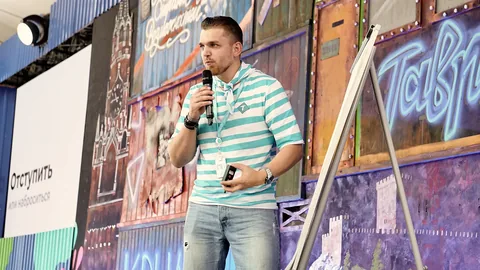
Use one client question for the first trial: record the answer and choose two specific changes. If several employees will take part, continue with employee generated content, which covers responsibilities and approvals for regular publishing.
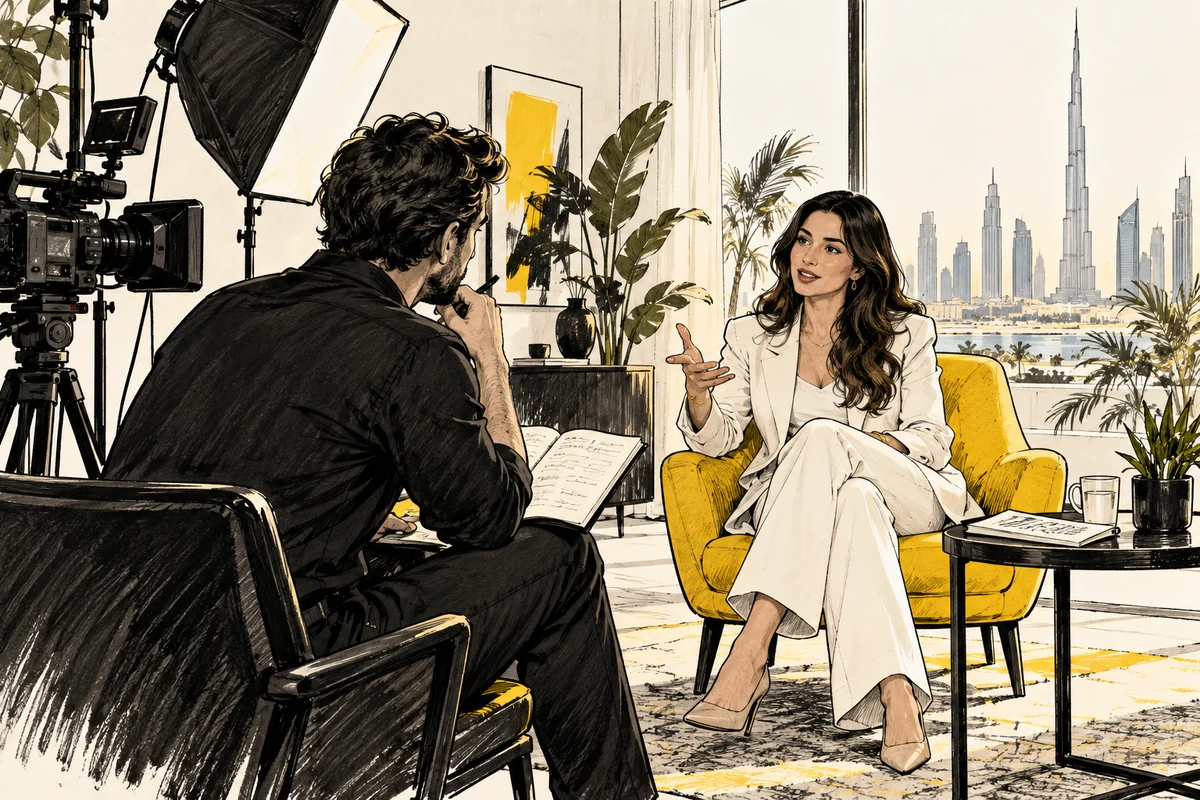
From a project: A conversation with the speaker on a real estate channel shoot.