Your business has a YouTube channel, but few enquiries: what to change first
Audit a business YouTube channel: data, topics, packaging, retention and enquiries. Includes a sample audit conclusion and a path to a monthly action plan.
In this article (8)

If a YouTube channel gets views but few suitable enquiries, begin with the audience and the route to your service. Compare videos with viewing data and sales conversations. Use that evidence to choose what to change: the topic, opening, contact link or handling of enquiries.
An audit helps locate what needs investigation. People may pass over the thumbnail, leave before the explanation or watch without a reason to contact the company. Others may have sent a message and waited two days for a reply. Each situation calls for a different action; a views chart alone cannot distinguish them.
I work from Dubai with local and remote projects. At iZi Media, a review starts with the service the business wants to sell and the people who need it. This lets us judge whom the topics and delivery attract before discussing retention, Shorts and the filming schedule.
Agree on what makes an enquiry valuable
Suppose a Dubai property agency publishes neighbourhood reviews. The comments contain rental questions, while the business sells investment properties. Some viewers help build awareness, but salespeople need people with a different task. Separate these groups and see which topics attract each one.
Write down the signs of a suitable enquiry: service, geography, approximate project scope, timing and readiness to talk. For a consultancy, that could mean an owner with an operating business and a specific management problem. For an interior studio, it could mean someone with a property and a renovation planned. These criteria help compare enquiries from different videos.
Agree separately on what counts as a channel outcome. A completed form, meeting, proposal and paid contract are different stages. Someone might watch an interview, visit the website a week later and message a month after that. Where the client remembers, record both the first encounter and the material that prompted them to contact you.
Ask two questions: “How did you hear about us?” and “Which material helped you decide to contact us?” Record the client’s wording. Their answers supplement click data, particularly when they changed devices or received a link from someone they know. They also depend on what the client remembers.
Collect the material before the audit
Begin with the last 90 days and add older videos still receiving views. Extend the period if it contains only two videos. Choose data that lets you compare similar videos and check your interpretation with sales.
Give every video a row in the export. Record topic, format, length, publication date, traffic sources, thumbnail impressions, CTR, average view duration and any trackable visits. Add production cost, speaker time and enquiries. Analyse long videos, Shorts and paid promotion in separate groups: viewers encounter them under different conditions.
Compare videos at the same publication age. Seven days and three months give a video different opportunities to find an audience. Save metrics at matching intervals, then use cumulative figures to assess the archive.
Grant YouTube Studio access through channel permissions. Choose an appropriate viewing role for someone reviewing statistics. If the work includes revenue data, check access to that information specifically. Agree the permissions with the owner before starting.
| Material | What it helps you see | Where to find it |
|---|---|---|
| Video and traffic-source statistics | How viewers discover and watch a video | YouTube Studio |
| Scripts, thumbnails and opening minutes | What the video promised and delivered | Production archive |
| Enquiries and reasons for declining | Who contacts you and what they need | CRM and sales |
| Deadlines, costs and team hours | What a video costs and where it stalls | Project plan and time records |
| Service pages and contact form | What viewers see after clicking | Company website |
Add, for example, the ten most recent conversations with prospective clients. Look for questions about timing, scope, options and price that remain after viewing. Remove personal information and agree access to client stories before sharing them.
Start with a small channel
With only a few videos, first check what you can inspect directly: whether the topic matches the service, the title’s promise is fulfilled, the correct page opens and a salesperson receives the message. These checks do not require substantial viewing traffic. Judging audience response requires observations from comparable material.
An illustrative company has four long videos covering different services in different languages. One has 180 views, the others a few dozen each, and no enquiries have an established YouTube connection. These figures are invented for the exercise. They cannot identify a winning topic or establish that the channel does not work.
Choose the service and audience for the next series. Open a relevant video with its title, first minutes and destination page. If comparable videos do not exist yet, record that limitation and prepare the next piece around a clear task. Base the checks on information you actually have.
| Finding | First check | What the check establishes |
|---|---|---|
| The title does not identify the buyer’s question | Compare its promise with the service and video | Whether the content can be explained more clearly |
| The promised example is absent from the opening | Review the passage and outline | Where the example appears and whether it can come earlier |
| The contact path fails on a phone | Follow it through to a test message | Whether contact is accessible and the message arrives |
| A salesperson received a message but did not reply | Trace the handover and name an owner | Where handling stopped |
| No clear error, little data | Continue the chosen topic and observe | Whether comparable data and substantive questions emerge |
Correct an established error first. Otherwise choose a check using the best-supported explanation, its cost and your ability to assess the result. Few enquiries may reflect insufficient observation. “Cause not yet established” is more useful than replacing the whole team prematurely.
Review the viewer journey in stages
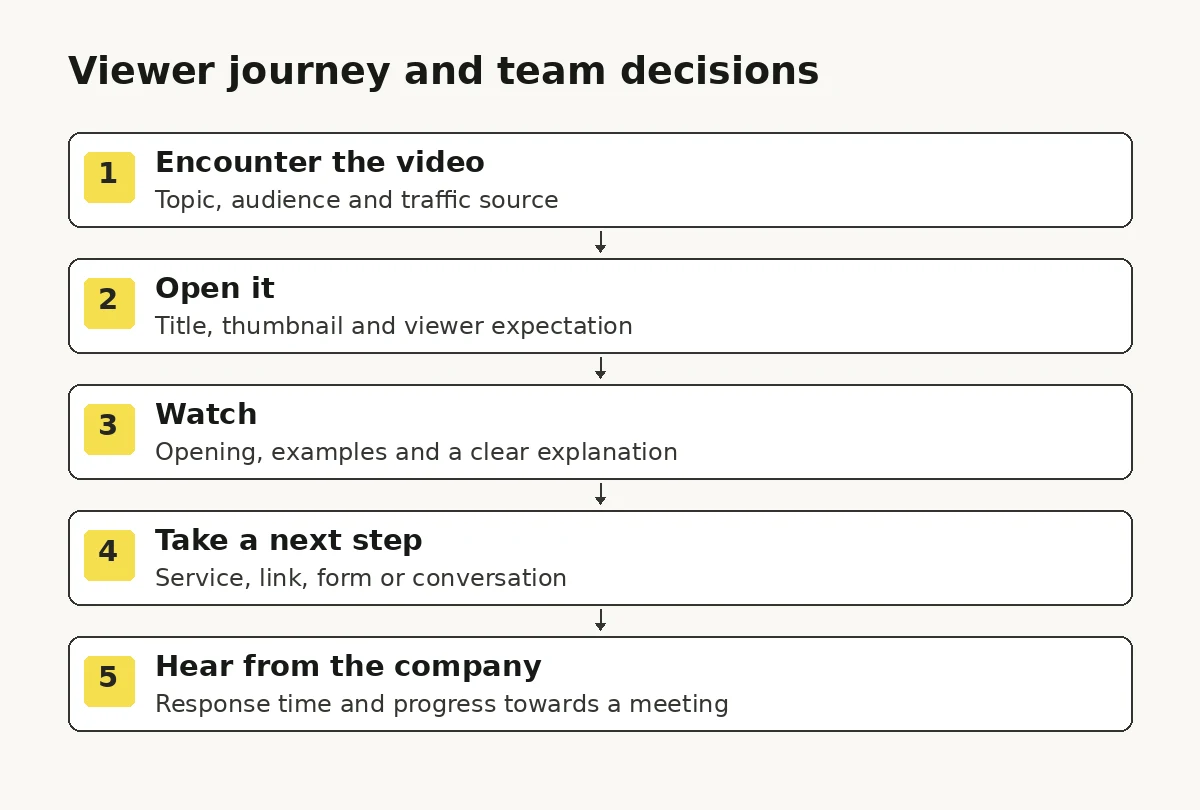
Follow the journey in order: where viewers encounter the video, why they click on it, how far they watch and what they do next. If a topic attracts suitable viewers who leave before the example, examine the opening first. A clear explanation reaching too few suitable people calls for a different check.
The video receives few impressions
Start with the topic and traffic source. A precise answer to a buyer’s question may attract a small search audience over a long period. A story about a prominent event may receive more home-page impressions. Assess their business value through audience fit and subsequent actions.
For several comparable videos, write down the decision each helps a viewer make. “Property market news” says little about the buyer’s task. “How to compare two apartments at the same price when ownership costs differ” identifies both a comparison and the material needed to explain it.
YouTube’s recommendation guidance considers viewer response, topic interest and viewing context. A strong individual video does not establish how large the audience for a series might be. Before increasing the budget or launching a new channel, examine other comparable videos and whom they attract.
People see the video but rarely click on it
Review the title and thumbnail together. A quick glance should tell someone what situation you will explain and why it deserves their time. “Interview with a property expert” describes the recording. “Two apartments, one price: which costs more to own?” explains the conversation, provided the video actually covers that comparison.
Compare CTR within similar traffic sources. YouTube’s CTR guidance explains the influence of audience and where impressions appear. A percentage borrowed from another channel gives little basis for judging your video. External views also enter the statistics differently from counted thumbnail impressions.
For eligible long videos, use YouTube’s native title and thumbnail A/B test. Eligibility depends on settings and content type; the result is assessed by watch time. Make the alternatives meaningfully different. Record the promise you tested so the result informs the next video.
People click on the video and leave early
Watch the opening minutes with the speaker and editor. Note when the promised explanation begins and when the first example appears. Suppose a video about apartment costs opens with the guest’s biography and a market overview. Check retention there: viewers may leave before reaching the comparison.
Try opening the next video with the comparison itself: two properties, the same purchase price, different recurring payments. Then the expert explains which data the calculation needs. Their experience becomes visible through their work. Place the short introduction where it helps viewers assess the explanation.
The audience retention report helps locate exits and repeated viewing. A spike can suggest interest or a need to understand something again. Open that moment and listen. The chart identifies a passage to inspect; watching it gives you the basis for an editorial decision.
People watch but rarely visit the company
Check whether the content helps someone choose your service. After watching a Dubai story, could they explain how your specialist works and when to contact them? Find the passage that makes this connection and check what next step it offers.
Make the next step specific. For example: “If you already have two properties to compare, send them and explain why you are buying. We can discuss which data the calculation needs.” Use this invitation when the corresponding service exists. On the website, show its scope, a relevant case and a contact method.
Test the description link on a phone. It should lead to the material the speaker mentioned. If you use UTM parameters, agree consistent source names and video identifiers. A tag records a visit; conversations and CRM information help explain the client’s decision.
Enquiries arrive but few become meetings
Test the enquiry process yourself: submit the form, find the notification and measure the time to first reply. Establish who receives the enquiry and where the conversation is recorded. This can reveal a lost handoff between the website and a messaging app.
Ask sales to show conversations that stopped. If people repeatedly need a service the company does not offer, change the topics and promise. If the service fits but the next action confuses them, improve that step. The conversations determine which decision makes sense.
An example: turning a review into a plan
Consider an illustrative B2B channel. These figures are invented for teaching. In one month, eight long videos receive 24,000 views. The CRM records 12 enquiries mentioning the channel. Four fit the service, three reach a meeting and one becomes a contract.
One contract divided by all views does not give a reliable channel conversion rate. Views include repeat watching, the client may have found the company earlier and some enquiries remain open. In this example, begin with the videos mentioned by the four suitable prospects.
Suppose three name a guide to choosing a contractor and one names an explanation of the project stages. The most watched video is an entertaining industry story. I would prepare two more videos about selection and the working process, keep a separate role for broader stories and check who comes after the new series.
| Observation | What to test next | How to assess it |
|---|---|---|
| Viewers find comparisons useful | Two ways to solve one problem | Traffic sources and questions on the topic |
| People ask how the project runs | Stages, timings and an example outcome | Service-page visits and enquiry content |
| Viewers leave during a long introduction | Open with the specific situation | Opening retention against comparable videos |
| Sales sees forms too late | Notifications and a named enquiry owner | First-response time and completed conversations |
Assign a person to each change. The producer and speaker develop the topic and rehearse the opening; marketing and sales check the contact route. Before the next meeting, agree what evidence each person will bring and which decision it should support.
A sample audit conclusion
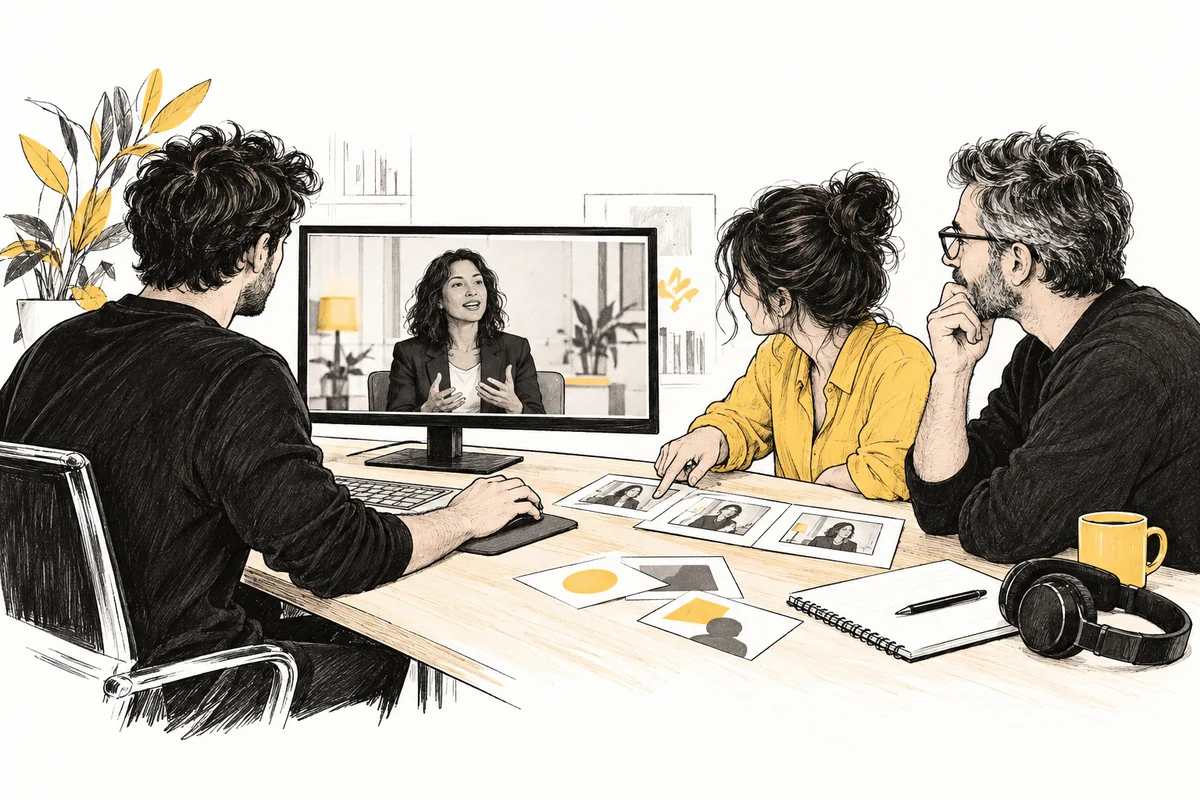
This shows the deliverable format for the hypothetical B2B channel above. It is a teaching document, not client analytics or the outcome of completed changes.
Business goal: enquiries about a specific service. Basis: eight long-form videos, 24,000 views and 12 enquiries mentioning the channel over a hypothetical month; four enquiries fit the service. The video connection comes from what people said, so exact sales attribution is unavailable.
| Part of the conclusion | Entry in the teaching sample |
|---|---|
| Observation | Three of four suitable enquirers named a supplier-comparison video; one named an explanation of project stages |
| Working explanation | These topics may help people judge whether the service fits |
| Alternative explanation | They may already have known the company; so few conversations cannot establish a reliable topic comparison |
| Decision | Prepare two videos on selection and process; retain broader stories as a separate series |
| Further checks | The promised explanation, a clear service offer and the correct link opening on a phone |
| Evidence for reconsideration | New enquiry content, how people first heard of the company, comparable viewing sources and video age |
A real conclusion needs links to reviewed videos, timecodes, the export period and metric definitions. Without Studio access, public videos and contact paths can be reviewed, but hidden CTR, retention or sales cannot be reconstructed. We agree the available data and audit depth before payment.
The conclusion produces a packaging brief: for each of the two videos, define the buyer’s question, title and thumbnail idea, find a supporting example and check the opening before recording. The sample monthly action plan adds a schedule and review criteria.
Choose the next check
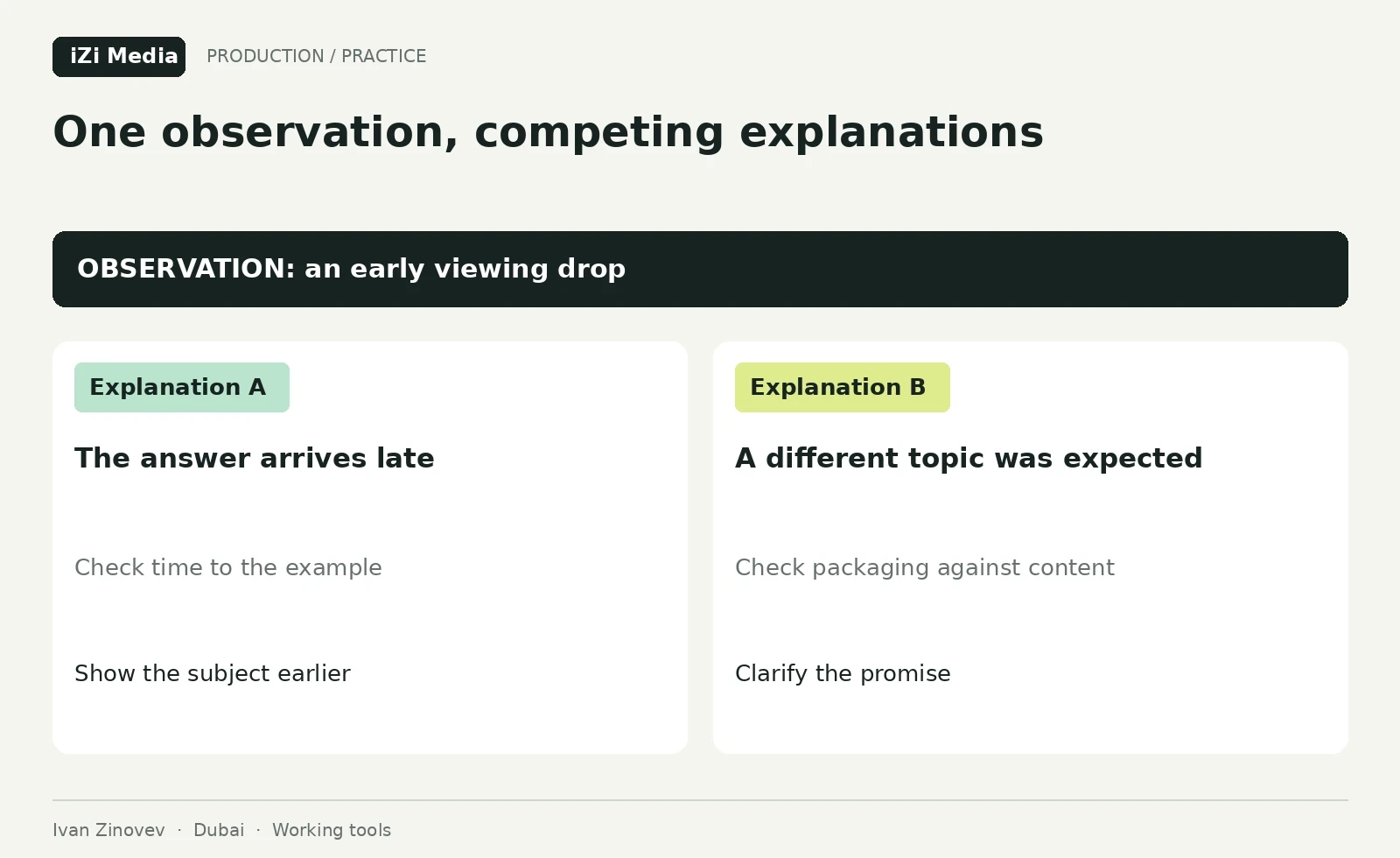
Separate five possible causes: the topic attracts a different audience, the offer does not fit its task, the packaging fails to explain the value of watching, the video delays the promised answer or sales handling loses the enquiry. A view count alone cannot distinguish them. Examine the relevant material: people’s questions, service scope, title and thumbnail, recording or handling history.
For example, a suitable buyer writes after watching an explanation, but the salesperson cannot clarify the service scope. Review the offer and reply before changing the edit. If new conversations repeatedly concern another service, return to the topic and promise. If there are no conversations yet, first check the contact path and available audience evidence.
Record which observation would change your explanation. It could concern a functioning notification, the viewer’s understanding of the promise or recurring questions from suitable buyers. The post-audit plan connects that check to an owner and decision. Discuss channel work through the YouTube production service.
What changes for a channel serving Dubai
Establish where viewers live and where they intend to use the service. A Russian-speaking client may already be in Dubai or be preparing to move from Moscow or another country. Those situations need different explanations. Ask the same questions about location and timing for an English-speaking audience.
For a bilingual project, decide how people receive the information: separate versions, subtitles or adapted videos. Review each group separately using the available data. Compare that with enquiry language and the team’s ability to serve the client.
Check seasonality against your own archive and sales. Holidays, travel periods, events and buying cycles can affect viewing and decisions. Record these circumstances when comparing months. They help you explain changes more carefully.
How AI can help with the audit
At iZi Media, we use AI in content work. For an audit, give it anonymised transcripts and ask for recurring questions, opening promises and vague passages. Require a timestamp and source passage for each observation. A person then checks what the speaker actually meant.
A useful instruction is: “From these transcripts, list the client situations the speaker describes. For each, give the exact passage, timestamp and source link. Leave the outcome field empty when the material gives no outcome.” The editor receives a draft they can verify.
Check numbers, periods and calculations against the export. Use spreadsheet formulas for arithmetic and the model to suggest possible explanations. The channel owner decides what the next video can test. Before processing confidential data, agree the tool, access and permitted material.
What you should receive after an audit
The team should receive source data, observations with examples and a plan for the next series. Prioritise the changes and give each a reason, responsible person and test. For example, “Open two videos with a comparison and review opening retention” is specific enough to put into production.
Three changes for the next month could cover content, delivery and the enquiry route. Treat that as an example scope, to be adjusted to the problems found and the team’s capacity. Changing topics, presenter, format, editing and schedule together makes it hard to tell what affected the outcome.
The Dubai property case reports four long videos, 20 Shorts, five leads and two clients in month one. These are published figures from one project. The case shows the stories and speaker preparation the team used; its numbers do not provide a forecast for another channel.
The next step is a monthly post-audit action plan: alternative causes, two main checks, owners and a review date.
Questions before reviewing a channel
Can we begin with five videos?
Yes, if they allow comparisons between topics, delivery and audience response. With little data, the outcome will be initial observations and a testing plan. Refine the conclusions as more material is published.
What is a good CTR?
Compare CTR for videos of similar age and within comparable traffic sources. Check impression volume and subsequent viewing alongside it. There is no universal percentage that tells you whether this particular thumbnail needs changing.
Should we delete older videos or start again?
First check whom the archive attracts and where its links lead. Add current follow-ups to useful videos. A substantial change in audience, language or content can justify considering a new channel, but that needs its own review.
When should we assess the changes?
It depends on publication volume, traffic sources and sales-cycle length. Agree matching viewing windows and a separate period for enquiries. A month may show working quality and early response; keep tracking contracts over a longer period.
Do we need an analyst, editor or producer?
Collecting statistics calls for analytical work. Connecting them to scripts, speakers, production and the next series calls for a producer making those decisions with the business. See the scope on the iZi Media YouTube production page.
Send the channel link, a service description and recent videos. Add anonymised enquiry data if available. I’ll propose the scope of the review and identify any further data needed. If the audit points to delivery problems, continue with preparing an expert for an interview.
For the commercial assessment, continue with YouTube enquiries and channel economics. It connects episode topics, contact routes and CRM records.