HomeArticlesPost-audit action plan
YouTube channel audit: build an action plan for the next month
Turn a YouTube audit into a monthly action plan: priorities, responsibilities, titles and thumbnails for two episodes, and review criteria. Includes a sample calendar.
In this article (13)
Suppose an audit leads the team to change thumbnails, shorten openings, strengthen calls to action and publish more often. A month later, the figures have changed, but it is unclear which change helped. Unless the team records the reason for each change and how it will assess it, the next review can end in another argument about the numbers.
Finish the audit with a working plan. For each selected change, record the observation, possible cause, check, responsible person and review date. A business channel needs to assess viewer response and enquiries alongside the team’s ability to publish on time. The five situations below lead into a thirty-day plan. Diagnostic numbers are illustrative and do not describe a current client channel.
Prepare comparable data
Start with several comparable videos. Analyse long expert explainers, interviews and Shorts in separate groups. Account for language, topic, duration, age since publication and traffic source. On a Dubai business channel, a Russian-language episode for Russian entrepreneurs and an English product demonstration may attract people with different needs.
A fresh video and one published three months ago have had different opportunities to accumulate views. Compare day-seven results with day-seven results rather than taking an arbitrary snapshot. If data is limited, record that limitation. The observation may inspire an idea, while evidence for a stable effect remains weak.
Collect impressions and CTR by source, views, average watch time, retention at important moments, available link clicks and qualified enquiries. Record the dates of topic approval, filming, first edit and publication alongside them. When choosing changes, you can then consider both viewer response and the time the team needs to deliver an episode.
| Analysis layer | Record | Question answered |
|---|---|---|
| Distribution | Impressions, source, video age | Where and to whom was the video offered? |
| Video selection | CTR within a comparable source | How did viewers respond to the offer? |
| Viewing | Retention, time, specific moments | What happened after opening? |
| Action | Click, message, qualified enquiry | How did the viewer continue? |
| Production | Stage dates, repeats, approvals | What can the team change? |
If the data is not ready, start with the business YouTube audit guide, which lists the metrics and diagnostic steps. The monthly plan needs observations that can be checked against those records.

Separate the observation from the explanation
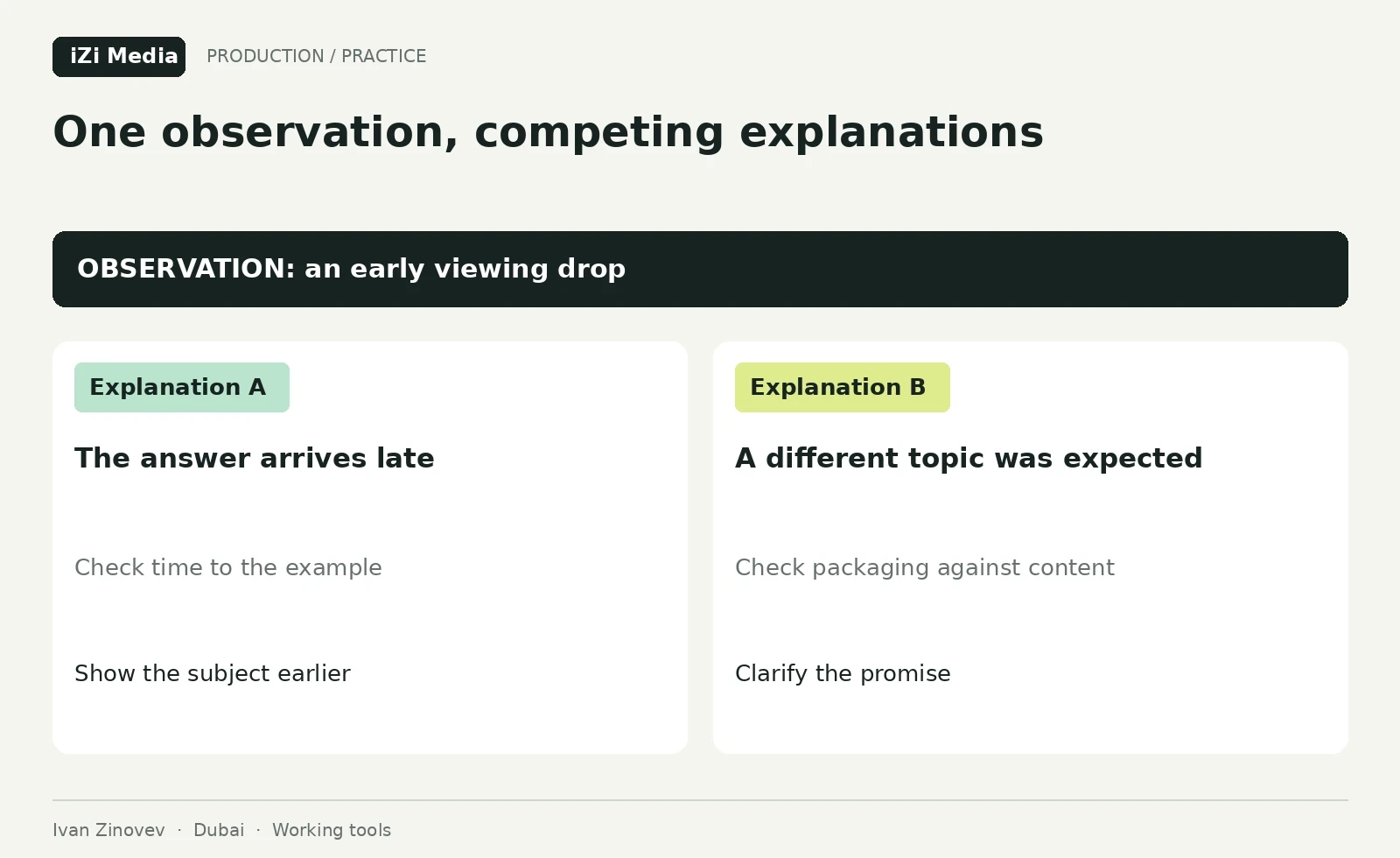
“Retention drops at 01:20” is an observation. “The viewer became bored” is one explanation. Advertising may start there, the promised section may end, an unclear diagram may appear, or a long title sequence may begin. Watching the moment and comparing other videos helps narrow the possibilities.
For each observation, write at least two plausible causes. Find evidence that distinguishes them. A popular episode with few enquiries may attract people outside your target audience, or its offer may be unclear even to a suitable viewer. In the first case, inspect the topic and enquiry profiles. In the second, examine the call to action, destination page and conversations.
A useful decision card might say: “Three comparable episodes lose many viewers before the example appears. The opening may delay the answer, or the packaging may promise a different subject. Check the first minutes alongside the title. In the next episode, move the supporting example earlier while keeping the audience topic. Evaluate retention and comment content under comparable traffic.”
The card shows the basis for the decision and when it should be reconsidered. If the designer, producer and client disagree, they can return to the episode and its data instead of debating only whether they like the thumbnail.
Situation 1: few impressions, but viewers keep watching
One explanation is a narrow topic reaching a small interested group. Another is that the current packaging and content are less competitive than other videos the same people could watch. Limited channel history and traffic-source characteristics may also matter. “High CTR, few impressions” alone cannot identify the cause.
YouTube's impressions and CTR guidance explains that these metrics depend on audience and placement, and a small loyal audience can produce high values. Inspect sources and comparable topics within the channel first. An overall CTR hides differences between Home, Search and channel-page impressions.
For the month, consider a follow-up to a topic that prompted substantive responses from the intended viewers. Before recording, show the title and thumbnail to people resembling the buyer and ask what they expect the video to explain. Separately, use YouTube’s built-in title and thumbnail test where available on an existing episode. Keep the new video and changes to the older video separate in the review.
Assess whether a comparable impression source expanded, viewing quality held up and the audience remained relevant to the business. A lower overall CTR alongside broader impressions is not automatically a bad result. If retention and audience fit deteriorate, expansion may have moved the channel away from useful viewers.
Situation 2: impressions exist, but few people choose the video
The title and thumbnail may be too general for viewers to understand what they will learn. Alternatively, the promise may be clear while the topic does not fit the people receiving it. A further explanation is a comparison with older videos drawing different traffic. Make the conditions comparable before changing the design.
Identify the question promised by the title and thumbnail, then check it against the opening minutes. If the title promises Dubai filming costs but the video spends ten minutes on personal branding, resolve that mismatch. You can then compare visual treatments of the same, accurate promise.
Prepare distinct approaches to the same content for a test: estimate comparison, budget components and choosing the wrong scope, for example. These offer different reasons to open the same explanation. Variants differing only in the colour of a small label often reveal little about viewers' response to the promise.
As checked on 17 October 2026, YouTube's title and thumbnail testing guidance describes comparison of up to three variants on eligible videos in desktop Studio. Feature eligibility conditions apply, and Shorts are excluded. Results use watch time. Check availability and current conditions in your channel before starting.
Keep the original variants, start date and outcome. If differences are inconclusive, record that. Manually switching thumbnails on Monday and Friday produces a weaker comparison because different people may see the video on different days. A rise after replacement is an observation; attributing it to the replacement needs stronger evidence.
Situation 3: people click, then leave early
The opening may delay the promised answer. Viewers may expect something different from the title and thumbnail. A particular moment may be difficult to understand or perceive: quiet audio, unexplained terminology or an unreadable document. Similar drops can arise from each cause.
Watch the video alongside its retention curve. Record exactly what happened before the drop: a greeting, topic change, demonstration or list of credentials. Find a comparable episode where the same device held attention better. This helps form a testable explanation rather than a vague instruction to “make it more dynamic.”
YouTube's retention guidance notes that dips can reflect departures or skipping, while spikes can reflect rewatching, including confusion. Inspect the scene's context. An engaging moment and a difficult diagram need different responses.
Illustrative example: of 1,000 viewing starts, 560 remain at thirty seconds. The episode spends that opening on greetings and a general author introduction; the specific explanation begins at 01:40. The hypothesis is that viewers wait too long for the promised subject. In the next comparable episode, show the subject immediately, explain the task briefly and begin the analysis. The 56% figure illustrates a calculation; it is not a universal quality threshold.
Compare the opening, average watch time and responses from relevant viewers. If the first seconds hold more viewers but a large drop remains later, check the next section: does it answer the promised question, and can viewers follow the explanation? Speeding up the whole video without that check can make useful material harder to understand.
Situation 4: people watch, but qualified enquiries are scarce
The video may attract curious people who are far from buying. It may attract potential clients who cannot understand the next step. Enquiries may also exist without reliable YouTube attribution: someone contacts you a week later, or comes through a recommendation after watching.
Review comments, messages and meeting questions for needs your business actually serves. Then follow the contact route on a phone. For an English-language episode, check the English destination page and whether someone can reply in English. These checks help distinguish unsuitable traffic from difficulty getting in touch.
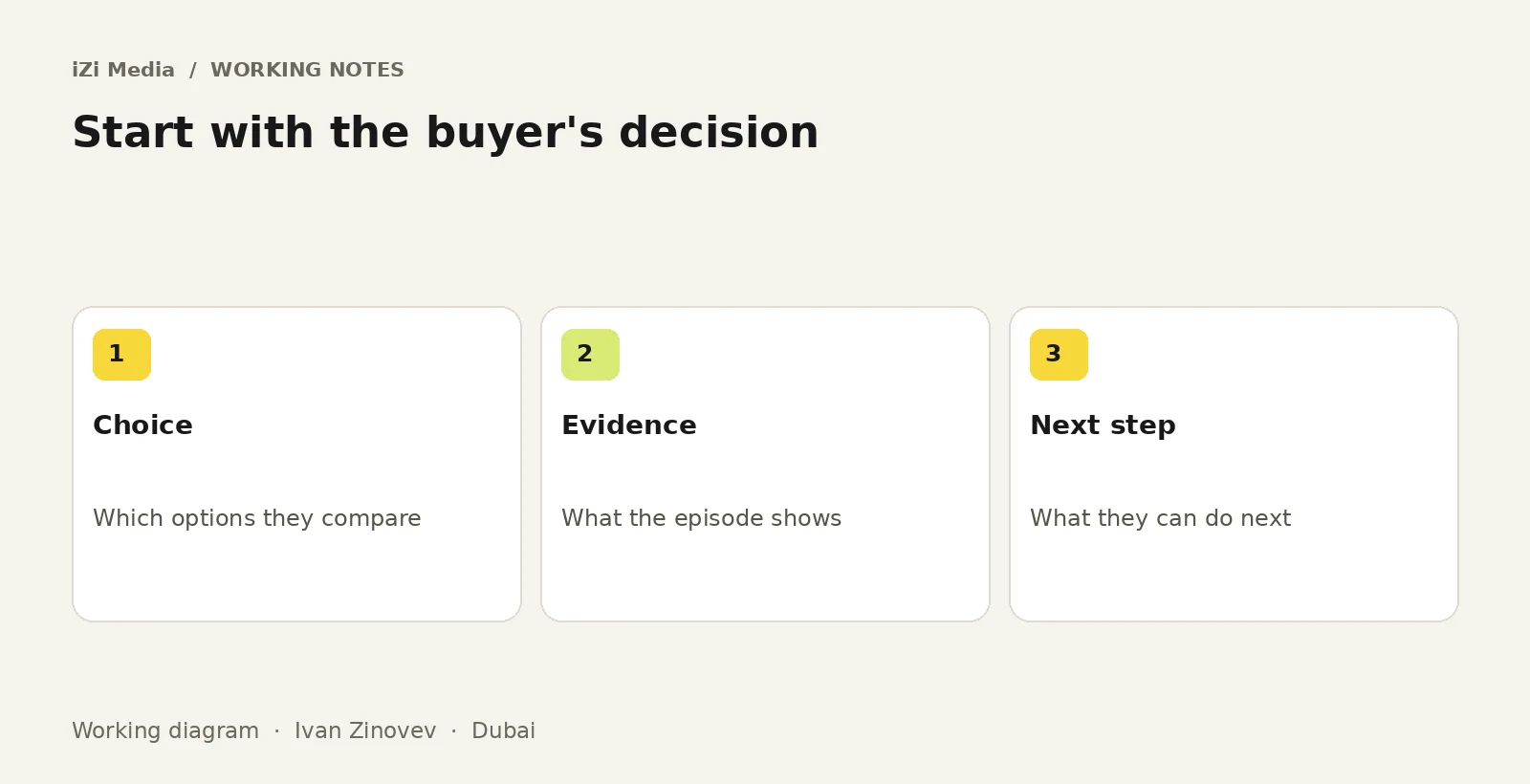
For one suitable episode, connect the topic, evidence of your work and a specific next step. After explaining an estimate, offer to review the viewer's project subject, language and intended volume. Agree which information the responder will request. Track a click, message, qualified enquiry and deal as separate stages.
My published Dubai real-estate agency case study reports four long videos, twenty Shorts, five leads and two clients in the first month. This belongs to one project under its own conditions. It demonstrates why enquiries should be recorded separately from views; it does not justify promising another business the same conversion.
During the month, track each enquiry's path and why it qualified or did not. When messages are scarce, the assessment will be descriptive. Repeated observations and consistent criteria support a stronger conclusion. The YouTube lead generation guide provides the tracking structure.
Situation 5: the analysis is clear, but production is delayed
Topics and changes may exceed the team's capacity. Alternatively, work may be waiting for approvals: a specialist waits for a decision, the client waits for a comprehensible draft, and the producer rewrites assignments. This can look like a shortage of editors even when another editor would simply add another file to the approval queue.
Separate elapsed stage time from active work. In an illustrative example, editing takes six hours, but the episode waits five days for comments from three people. Begin by naming the final-feedback owner and response deadline. If the editor works continuously and the queue grows, reassess capacity or simplify the agreed scope. The Dubai production cost guide helps compare that scope and the resources it requires.
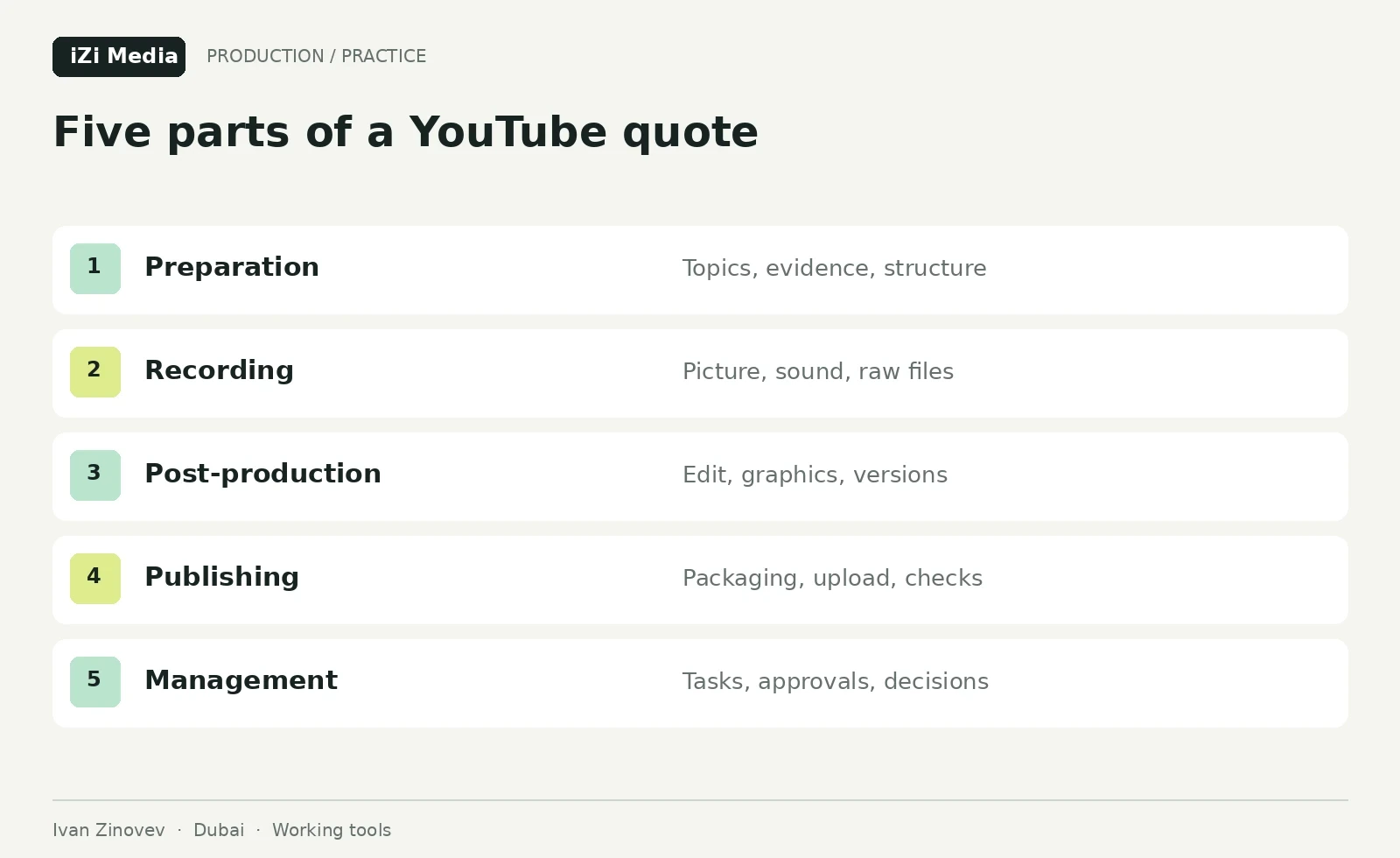
Choose one process for the month: a topic card before filming, a consolidated feedback list, a response deadline or a footage-handover standard. The owner must have authority to decide. Track time from approved topic to publication, repeat rounds and the proportion of episodes delivered as planned. The batch filming guide provides topic cards and the handover structure.
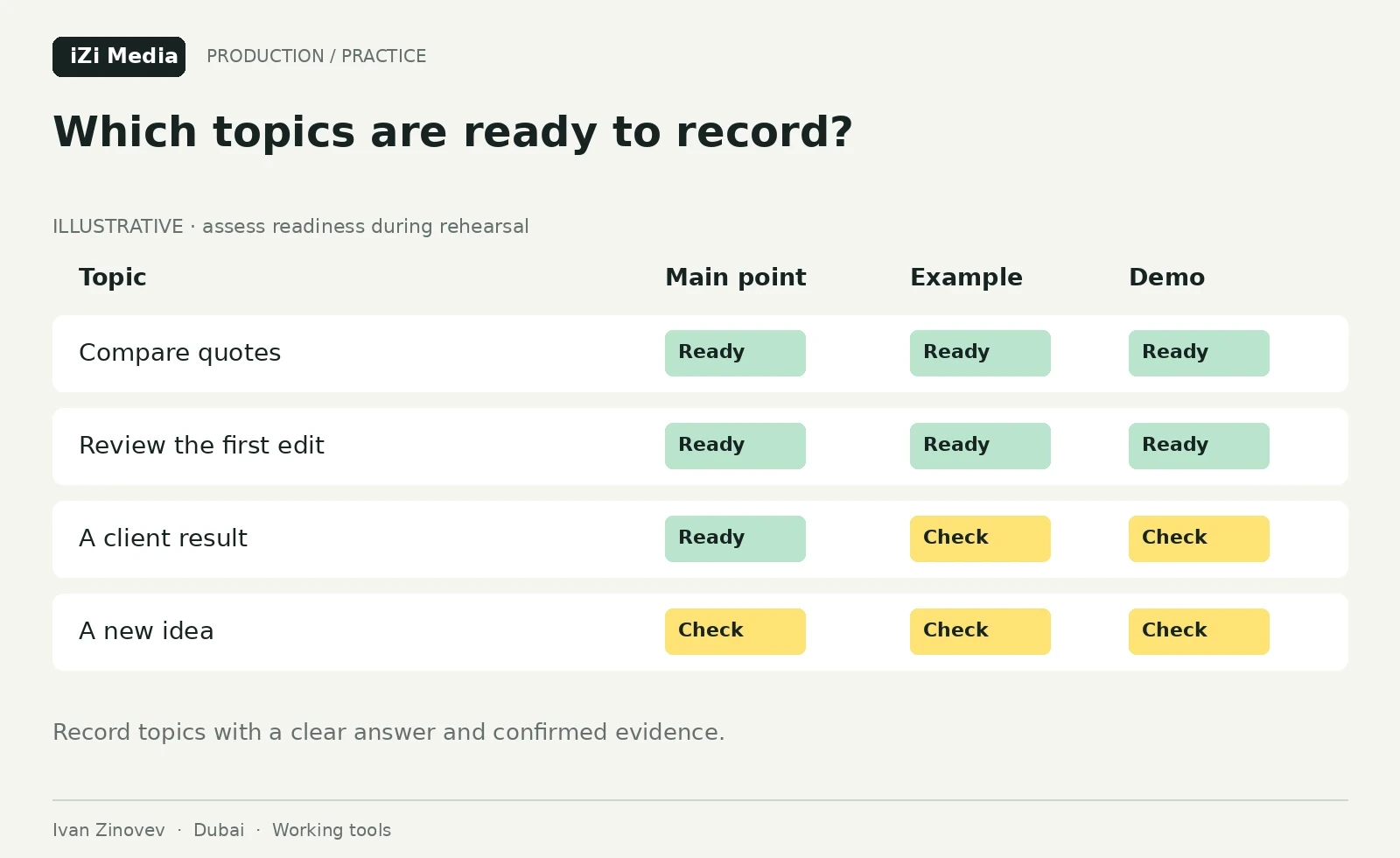
Required review of complex material takes time too. Make it a separate stage and, where possible, move it before editing. The plan should show how much time fact-checking needs and how much time an episode simply spends waiting for an available approver.
Choose the role of long videos and Shorts
Choose the format around the viewer’s question and the material required to answer it. A comparison involving conditions, calculations and objections may need a detailed episode. One self-contained question can suit a short version if essential conditions survive. A Short and a long episode can serve different tasks within one series.
In an illustrative agency plan, a long video compares two options against a buyer’s criteria; a short version explains one criterion using the same cleared material. Check each video’s clarity independently. Where further explanation is needed, identify the continuation and provide an available route. A Short’s view does not automatically establish a view of the long episode.
Review performance within the relevant format and record the client-reported sequence separately. Reach, retention and enquiries use different units. Without a contact history, do not allocate leads between formats in proportion to their views. The interview clips guide explains how to select self-contained answers.
Choose two main checks for the month
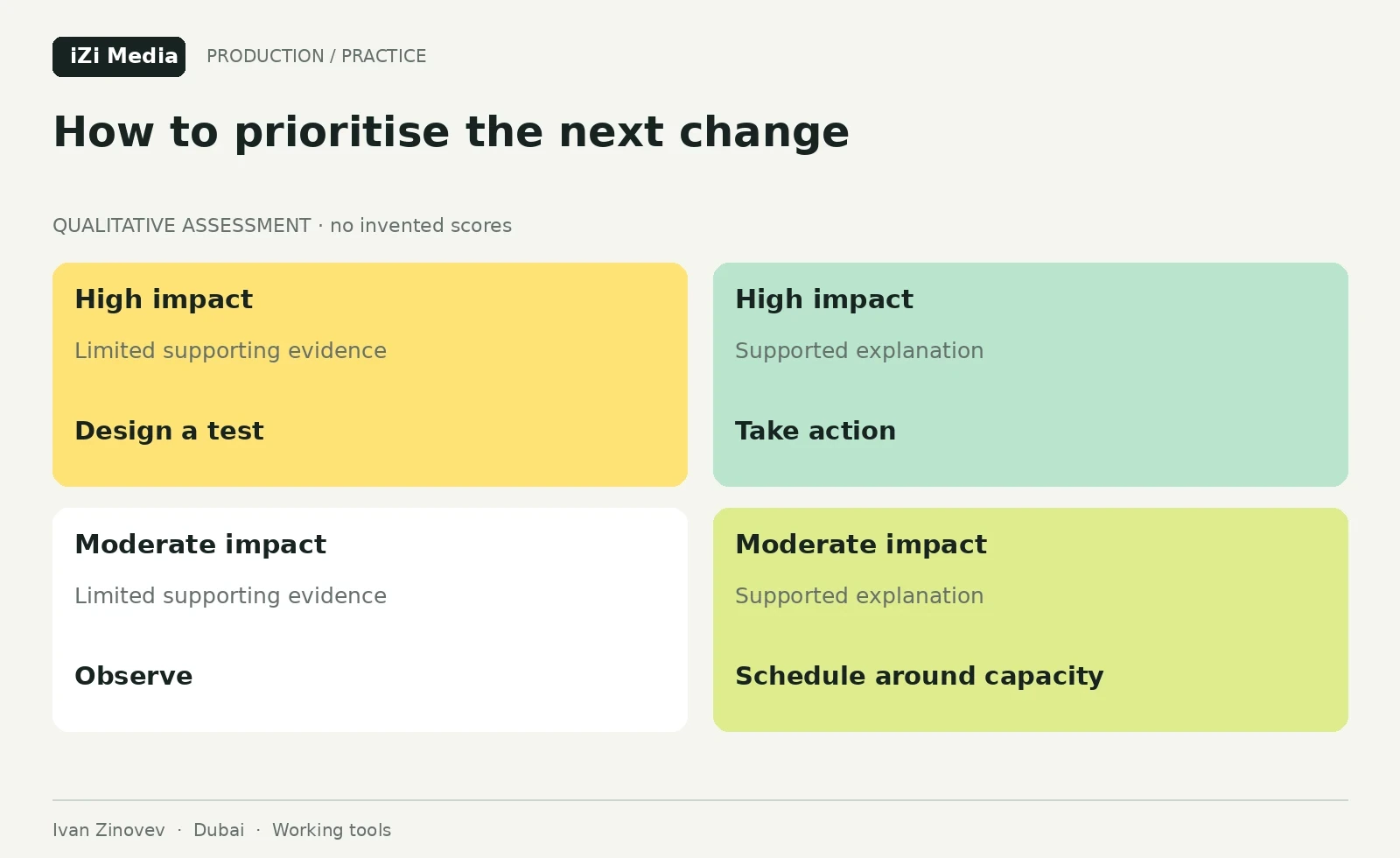
Sort the long findings list into urgent corrections, planned experiments and future observations. Correct a wrong amount or broken link immediately. Topic, packaging and structure changes require evaluation. Two main directions can make a month manageable for a small channel, giving the team time to prepare them and understand the results.
| Finding | Priority action | Why now | What to check |
|---|---|---|---|
| Contact button points to the wrong place | Fix the destination | Affects already interested viewers | Phone access in both languages |
| Promise differs from the opening | Rebuild the next episode's opening | Affects understanding of the content | Retention and expectation accuracy |
| Packaging is too general | Set up a built-in title and thumbnail test | Suitable content and impressions exist | Test outcome and audience profile |
| Editing waits for approval | Assign one responsible approver | Stage dates show the delay | Approval time and repeat rounds |
| Too little topic data | Continue observing | Effect cannot yet be separated from chance | Repeated comparable videos |
For each task, consider the effect on the business and how well the evidence supports the suspected cause. Then check the time and resources needed. If two options are equally well supported, start with the cheaper, faster one to evaluate. Scores may help the discussion, but do not make the underlying estimates more certain.
An action plan with owners and decisions
The following teaching example contains no real channel results. Its observations are assumed for illustration; replace them with links to verified evidence in your own plan. Correct an urgent error immediately and select the remaining tasks around available capacity.
| Evidence and possible cause | Action and owner | Review and decision |
|---|---|---|
| A test message did not reach sales; the notification may be misconfigured | Website and sales owners check the recipient and repair the handover | Complete the path on a phone and confirm receipt; investigate further if the message is lost again |
| Two comparable videos delay the example; the opening may be long or the promise inaccurate | Producer and speaker review packaging and start the next episode with the relevant example | Compare retention and questions under similar traffic; keep the conclusion provisional if conditions differ |
| Enquiries concern another service; the topic may attract a different audience | Editorial lead and sales choose the intended buyer’s question and agree the offer | Review new conversations; reconsider the topic or offer if relevance does not change |
| Feedback awaits several people; there may be no single approver | Manager names a decision-maker and a deadline for consolidated feedback | Compare waiting time and revision rounds; review authority and capacity if the queue persists |
Replace roles with names and dates. Schedule review around the change actually made: a delayed video has not yet had time to produce observations. Use the content team guide to allocate decisions.

At month end, tasks can have different outcomes: error corrected, explanation provisionally supported, insufficient evidence or action not completed. Preserve these statuses separately. They help choose the next cycle without promising that every change must deliver growth.
Build a thirty-day decision calendar
| Period | Actions | Stage outcome |
|---|---|---|
| Days 1–3 | Collect comparable data; check links and facts | Observations and urgent corrections |
| Days 4–7 | Select two hypotheses, criteria and owners | Experiment cards and baseline |
| Days 8–18 | Prepare and publish material; launch an available test | Changes actually implemented |
| Days 19–25 | Observe; collect messages and delay causes | Data against the chosen criteria |
| Days 26–30 | Compare conditions and decide | Continue, refine, stop or observe |
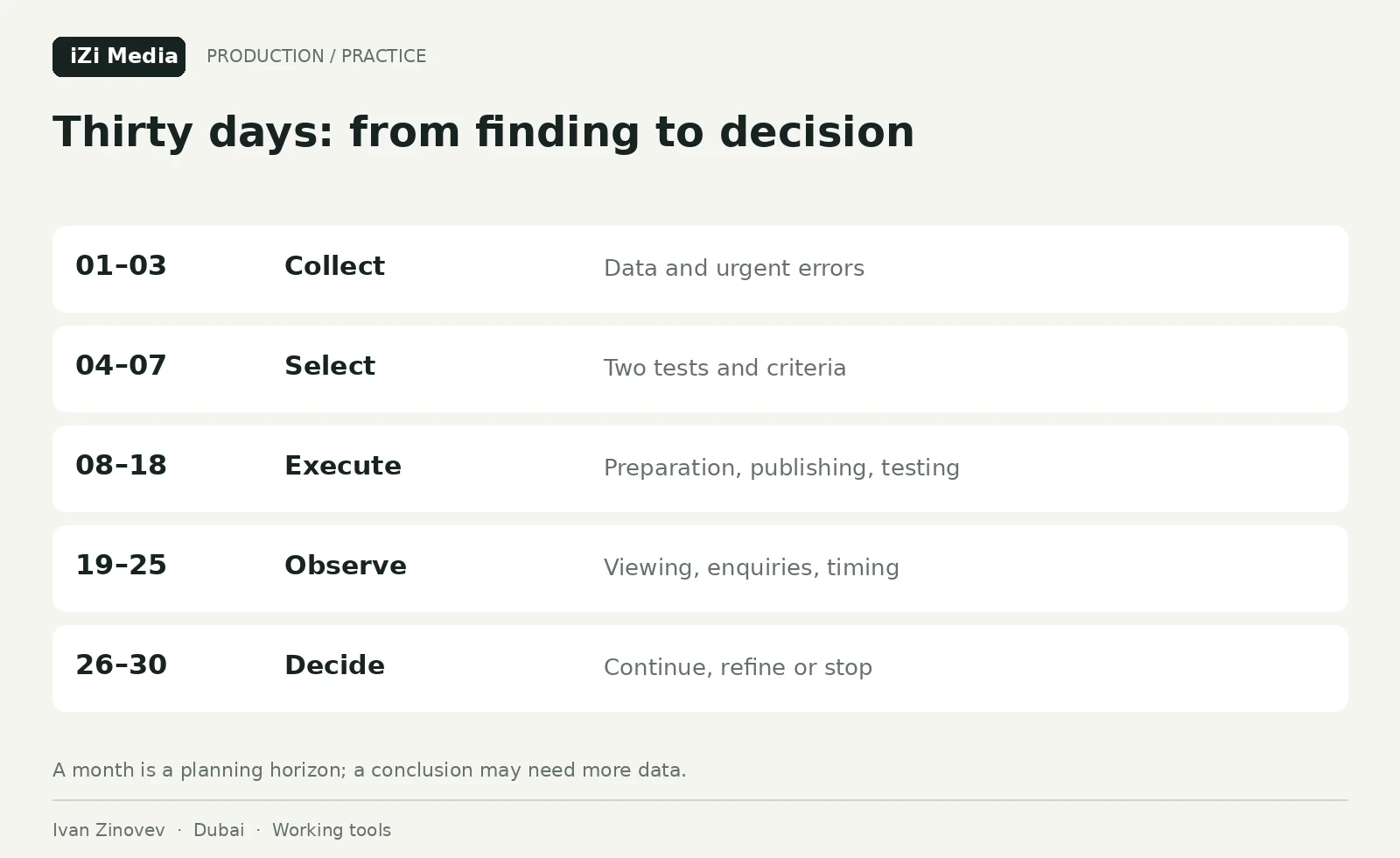
After thirty days, review the plan using the evidence available. Limited data may call for more observation; a change in traffic source may require a narrower comparison. If production was delayed, the experiment may only have started near the end of the month. The calendar date alone is then no basis for judging its effect.
The review card should record the date, original hypothesis, executed change, result and limitations. “Moving the example earlier improved retention in two episodes, but most traffic came from subscribers; check the next video” is a useful conclusion. It supports a decision while preserving the limits of the evidence.
Carrying out the sample audit decision
Continue the hypothetical B2B example from the audit guide. The two episodes below form a teaching editorial plan, not published work. No viewing or sales results exist for this plan yet.
| Timing and owner | Working material | Readiness criterion |
|---|---|---|
| Week one: producer and sales | Suitable customer questions and the service offer | Two situations selected; facts and permitted examples approved |
| Week two: producer, speaker and designer | “How to compare two supplier proposals” | Title and thumbnail promise a comparison; the opening shows a useful selection criterion |
| Week three: speaker and editor, led by the producer | “What you receive in the first project stage” | A specific deliverable is shown; the CTA leads to the matching service description |
| After publication: producer and sales | Viewing at comparable video ages and the substance of new enquiries | Sources, limitations and the next decision recorded; missing enquiries are not replaced with invented results |
Before recording, prepare one editorial brief: the buyer’s situation, title promise, thumbnail idea, checkable example, the speaker’s first answer and the next step. The editor works from that same brief. An eligible existing video can have a separate built-in title or thumbnail test. That test and a review of the new series answer different questions; do not transfer conclusions from one to the other.
Move the decision date if publishing is delayed or comparable evidence is scarce. Increasing output to fill the calendar is unnecessary: the next video should help check the chosen explanation.
When to discuss a channel relaunch
First describe what changes: the service, audience, language, presenter or delivery. If earlier videos answer the same buyers’ questions, continue the useful series, update links and explain the revised offer. Low views alone do not establish that the channel’s history prevents development.
Discuss a separate channel when the intended audience needs another language or subject and mixing series makes the offer difficult to understand. Before deciding, review the archive, audience sources, account access and the team’s ability to maintain another channel. A new address alone does not repair an unclear service or broken contact path.
Prepare a transition plan: which material remains useful, where links lead, where new videos appear and how the old and new series will be assessed. Do not delete an archive on an assumption about the algorithm. Use the Russian and English series guide for language choices and discuss preparation within channel production.
Give AI a clearly defined part of the audit
AI can summarise exports, find repeated questions and suggest moments to inspect. Define the fields first and check that the model reads percentages, minutes, dates and languages correctly. Missing table fields must remain unknown.
Example brief: “Analyse this table of comparable episodes. Separate observations from possible causes. For each cause, identify supporting rows, at least one alternative explanation and a check that distinguishes them. Propose two monthly actions with an owner, criterion and stopping condition. Do not add new metrics or results.”
The producer checks the export, watches the flagged sections and discusses the findings with the business. An unusual value helps identify a moment worth watching; it does not explain the viewer’s response. Before assigning an edit, check what happened on screen and whether the explanation fits the other evidence.
Anonymise comments and correspondence before processing. The question, situation and enquiry stage are enough for analysis. Client personal details rarely help choose a topic or repair an opening.
What the audit should deliver
Give the team the selected tasks, the people responsible and the review dates. For each task, link to the evidence and explain why the change was chosen and what result would justify continuing, adjusting or stopping it. Keep the detailed tables for the next review.
Can we improve everything at once? Fix urgent errors immediately. Keep experiments manageable. The more directions change simultaneously, the harder it is to understand each contribution.
What counts as a good CTR? Look at comparable videos and traffic sources. One number for every subject, format and channel stage is a weak basis for decisions.
What should we do with an inconclusive test? Record uncertainty and assess variant differences and data volume. Then decide whether another test or a more substantial question deserves the team's attention.
When should we bring in a producer? When data and material exist but the team cannot select the next step, or decisions repeatedly stay in a document. Review production alongside analytics in that case.
If you need an action plan for a Dubai business YouTube channel, send its link, audience language and intended business role. In the first conversation, we will identify the necessary data and who will implement changes. Discuss your channel with Ivan Zinovev.
Sources on impressions, retention and testing are official YouTube guidance, linked in the relevant sections and checked on 13 November 2026. The monthly plan, cards and diagnostic examples are iZi Media's working method. Illustrative numbers explain the approach; a particular channel is evaluated using its own data.