How to choose interview clips for YouTube Shorts
Select interview clips for Shorts: a complete idea, enough context, an editing brief and a relevant next video.
In this article (7)
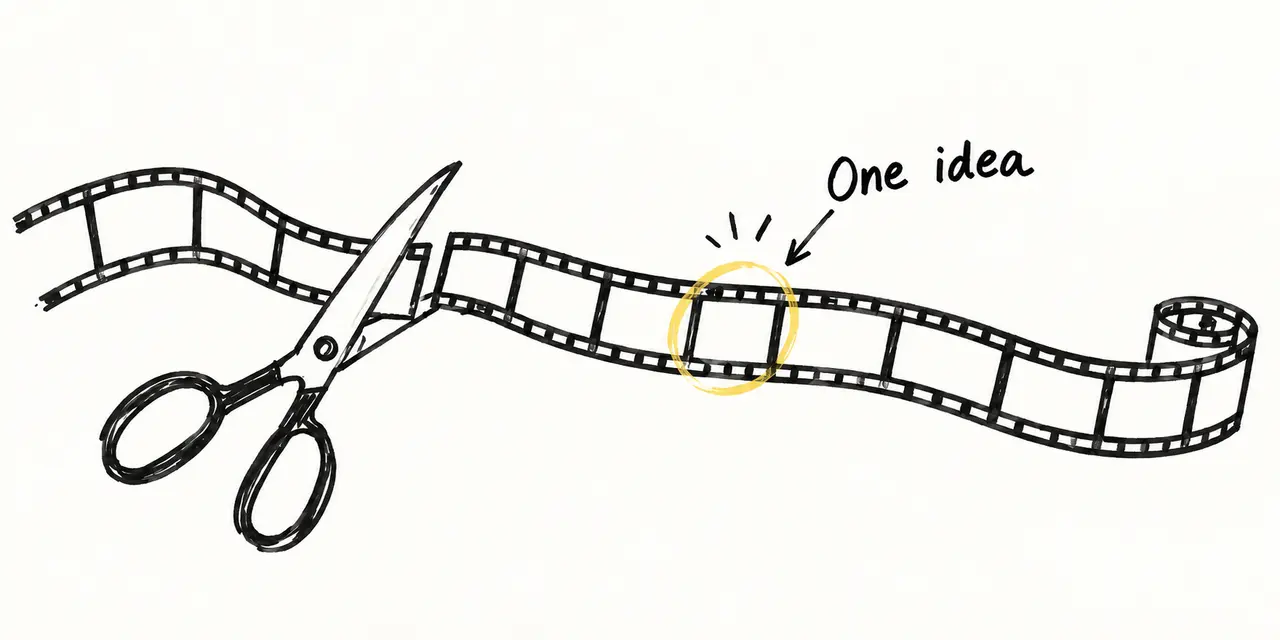
An hour-long conversation may produce several strong short videos. But an expressive line does not guarantee a suitable clip. In the full episode, viewers know the question and previous example. In the Shorts feed, they arrive halfway through a thought. Editing needs to restore enough context for the answer to make sense.
I start with substance: who needs this clip, what they will understand and how the speaker supports the conclusion. Then I choose the opening, necessary explanations and ending. The length follows the idea.
What to look for in the transcript
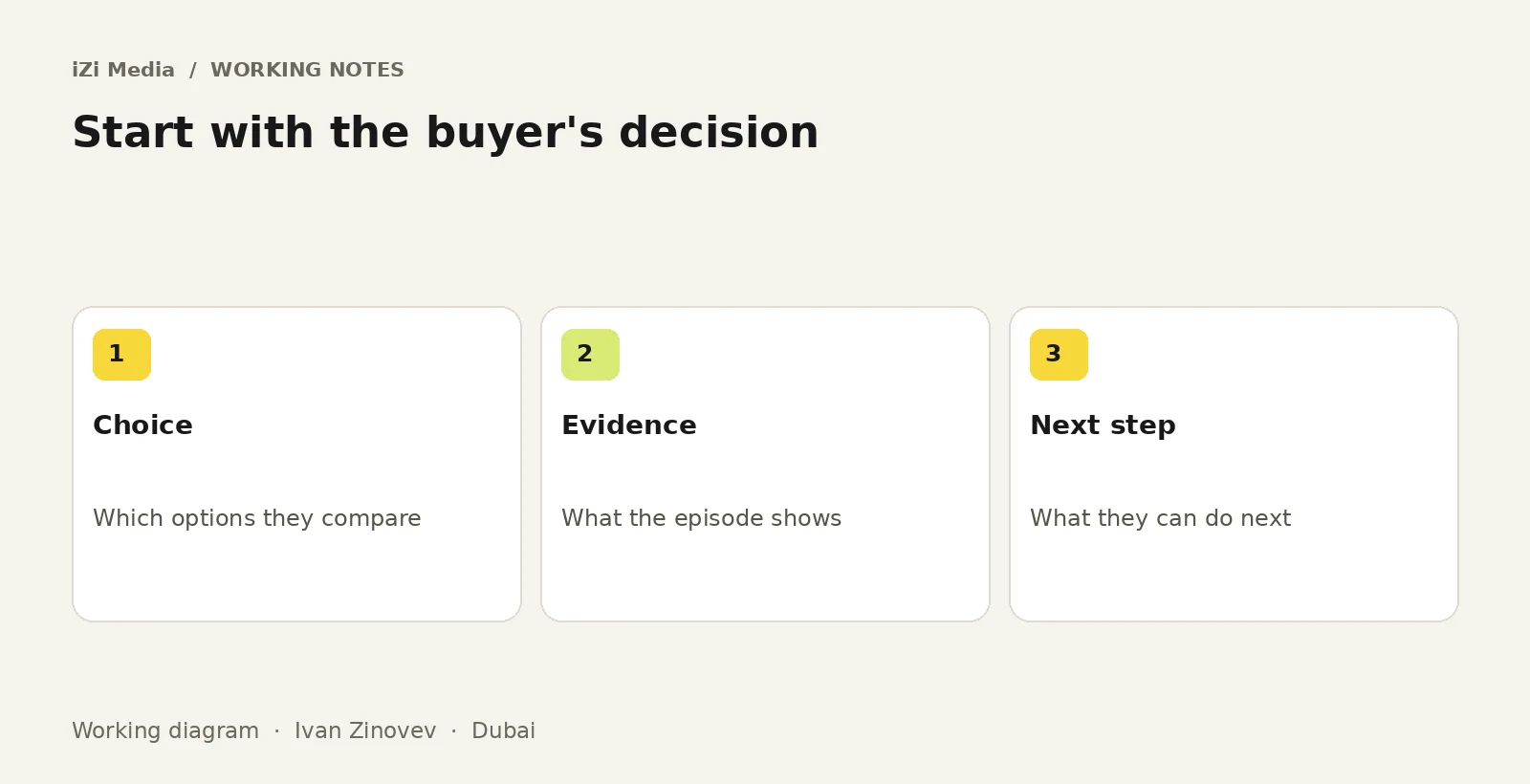
Good candidates include a decision with a clear reason, a specific mistake, a demonstration, a debatable claim with an argument or an answer to a frequent client concern. An episode showing how someone chose between alternatives is particularly useful.
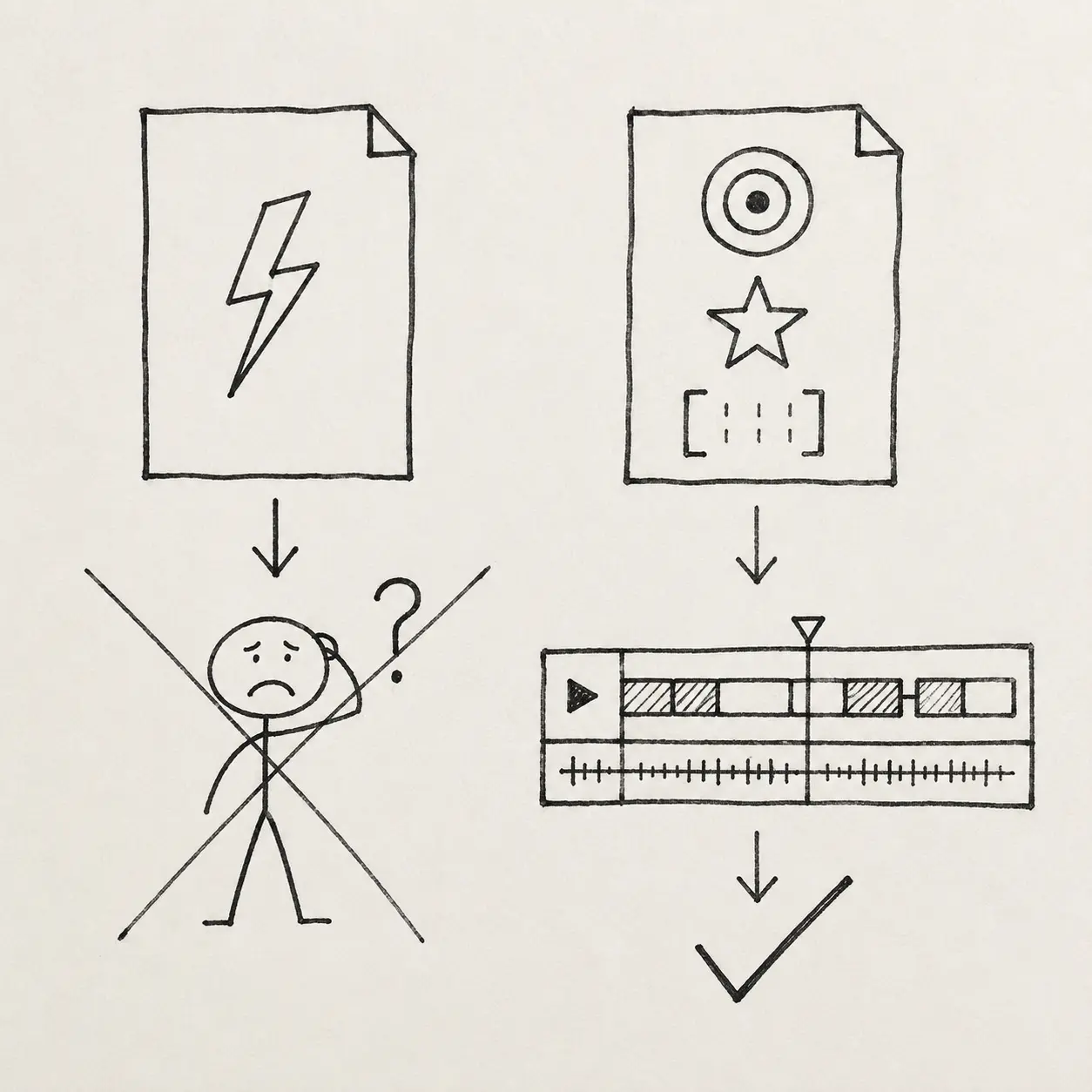
Review the recording and create candidate cards: timestamp, viewer situation, main idea, supporting example, missing context and ending. This gives the editor more direction than “find something interesting”.
Plan for those episodes while preparing the conversation. After the speaker explains an important idea, ask for an example or a concise conclusion. The request should improve clarity while preserving meaning.
Selecting one answer
The following answer was invented for this illustrative exercise: “We turned down the job because the client wanted to start renovating while the design was still changing. Any new revision could affect work already completed. We suggested agreeing on the decisions first, then starting on site.” It demonstrates an answer’s structure; it is not an iZi Media client story.
Use it to make a short video about why the company rejected the job. Name the situation at the start. Explain the risk and show the decision. The closing line could suggest what a client should check before starting. Keeping only “we turned down the job” promises a story without delivering it.
Restore the necessary context
Listen to the clip without the rest of the episode. Is it clear who is involved? What do “this”, “there” and “then” mean? Which question is being discussed? If meaning depends on earlier minutes, include a short part of the question or find a standalone opening in the recording.
A caption can identify the subject, but it must not invent a fact or strengthen the conclusion beyond what was said. Do not turn “in this case” into “always”, remove a significant qualification or splice answers to suggest that someone said the opposite.
Keep the selection grounded in the material
Separate strong candidates, clips needing more work and material useful only within the full episode. The proportions will vary between conversations.
If you need a regular volume, plan it before filming: several standalone topics, specific examples and time for clear answers. An extra question on set may be more useful than trying to rescue a random fragment in the edit.
What to give the editor
The clip card should contain the original timestamp, purpose, suggested opening, mandatory parts, acceptable cuts and materials to show. Add vertical framing and subtitle checks. A standalone idea matters more than mechanically changing the shot every few seconds.
Start approval by watching without the full interview. Then compare the cut with the source: have the conditions, words and meaning survived? Check sound, framing, captions and spelling afterwards.
Where to send the viewer next
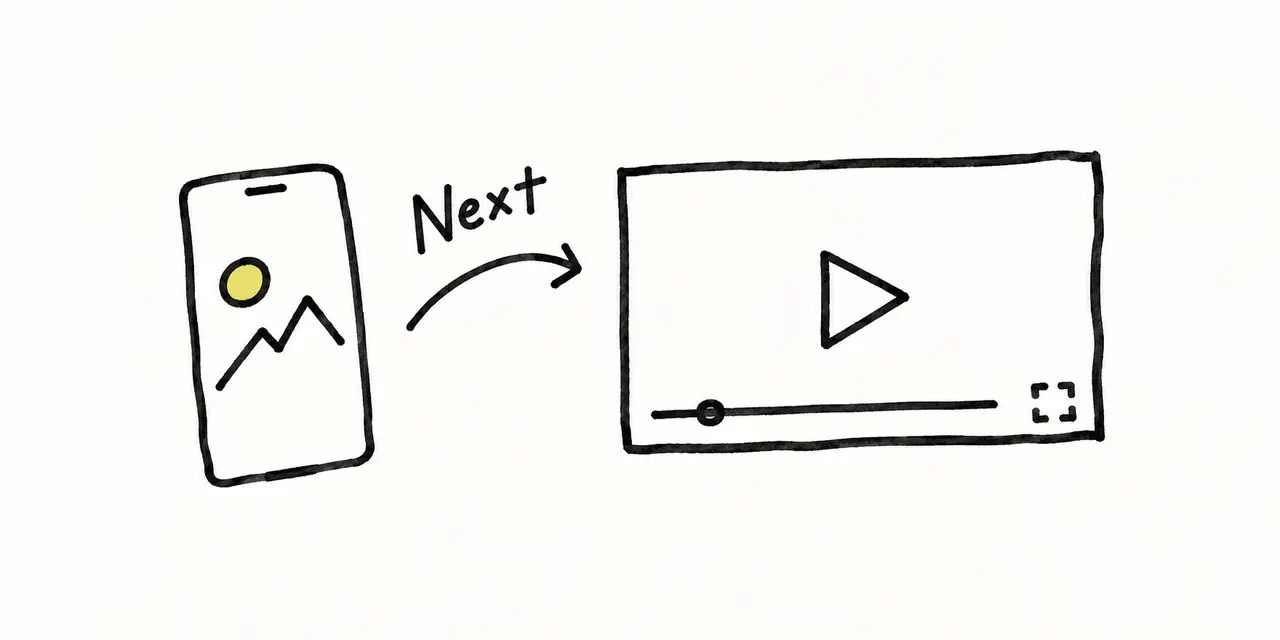
Some clips benefit from a continuation in the full episode. YouTube lets you add a “Related video” from your channel to a Short; this requires advanced feature access. The selected video must be public or unlisted. The link helps viewers find the continuation, but a click is not guaranteed.
The full episode should develop the question raised in the short video. If the clip fully solves the viewer’s task, the answer alone may be enough. Choose the call to action for the content and purpose.
How to assess published clips
Compare videos with similar purposes and formats. Check how viewers start and continue watching, where they leave and what they ask. For a business, record relevant enquiries separately.
Since 31 March 2025, Shorts views count starts and replays without a minimum watch time. YouTube retains “Engaged views” to assess continued viewing. The total counter therefore does not represent the number of people who watched attentively and became interested in the service.
If you already have an interview, send me the recording or a link and tell me what the video needs to achieve. I can help select clips, prepare editing briefs and connect the short videos with the rest of the channel. If you haven’t recorded it yet, we’ll start with the questions and structure.
Sources: YouTube Help on related videos and Shorts view counts. Continue with interview preparation, business podcasts, editing briefs and tracking YouTube enquiries.