HomeArticlesProduction partners
A studio client wants a fully produced podcast: who owns the content?
Add editorial preparation to studio recording: questions, interviewer, timing, short clips and a clear handoff.
In this article (7)
A client asks a studio: “Do you have two cameras, microphones and a good-looking set? Great. Can I just come in and record a podcast about my business?” Before booking, ask who will prepare the topic and lead the conversation.
Studio offers vary. Some already include a producer and interviewer; others provide technical recording or optional editing. Check the actual scope. “Fully produced” only becomes clear when the tasks and deliverables are listed.
I am Ivan Zinovev, producer at iZi Media. This guide sets out a way to discuss adding editorial work to a studio recording. It is a proposed working arrangement, not a claim that I already have a partnership with a particular studio.
What to establish at the first enquiry
Ask the client to describe the purpose without naming a format. “I want a podcast” might mean a conversation for prospective buyers, a partner interview, the founder’s story or a set of answers for a website. That affects questions, participants, length and editing.
Work through five points: who the recording is for, what the viewer should understand, who speaks, which examples support the conversation and what is needed afterwards. If the client cannot answer, schedule a preparation meeting before paid studio time. Its outcome should establish whether the project is ready to record.
Business purposes and deliverables are covered in the business podcast guide for Dubai. Here, the priority is arranging the joint work so every stage has an owner.
When an interviewer is useful
A prepared speaker with a checked script can record a direct-to-camera video. An interview needs someone who listens, follows up, returns to the topic and recognises when an example has been explored enough. A question list on the table cannot do that by itself.
An interviewer is especially useful when an owner speaks confidently in everyday life but switches to presentation language on camera. Start with a specific incident: “Think of a moment when you rejected the usual approach.” What matters next is the speaker’s answer, rather than mechanically moving to the next item on the list.
The producer may lead the interview or prepare another interviewer. Decide that separately in the scope. If the studio already has an interviewer, my contribution may be limited to the topic, structure and review of the result.
What to prepare before the studio slot
Editorial preparation includes the purpose, working topic, conversation blocks, questions and relevant examples. Discuss which incidents the speaker is willing to share, what needs checking and which names or documents must remain private.
Word-for-word answers are not always necessary. Facts and prompts are often enough: situation, decision, reason and consequences. A rehearsal reveals where the speaker becomes vague and which follow-up helps. Use the interview question guide to prepare.
The studio confirms the technical side: equipment, crew, sound monitoring, available time, backups and file delivery. The client appoints someone to check facts and authorise use of the material. If an editor is involved, they receive the structure and brief in advance.
How to allocate recording time
An hour booked is different from an hour of finished conversation. Ask the studio whether setup is inside the slot and how much time remains for recording.
An illustrative 90-minute plan might allow 15 minutes for setup and checks, 10 for a warm-up and test answer, 45 for the main blocks, 15 for follow-ups and clearer takes, and 5 to finish. This is a discussion example, not a standard or a description of any studio’s terms. If the location needs more setup time, adjust the plan before booking.
Within the conversation, separate essential blocks from optional questions. For example: the viewer’s problem, the speaker’s decision, a concrete story and the limits of the advice. If the first story runs long, the interviewer drops optional questions while keeping the essential material. They should not discover two minutes before the end that the guest’s biography used up the whole session.
Who chooses the short clips?
Discuss clip numbers together with their purpose. “Cut ten clips” does not explain which ideas should stand alone. Preparation can include questions likely to produce self-contained answers, but select the excerpts from the actual recording.
The producer or editor proposes excerpts with timestamps, topics and necessary context. The client checks facts and whether publication is permitted. The editor assembles the agreed versions. If a striking line changes meaning without the explanation beside it, a strong opening alone cannot justify using it. See the criteria in the guide to Shorts from interviews.
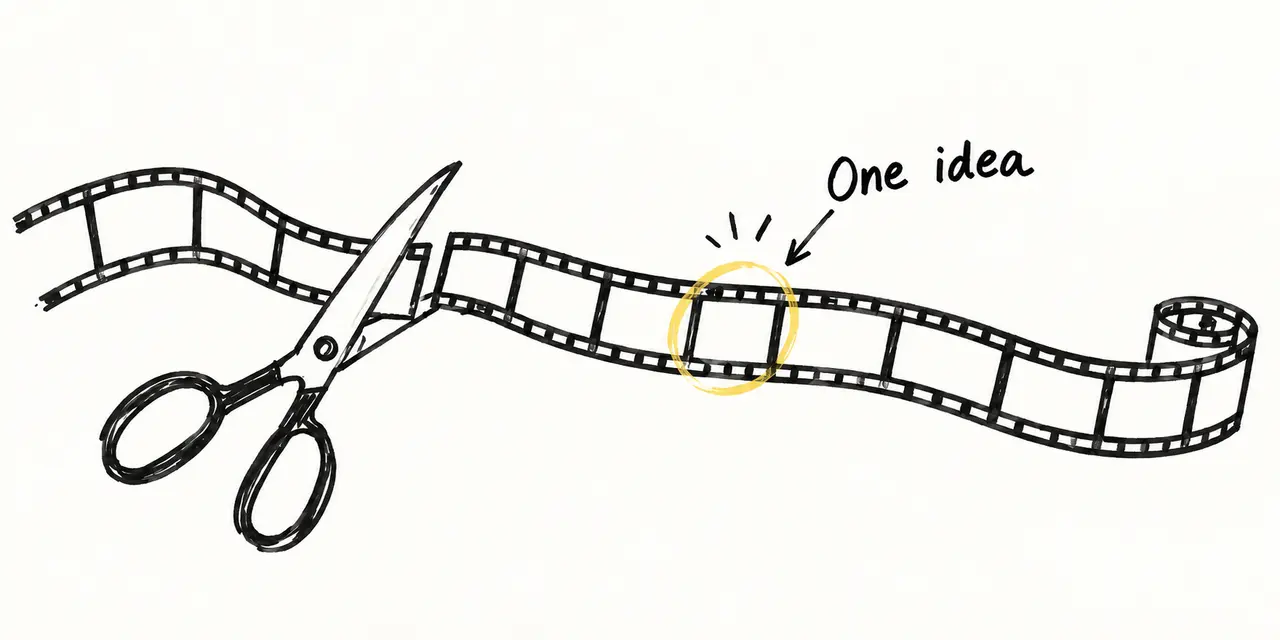
One conversation may contain three strong standalone answers; another may contain more. If the order requires a fixed number of pieces, agree how to make up any shortfall: additional answers, a separate recording or a change to the package.
What to hand over after recording
What you hand over depends on the agreed scope. If the project includes editing, document:
- The source footage, audio tracks and their location, if included in delivery.
- The episode plan and marked versions of useful answers.
- Timestamps for selected short excerpts and notes explaining them.
- Names, numbers and statements still awaiting verification.
- The edit version, review format and deadline for one consolidated revision list.
- The person approving the final version and the storage arrangements.
When a studio sells recording only, editorial selection, titles and publishing should not automatically become its responsibilities. Name those tasks and assign an owner. Agree file access, retention periods and whether source footage can be handed to a third party.
How to agree on client communication, payment and repeat work
Two arrangements are possible. In the first, the studio remains the main contractor: it assembles the proposal, receives the client’s payment and pays the producer for the agreed work. In the second, the studio introduces the producer, and the technical and editorial scopes are discussed and paid separately. These are options for negotiation, not published rates or existing iZi Media agreements.
In either arrangement, define who speaks to the guest, who can change the scope, who receives revisions and how the next episode is commissioned. A producer may need direct access to the guest for preparation even when the studio keeps the commercial contact. Make that clear to everyone involved.
Keep the first joint order to one episode. At the review, check whether the content was ready for the slot, the time was sufficient, the editor received a usable brief and feedback arrived as one list without contradictions. That provides a better basis for deciding on recurring work.
If your studio has a request like this, send the client brief, your service scope and the intended recording deliverables. Discuss the editorial part through YouTube production. The YouTube launch case study describes preparing pilot videos. A filming team can read how a camera crew can bring in a producer; an agency can read how to organise project-based involvement.