How to start a business YouTube channel in Dubai
Start a business YouTube channel in Dubai: choose the audience and language, prepare a first series and track how viewers become enquiries.
In this article (11)

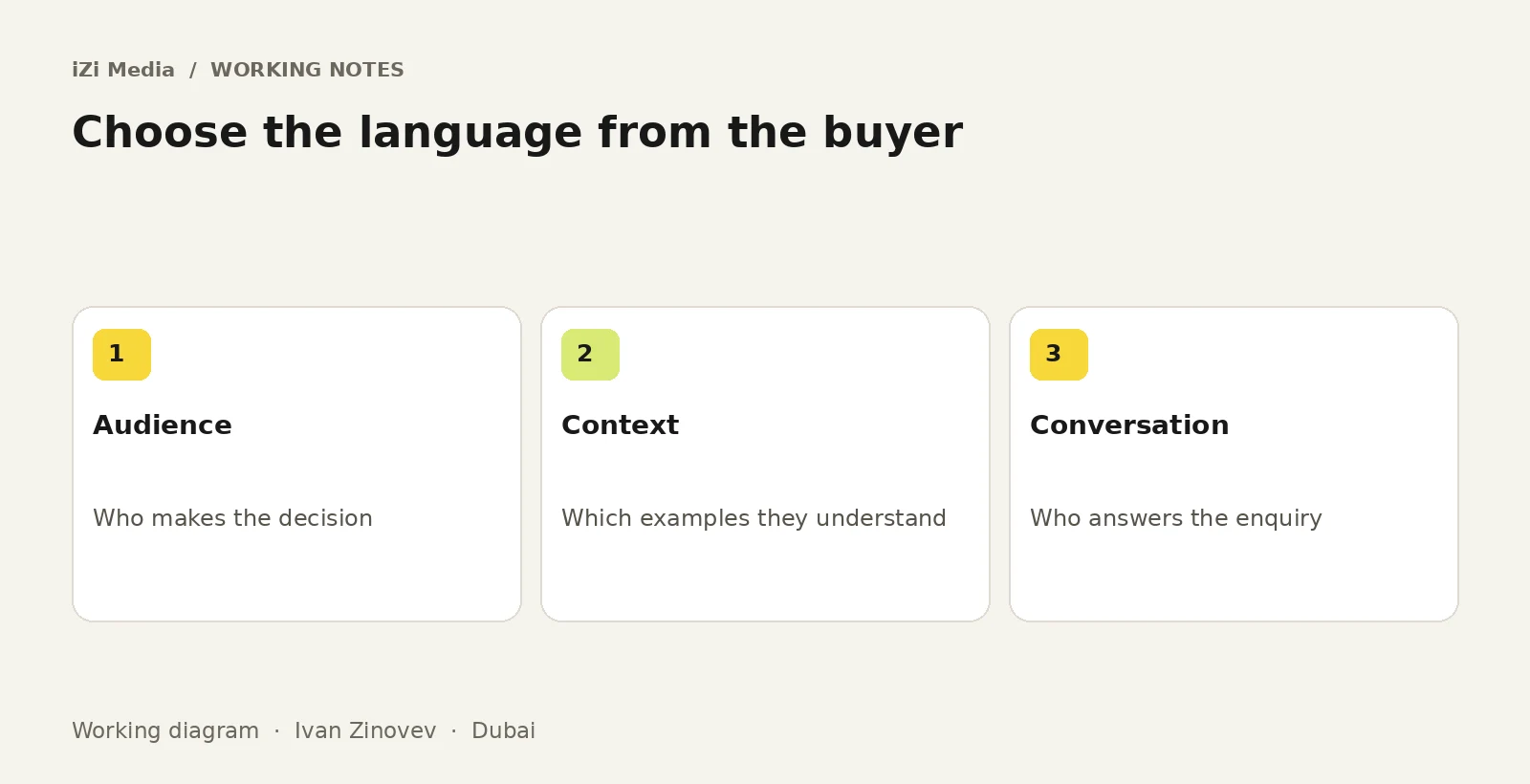
Start a business YouTube channel with a small series for one audience. Choose questions customers ask before buying, prepare examples and test the delivery in a short recording. Before booking the shoot, choose the channel’s language and assign someone to take each video through to publication.
The first series gives you something to assess: which topics viewers choose, where they stop watching and what they ask afterwards. You need a prepared speaker, clear sound and editing. Choose a number of videos that fits the expert’s and team’s available time.
I’m Ivan Zinovev, founder of iZi Media. I help businesses and experts launch and develop YouTube channels. Being based in Dubai lets me take part in local preparation and filming while organising some work remotely. For a business in another country, the starting point is similar: understand the viewer and show your work through specific material.
Choose a person and situation for the first video
“Our channel is for entrepreneurs” leaves too many possibilities. An owner with an established sales team watches for different reasons from an expert selling their first consultations. Someone who has moved their business to the UAE may be figuring out local partnerships, hiring and operating conditions.
Choose a situation in which a person would want to hear from you. A property buyer is comparing Dubai neighbourhoods before relocating. An owner wants to hand over apartment management. An expert is choosing a format for a first product. A manager is looking for help publishing videos regularly.
For each situation, decide what the viewer should be able to do after watching. A neighbourhood video could show how to check daily journeys before a move. A service review could explain specific changes to an offer. This tells you what material to show on screen.
Collect material from client conversations. Take recent discussions and write down the questions, doubts and decisions people postponed. Remove names and personal details. You now have material for the first videos and language for their titles.
Russian or English for a Dubai YouTube channel?
Choose the language according to the audience and how your business works with customers afterwards. Russian can help you explain detail naturally to Russian-speaking buyers. English makes sense when viewers research the subject, watch videos and communicate with sales in English.

| Situation | A sensible starting point | What to prepare |
|---|---|---|
| Most customers speak Russian | A Russian-language series | Their questions, examples and a clear invitation to contact you |
| Your company sells to an English-speaking audience | An English-language series | English editing and customer support |
| You have two distinct customer groups | The priority audience first | Separate topics and success criteria for the second language |
| The expert is more fluent in Russian but the audience is international | Choose after a test recording | Compare English delivery with adaptation options |
You can film in Dubai and serve customers worldwide. State your location and whom you work with in the channel description and contact details. Mention the city in a video when it affects the explanation, such as comparing neighbourhoods or arranging a local shoot.
For bilingual content, think about navigation, packaging and viewer expectations. Separate playlists can organise the series. Whether a second channel makes sense depends on differences in topics, audience and resources. Record short samples to assess how confidently the speaker explains the subject in each language.
What should the first series cover?
Build the first series around a buying decision. Choose questions that need their own explanation and find supporting material from your work. A comparison of options and a detailed project breakdown can complement each other when they address the same customer.
Here is an illustrative series for a property agency. Each topic needs current evidence and the agency’s own material.
| The video’s job | Sample topic | What to have ready |
|---|---|---|
| Help someone choose | How to compare two apartments for your needs | Criteria and two checked examples |
| Explain a decision | Which costs to include when renting out an apartment | An up-to-date calculation with sources and conditions |
| Show the work | How a particular transaction progressed | The story, stages and material cleared for use |
| Explore a customer’s situation | What a family should check before choosing a neighbourhood | Journeys, needs and constraints |
| Introduce the company’s approach | How we select properties around a buyer’s needs | Actual steps and service scope |
An expert channel can examine a recognisable situation from a psychologist’s, teacher’s or consultant’s work and explain the approach. State which conditions affect the result. For health, finance and legal subjects, identify claims needing professional review and sources before recording.
Prepare the title, thumbnail concept and opening before recording. Instead of a broad introduction to a market, begin with two options the customer is considering and explain how you will compare them. The viewer has a reason to keep watching.
Prepare the speaker for the first recording
Before writing the script, record a short interview about a specific situation. Ask what happened and why the expert chose that course of action. Follow up on details a viewer would need to understand the decision. Use the recording to build an outline in the speaker’s own language.
Some speakers work confidently from a short outline. Others need detailed questions. When wording must be precise, prepare those passages verbatim. A test recording shows what helps this particular person.
Break a long explanation into sections. Prepare examples, images, objects or a screen the speaker can use. Leave room for follow-up questions during filming; those often produce the clearest answers.
For an initial expert video, I first check the sound, framing, delivery and content. The choice of camera follows the recording conditions. You can test a format with available equipment in a quiet room. A complex location, several speakers or a product demonstration calls for an appropriate crew.
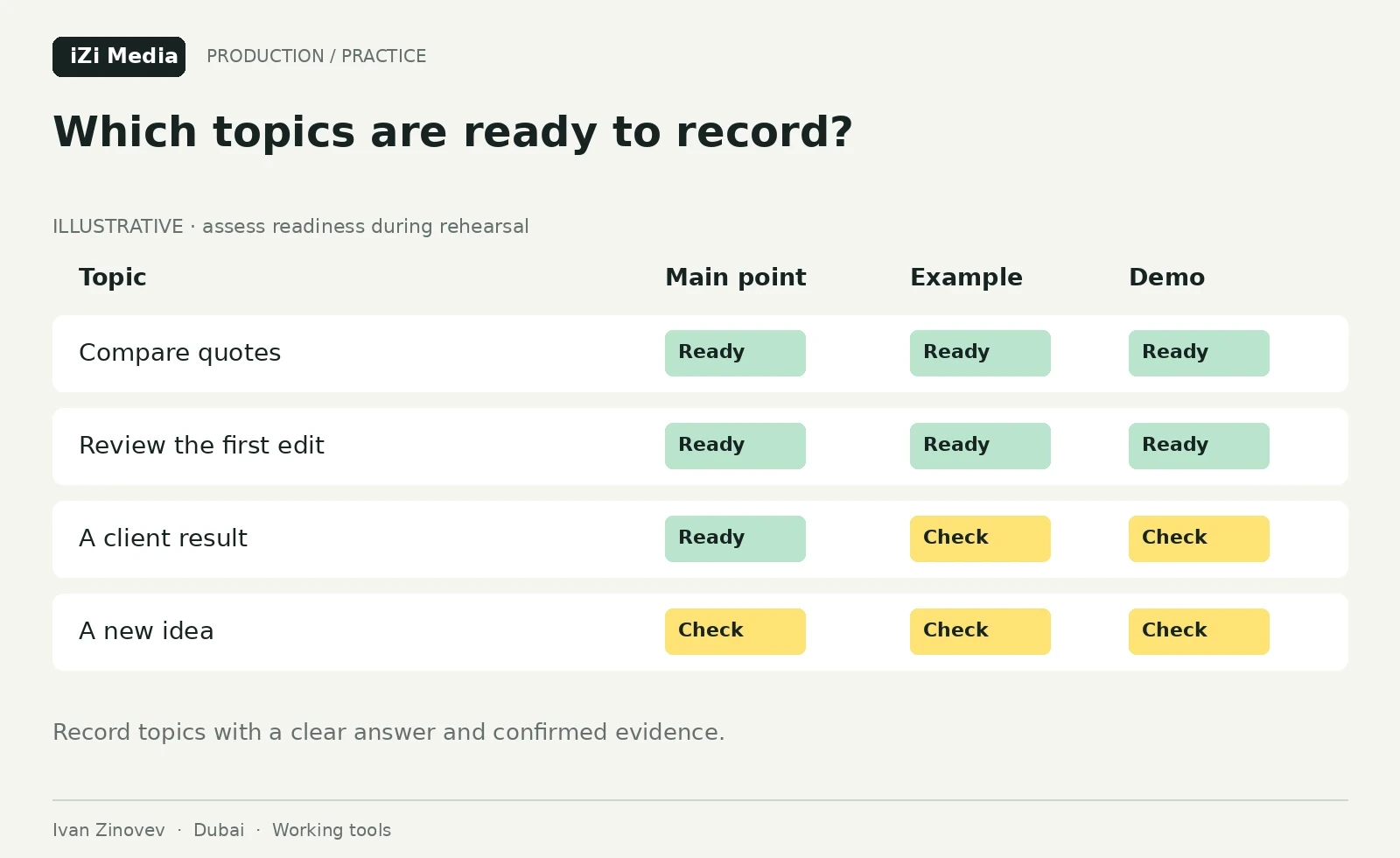
Once the first topics are ready, build a batch filming plan: readiness checks, recording order and editor handover.
Prepare your first script with AI
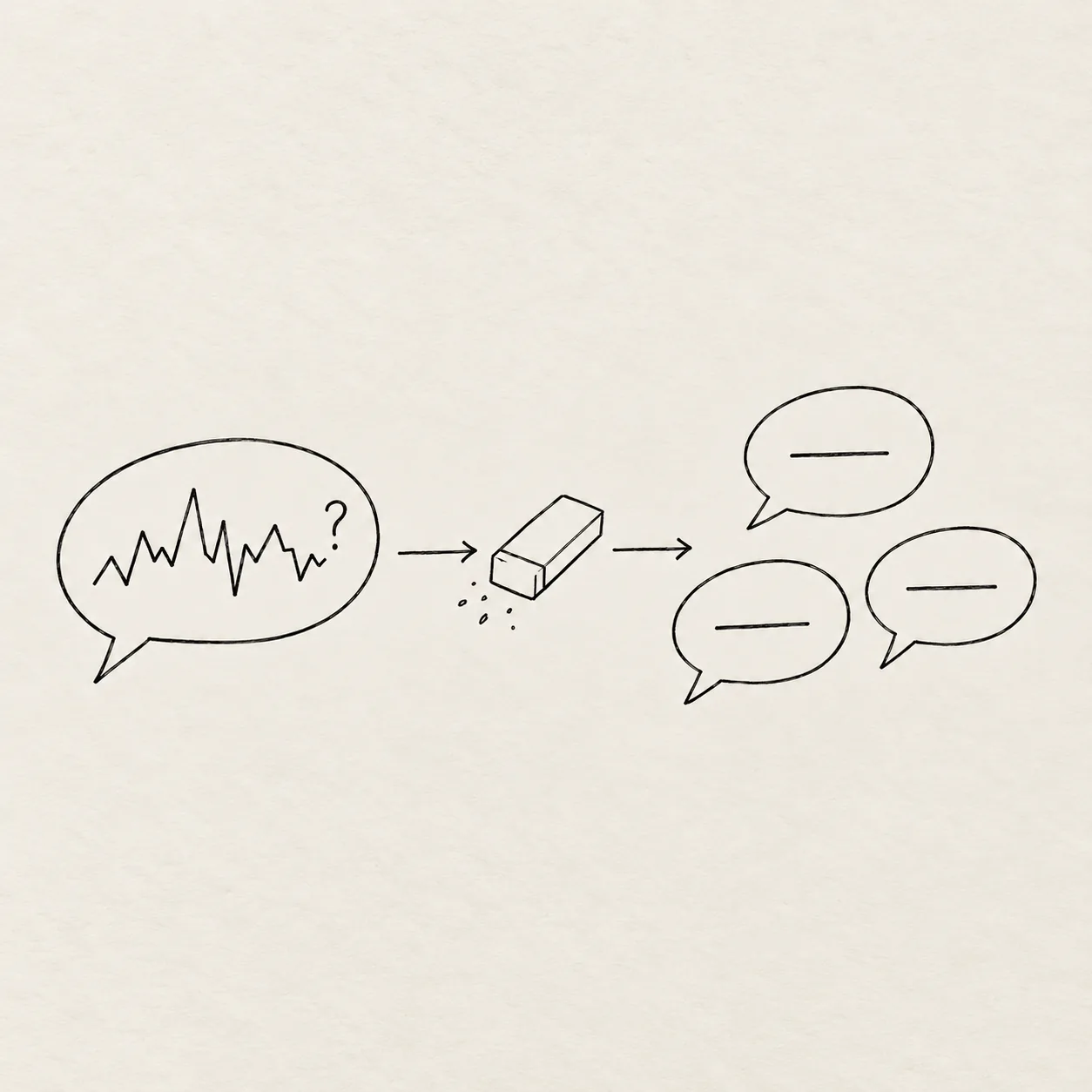
Give the tool an interview about your work. Record a conversation about a real customer decision: what they wanted, the options you considered, why you chose one and what evidence you can show. Remove personal information and material needing separate approval before processing it.
Here is a practical instruction:
Work from this transcript. Find situations in which a customer chose between options. For each, identify the source passage, timestamp and viewer question. List separately the places where an explanation needs another fact or example. Preserve the speaker’s wording; mark missing information as “clarify”.
Check the AI response against the recording, including quotes, qualifications and examples. Choose one topic from the verified material. You can then request an outline that moves from the customer’s situation and options to the expert’s explanation. Check that every section has material to support it.
For an AI-suggested title, find the exact passage that delivers its promise. If none does, revise the title or collect more material before filming. I discuss preserving the author’s voice in why experts start sounding like everyone else on YouTube.
Realistic scenes generated or meaningfully changed with AI require disclosure under YouTube’s rules. The guidance treats assistance with outlines, titles and captions separately from realistic synthetic scenes. Check the conditions for your particular material before uploading.
Organise the first month
Leave time in the first month for a test recording and a review of published videos. The sequence below is an example; timing depends on the speaker, other participants and complexity of the material.
| Stage | What happens | What should be ready |
|---|---|---|
| Preparation | Choose the audience, offer and first series | Topics, material, outline and responsibilities |
| Test recording | Assess delivery, sound and format | A sample and a list of changes |
| Main recording | Film the agreed videos | Footage, supporting shots and editing notes |
| Publishing | Finish the edits, thumbnails, descriptions and next step | Published videos with checked links |
| Review | Examine viewing behaviour and enquiries | Decisions for the next series |
Four long-form videos in a month can be a starting point if the material is ready and the team can complete that volume. A complex documentary format needs a different schedule. Check the expert’s preparation time and editing capacity before committing to regular videos.
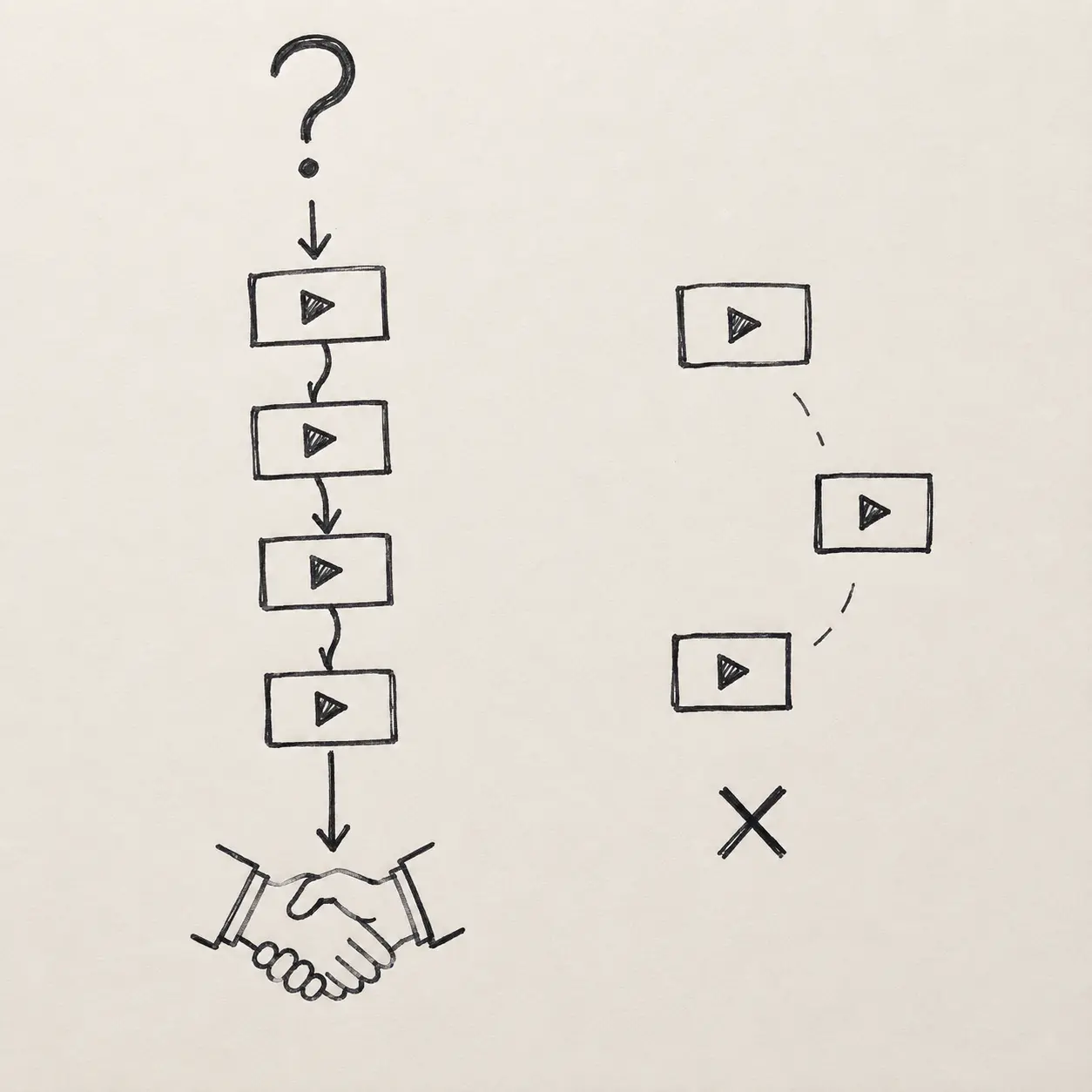
Connect the first videos by subject. After comparing options, offer a detailed examination of the one that interests the viewer. Choose a continuation that answers a question raised by the current video. Read more in the channel as a content library.
Use Shorts alongside longer videos
A short video should make sense to someone meeting you for the first time. Choose one point, explain the situation and take it to a conclusion. A long recording may contain several such stories; another topic may need its own short recording.
Decide what the Shorts should do. They can introduce the expert, demonstrate a technique, answer a question or lead to a deeper explanation. Choose their content and next step accordingly.
If you also publish on Reels or TikTok, review the presentation, captions and links for each platform. A 9:16 frame suits vertical video, while the content and route to the next step should fit the place where it is published.
Report long-form videos and Shorts separately. They may attract different audiences and serve different viewing needs. Compare each group with enquiries whose sources you have been able to establish.
How YouTube can contribute to customer acquisition
Give the viewer a clear next step. After a video about choosing a service, invite them to discuss their own situation. Explain where to contact you, what information to send and what happens afterwards. Test that path on the phone a viewer might use.
In one of our Dubai property projects, the first month included four long-form videos and twenty Shorts. The project recorded five leads and two clients. The Shorts opened with stories about notable deals, major brands and celebrities. The longer videos brought out the speaker’s character. When he challenged a point I made, drew a diagram or worked through a calculation, I let the conversation develop. Viewers could see his own explanation. The Dubai real-estate case study describes the approach.
In that project, stories were used to introduce property topics. The figures apply only to that project and cannot predict another channel’s results. To assess a different channel, you need its offer, enquiry sources and sales data. Compare clicks and messages with customer records.
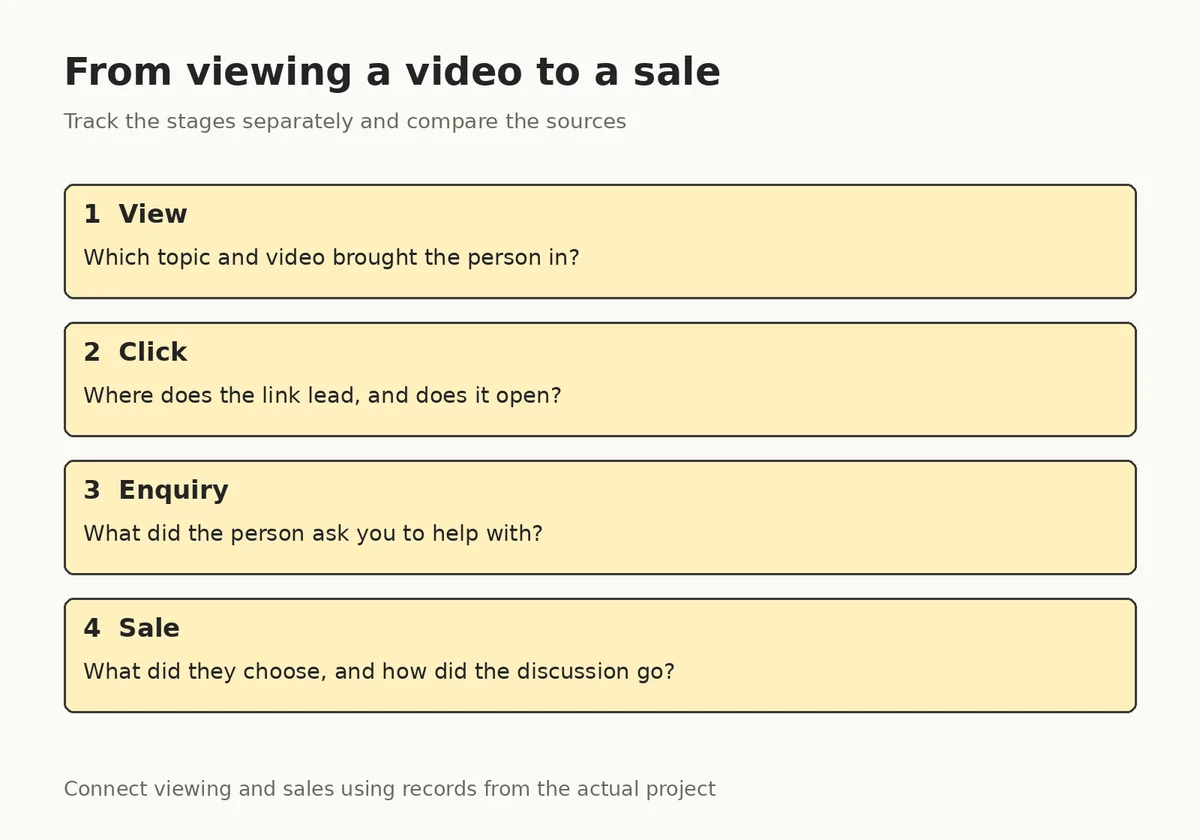
Put a clear, trackable link in the description. Ask which video brought the person in when they contact you. In customer records, separate an initial enquiry, a suitable need, a meeting and a sale. That gives you a useful basis for discussing the channel’s value.
Which metrics should you review after publishing?
First check whom the video reached and where views came from. Then examine clicks and viewing over time. This helps avoid changing a thumbnail simply because the video has reached a broader audience.
| What you see | What to examine |
|---|---|
| Impressions but few clicks | Topic, clarity of the title, thumbnail and impression source |
| People click on the video and leave quickly | Whether the opening fulfils the promise and the pace of the explanation |
| Views but few enquiries | Audience, offer, link and contact experience |
| Enquiries but few sales | Fit between expectations and the service, and enquiry handling |
| One topic performs much better | Who watched it and what continuation would help them |
The table suggests what to investigate; it does not establish the cause. YouTube’s guidance on impressions and CTR discusses audience and traffic source. CTR can fall as a video reaches new viewers.
The title, description and content help explain the subject. Fill tags sensibly: YouTube’s tag guidance describes their limited role and usefulness for common spelling variations. Spend the main effort on the topic, title, thumbnail and video itself.
Questions before launching
How should an expert start a YouTube channel?
Choose a customer situation you can explain usefully. Prepare an example, conversation outline and next step. Record a sample, assess the delivery and build a small series for one audience.
Can I start filming with a phone?
Yes, in suitable recording conditions. Test sound, light and a stable frame. Add equipment and an operator as the filming becomes more complex or the delivery requirements grow.
How much time does the business owner need to spend?
Allow for a preparation interview, topic approval, filming and reviewing finished material. The time depends on the format and how many decisions the team handles. Agree this before starting.
When should I expect the first customers from YouTube?
There is no single timetable. It depends on the audience, offer, content and sales process. From the first videos, track clicks and enquiries, and ask prospective clients which videos they watched. As data accumulates, assess which videos contribute to their decision.
Prepare your first video
Send me a description of the business, your customers’ language and a few questions they ask before buying. Add the channel link if you already have one. At iZi Media, we can discuss the first series and production scope. Start on the YouTube production page.
Continue with choosing a producer and building your team.
If you plan to serve two audiences, choose the language model before filming. The Russian and English YouTube guide covers adaptation, team roles and trial-series review.