HomeArticlesClinics and doctors
Video Content for Dubai Clinics: Doctors, AI Avatars and Costs
Organise clinic videos with clinical review, live filming, authorised AI avatars and language versions. A worked budget for 30 short videos in Dubai.
In this article (10)
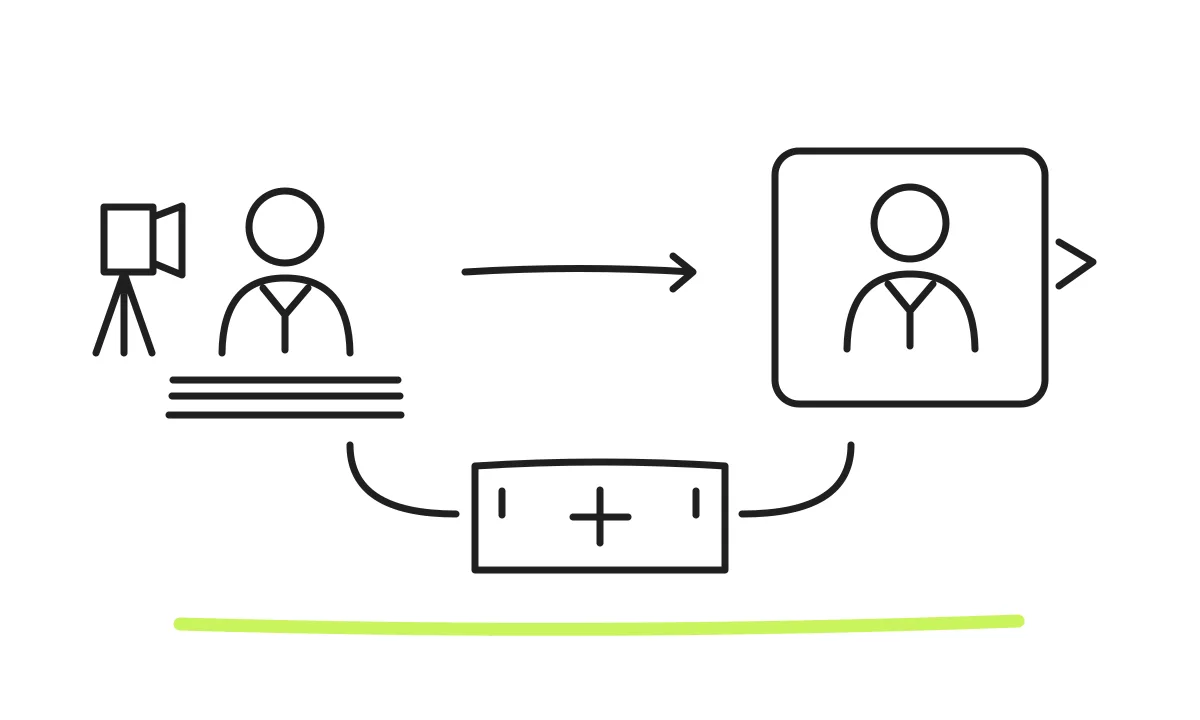
A clinic has doctors, useful topics and patients who need clear explanations. Yet every video depends on arranging another recording: finding a gap in the doctor’s schedule, preparing the speaker, setting up and recording several takes. When filming moves, the content calendar moves with it.
I’m Ivan Zinovev, a YouTube producer and content strategist at iZi Media in Dubai. My experience includes paediatric, family, adult and longevity healthcare. I have worked on a production process where the team prepares material, a doctor reviews its clinical meaning, and planned filming can be combined with an authorised avatar and a library of real clinic footage. This guide explains the approach and provides a budget model for a hypothetical clinic.
Start with patients’ questions
Ask doctors and reception staff what people need to understand before booking, what happens at the first appointment, what information to bring and how the clinic explains the next step. Choose topics that match actual services and the individual doctor’s expertise.
A family clinic may need to explain how to access its services. Paediatric content needs to address parents and handle filming involving children carefully. Longevity content can explain how a doctor assesses the basis and limits of a recommendation. These differences should shape the content rather than simply changing the specialty name in a standard script.
An initial series might introduce a doctor, explain the consultation process, answer an administrative question and show what information a doctor needs before recommending a next step. The clinic’s qualified specialist determines and reviews the clinical statements.
Decide what to film and where an avatar fits
An avatar can deliver a prepared explanation that the doctor has reviewed and authorised in their name. Real filming lets viewers meet the person, see the premises and team, or hear an independent answer during an interview.
| Material | Suitable production method | What to review |
|---|---|---|
| A short approved explanation | Authorised avatar and real clinic footage | Script, pronunciation, captions and final video |
| Introducing a doctor and their approach | A filmed interview | Accuracy and preservation of meaning in the edit |
| A clinic tour or team at work | Real footage | Participants’ permissions and details visible on screen |
| A patient’s story or testimonial | An authentic recording with permission | Consent for the particular use and accuracy of the account |
Keep planned live filming in the schedule for new doctors, interviews and current views of the clinic and team. Frequency depends on how quickly the clinic changes and what the footage library already contains.
Agree how the doctor’s likeness and voice can be used
Before creating a digital likeness, agree its purpose, platforms, languages, duration and permitted uses with the doctor. Define who can access it, how approval can be withdrawn, what happens when the relationship ends and how material is removed. The person responsible for applicable contractual requirements should review the agreement.
Each video needs an identifiable script version and a recorded approval. A new claim requires a new approval. Permission to create an avatar does not automatically authorise every generated statement.
In the process I propose, the doctor or a medical editor appointed by the clinic also checks the finished video, including cuts, subtitles, on-screen text and audio. This helps catch changes in meaning introduced after script approval. A realistic AI avatar depicting a doctor delivering generated speech needs the platform’s required disclosure; YouTube provides an AI use setting for this type of content.
Review scripts against clinical sources
For each significant clinical claim, keep its source, review date and relevant conditions. Current clinical guidelines and reviews can provide a starting point; a qualified specialist evaluates individual studies and their relevance.
PubMed helps people search biomedical literature and abstracts. Being indexed there does not make a paper’s conclusion a recommendation for every patient. UpToDate supports clinical decision-making; access and use must follow the subscription terms. The team writes an original explanation and sends the doctor the supporting sources.
A Dubai clinic also needs a separate review of requirements for medical publications and advertising. DHA publishes Standards for Medical Advertisement Content on Social Media. The clinic’s responsible representative confirms the applicable jurisdiction, current requirements and any permissions needed for the specific material. AI-assisted research can support preparation but does not replace this review.
What n8n can help organise
A content record can hold the patient question, doctor, language, script, sources, approval version and files. n8n can move that record between stages, collect responses, send reminders and create the editor’s task. Avatar generation can use an available integration or remain a manual step; automation depends on API access and the selected plan.
The sequence is idea → source research → script → clinical and regional review → doctor approval → generation or filming → editing → final video review → publication approval. Revisions preserve the version history. Publication starts after the required approvals have been recorded.
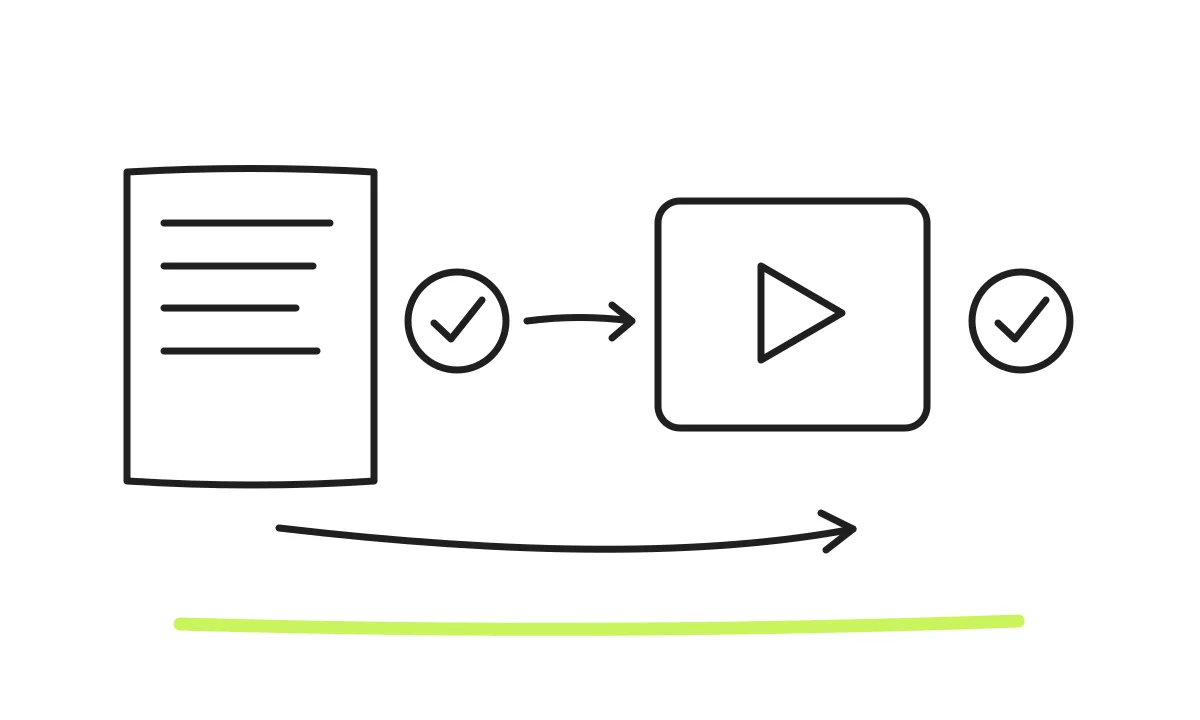
The writer makes the explanation clear, the clinical specialist reviews professional accuracy, the producer owns the format and progress, and the editor assembles and revises the material. My clinic production workflow case study describes the process work behind this approach.
Build a library of real clinic footage
Record rooms, equipment, room preparation, doctors and the team in situations cleared for filming. Tag each file with its subject, participants, permitted uses and the date when its accuracy or permissions should be checked again.
Before sending footage to an editor, remove readable patient records, screens, documents and other personal information captured incidentally. The clinic separately handles the necessary permissions for patients shown, particularly children. Permission to use a doctor’s likeness does not cover patients in the consulting room.
Choose footage that supports the specific explanation. Attractive but unrelated footage should not leave viewers with an incorrect impression of a procedure or room. New team members, equipment and changes to the premises are reasons to refresh the library.
A budget example for 30 short videos a month
This is a model for a hypothetical Dubai clinic, not a reported client result or a fixed iZi Media package price. Both options produce 30 distinct, 45–60 second videos in one language. The hybrid option contains 6 filmed videos and 24 videos using one doctor’s authorised avatar and real clinic footage.
Public price references were checked on 20 October 2026. Designage lists 10 Reels at AED 2,800 and 15 at AED 4,500, including filming, editing and basic planning support. Dubai Brand Films lists 8–12 Reels and photos at AED 8,900 with four production sessions. The scopes differ and do not establish a market average. Our model allows AED 220 per video for conventional filming and editing combined; clinical content preparation and coordination are separate lines.
| Monthly cost in AED | Conventional production | Hybrid production |
|---|---|---|
| Topics, research and scripts | 1,800 | 1,200 |
| Filming and footage refresh | 3,000 | 900 |
| Editing, sound and captions | 3,600 | 2,640 |
| Avatar, automation, AI and storage | 0 | 700 |
| Coordination, approvals and publication checks | 900 | 1,100 |
| Allowance for additional corrections | 500 | 500 |
| Monthly total | 9,800 | 7,040 |
| Rounded cost per finished video | 327 | 235 |
Assumed rates are AED 60 per conventional script and AED 40 with an established preparation process; AED 120 to edit a filmed video and AED 80 for a template-based avatar video. Editing is therefore 30 × 120 = AED 3,600 versus 6 × 120 + 24 × 80 = AED 2,640. Conventional filming allows two sessions at AED 1,500. Hybrid filming allows one AED 2,700 batch session per quarter, averaging AED 900 a month. The assumption is that it yields 18 filmed videos for the quarter and the required footage; the pilot must test that capacity.
These are model assumptions. Lower script and editing costs require repeatable formats, prepared templates and a clearly defined revision scope. Similar organisation can also reduce the cost of fully filmed production. The comparison represents combined process changes rather than the isolated effect of an avatar.
The AED 700 software allowance must be checked against minutes, avatar count, repeat generations and the selected plan. Fully automated API generation can cost differently. Clinical review is performed by the clinic’s doctor; their internal time and salary are excluded from both cash totals. External clinical review, translations, advertising, additional permissions, legal support and VAT are separate. Add a clinical reference subscription if it is purchased specifically for the project.
Under these conditions the difference is AED 2,760 a month, approximately 28%. If all 30 videos still cost AED 120 each to edit, the hybrid budget becomes AED 8,000 and the saving falls to approximately 18%. An already efficient batch-filming operation may save less; extra revisions and higher platform costs can remove the saving.
Assume a separate AED 6,000 setup cost for the workflow, avatar, automations and templates. This is another planning assumption to refine for the actual brief. In the main example, savings recover that cost in about three months. Month one requires AED 14,840, including setup, the full quarterly shoot payment and the hybrid process’s other running costs. At unchanged assumptions, net savings over 12 months after setup are AED 27,120. The doctor’s internal labour cost is excluded.
Measure doctors’ time separately
Recording time and review time are different lines. Before starting, record the actual time spent preparing, filming, approving scripts, reviewing final versions and resolving corrections. Compare those measures after the pilot at the same content volume and participant count.
Shorter recording sessions do not establish a benefit if the doctor spends the difference in lengthy approval discussions. Released hours represent available schedule capacity. Additional revenue requires evidence of actual extra appointments and their associated costs.
Adapt videos for patients’ languages
A longer interview can be adapted with translated speech, captions, titles and descriptions. A reviewer who understands both the language and medical terminology should check the clinical meaning and final audio. I produce in Russian and English; other languages require an appropriately qualified translator and reviewer as part of the agreed scope.
Where available, YouTube lets creators upload additional language audio tracks to one video. Automatic dubbing is a separate feature with language limitations and possible errors; for clinical content I propose review before publication. A separate channel makes sense when the audience and editorial plan differ and someone can maintain it.
Five language versions mean five available versions of the material. Reach is measured through actual viewing, retention and enquiries; the language count is not a views multiplier. The Russian and English YouTube guide explains how audience choice affects the channel.
Start with a small clinic pilot
Choose one doctor, a few common questions and a small test batch. Prepare the permissions, record the avatar and real footage, and take the material through the complete process. Review quality, cost per approved video, doctor hours, revision rounds and the team’s ability to repeat the work.
Then set the monthly volume and the share of material that should remain filmed. The expert batch-filming guide covers recording-day preparation, while the production cost guide explains the wider budget.
To discuss a clinic workflow, we can start with your existing material, doctors’ availability and the purpose of the first series. Those determine the team, the appropriate scope of automation and a pilot budget.