The task
- The aim was to publish regularly without requiring a full recording session with the doctor for every explanation.
- The doctor needed control over clinical statements and use of their likeness. The team needed clear script versions and handoffs.
Workflow development
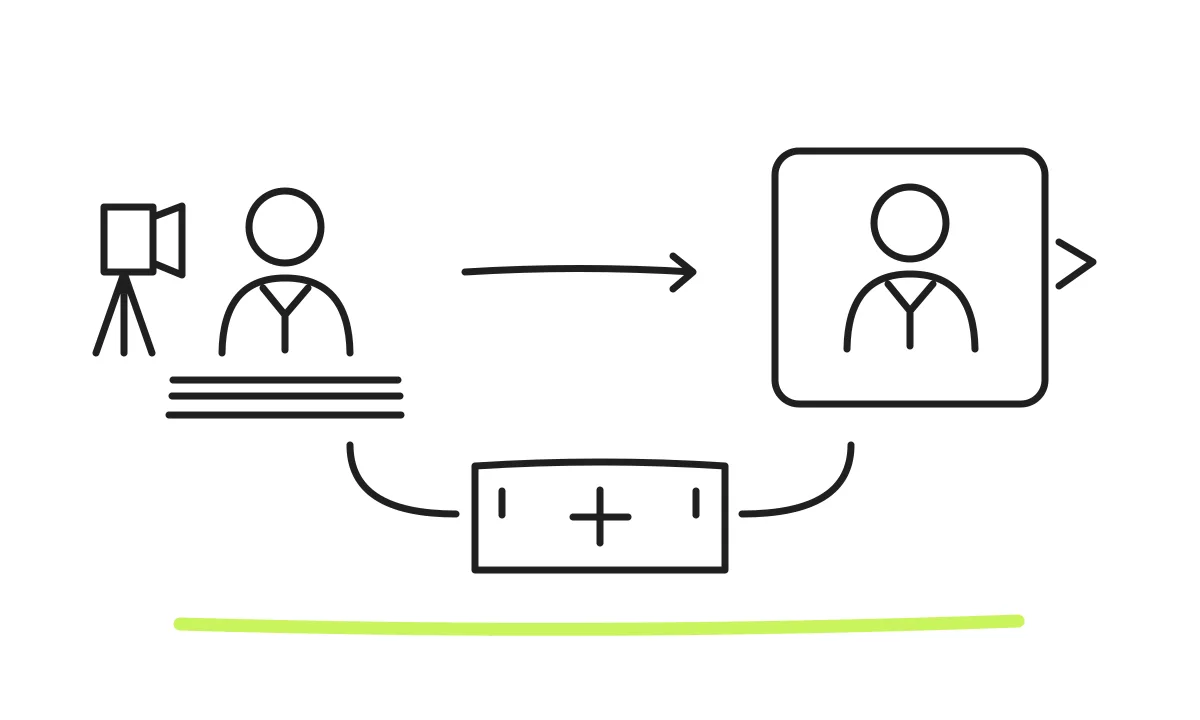
- Developed the sequence from ideas and sources through scripts, review, generation or filming, editing and publication approval.
- Worked on individual automation stages in n8n, doctor avatars and agreements covering likeness and voice use.
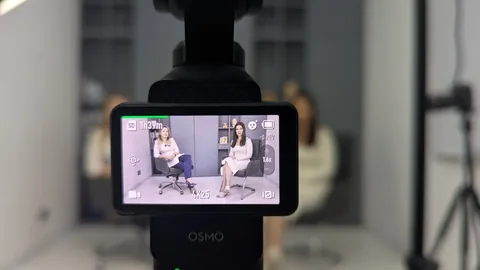
- The process included a library of real clinic, doctor and team footage to combine with approved explanations.
Experience and my role
My experience covers paediatric, family and adult clinics, as well as longevity healthcare, across several projects. This case describes the production approach and workflows I discussed and developed in those projects.
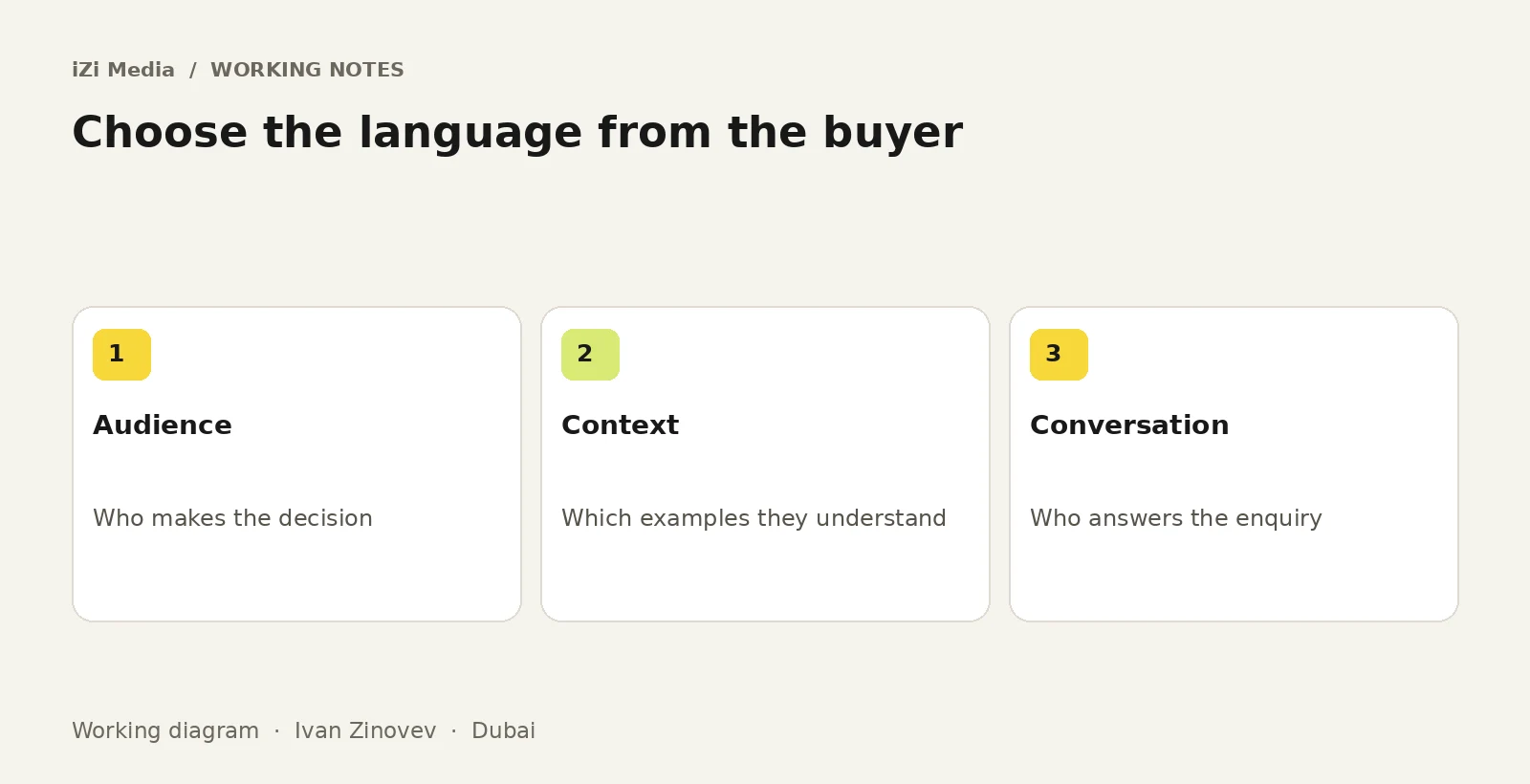
My role was production and workflow organisation: connecting topics, scripts, approvals, footage and the editor’s work. The doctor determines the clinical position.
An avatar authorised by the doctor
The work included an agreement for avatar use. Relevant terms include purpose, platforms, duration, languages and material approval. The intended process sends the script to the doctor before generation so they can review its meaning and authorise delivery in their name.
For a new clinic I extend that process to final video and translation review where applicable. After editing or dubbing, the meaning is checked against the approved version again.
Sources and clinical review
The design includes preparing source material with each script: research literature, clinical guidance and reference material. PubMed searches or UpToDate can support preparation; the doctor assesses the applicability of a claim.
Publication requirements depend on location and content type. A new project needs a responsible clinic representative to review this stage before publication.
Handing over to the team
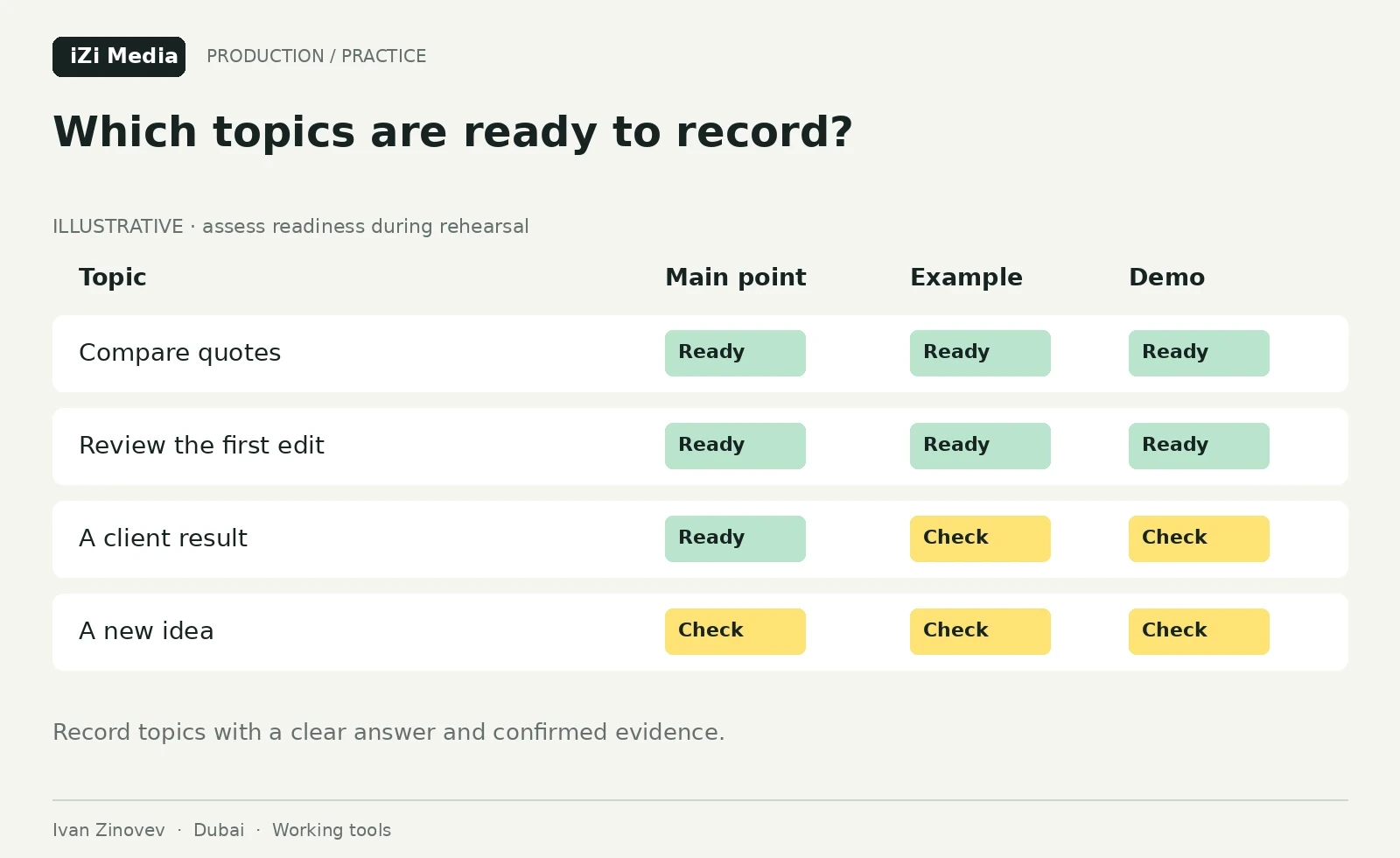
The editor needs an approved script, an authorised avatar version, suitable footage and the purpose of the video. Partial automation helps assemble that handoff and track status. Clinical questions return to the doctor and revisions remain tied to a specific version.
Live interviews, doctor introductions and current clinic filming remain in the plan. Translation and additional audio tracks are separate tasks requiring language and clinical review.
Project status
- Defined an approach that separates preparation, doctor approval, production and pre-publication review.
- The work covered specific n8n configurations, avatars and an agreement with the doctor. This case describes workflow development and individual components. It does not establish that the full workflow was launched or how it performed.
- A new clinic’s economics can be assessed from content volume and scope. The clinic content guide contains a separate worked budget model.
The workflow
- 01Topics and sources
- 02Script and review
- 03Doctor approval
- 04Avatar and footage
- 05Edit and publish
What the result tells us
This is a process case based on my experience across different clinics. Individual project names, dates, locations and outcomes are not disclosed here. The case does not report measured savings, reduced doctor hours or audience growth.
Sources
The case is based on my account of clinic work and individual workflow setup. Internal documents, patient images and client material are not reproduced. Figures in the related guide belong to a separate illustrative budget.