How to spot a content department that has become slow and expensive
How to find waiting time, repeated approvals and costly rework in video production. Includes a sample handoff and a method for reviewing one video.
In this article (5)
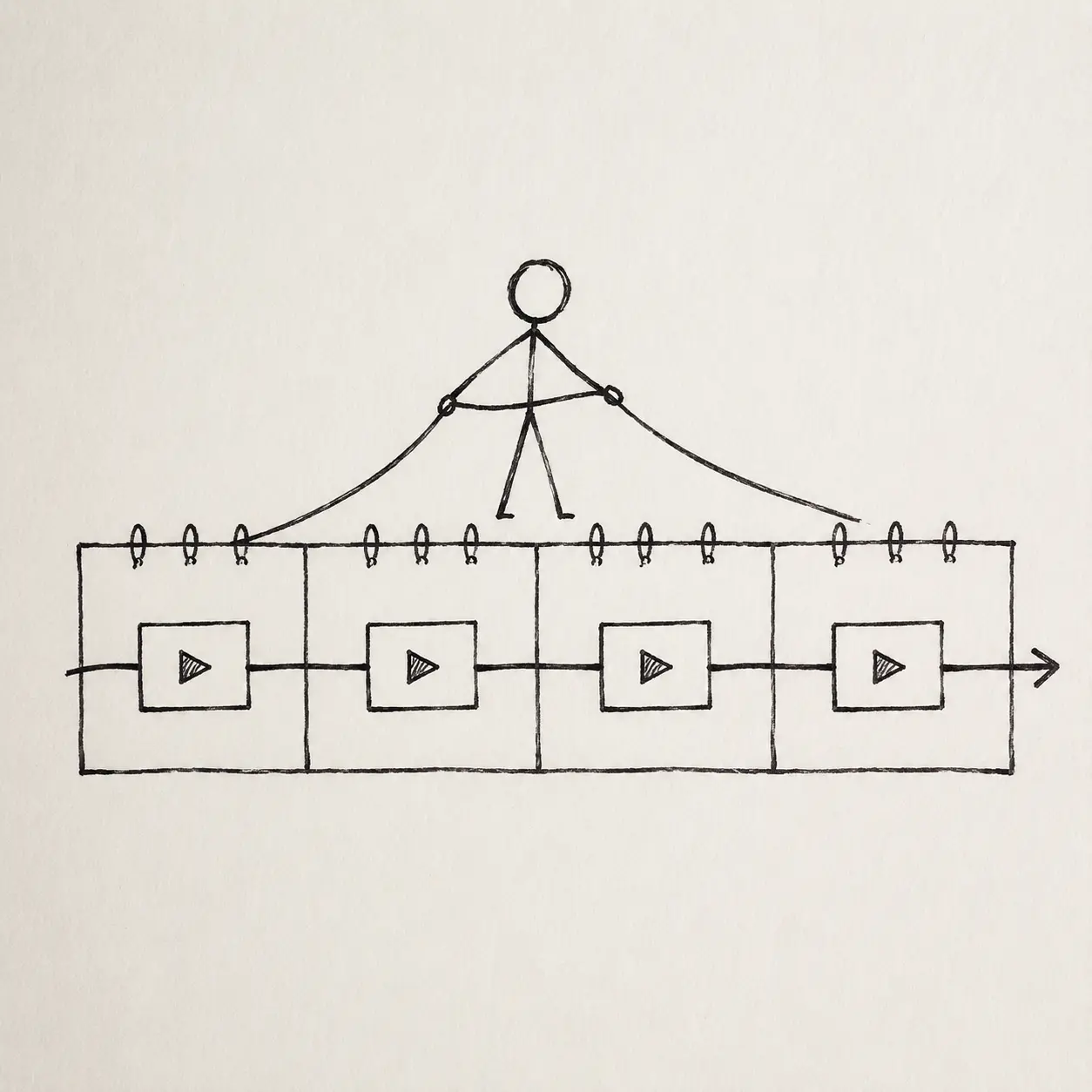
If editing takes two days but three weeks pass between filming and publication, find out what happened on the other days. The footage may have waited for fact-checking, a decision about an example or approval from someone who joined only at the final review.
A long turnaround does not by itself prove poor team performance. A complex subject may need additional sources, publication permission and specialist review. The problem arises when delays are unexplained and the same decisions keep reopening.
Trace one video from topic to publication
Choose a recent video and reconstruct its path through messages, documents and file versions. Record when the topic was approved, questions reached the speaker, footage arrived, the first cut was ready and the video was published. Note who awaited an answer and what needed deciding.
Separate working time from waiting. Several days spent checking a calculation may be justified. Several days spent finding someone authorised to approve it suggest an organisational gap. Those situations need different solutions.
Also examine the cost of reopening completed work. Adding an example to a document before filming may need only a discussion. The same request after recording can require a pickup, another edit and a new review. Record which information arrived late.
Where decisions get lost
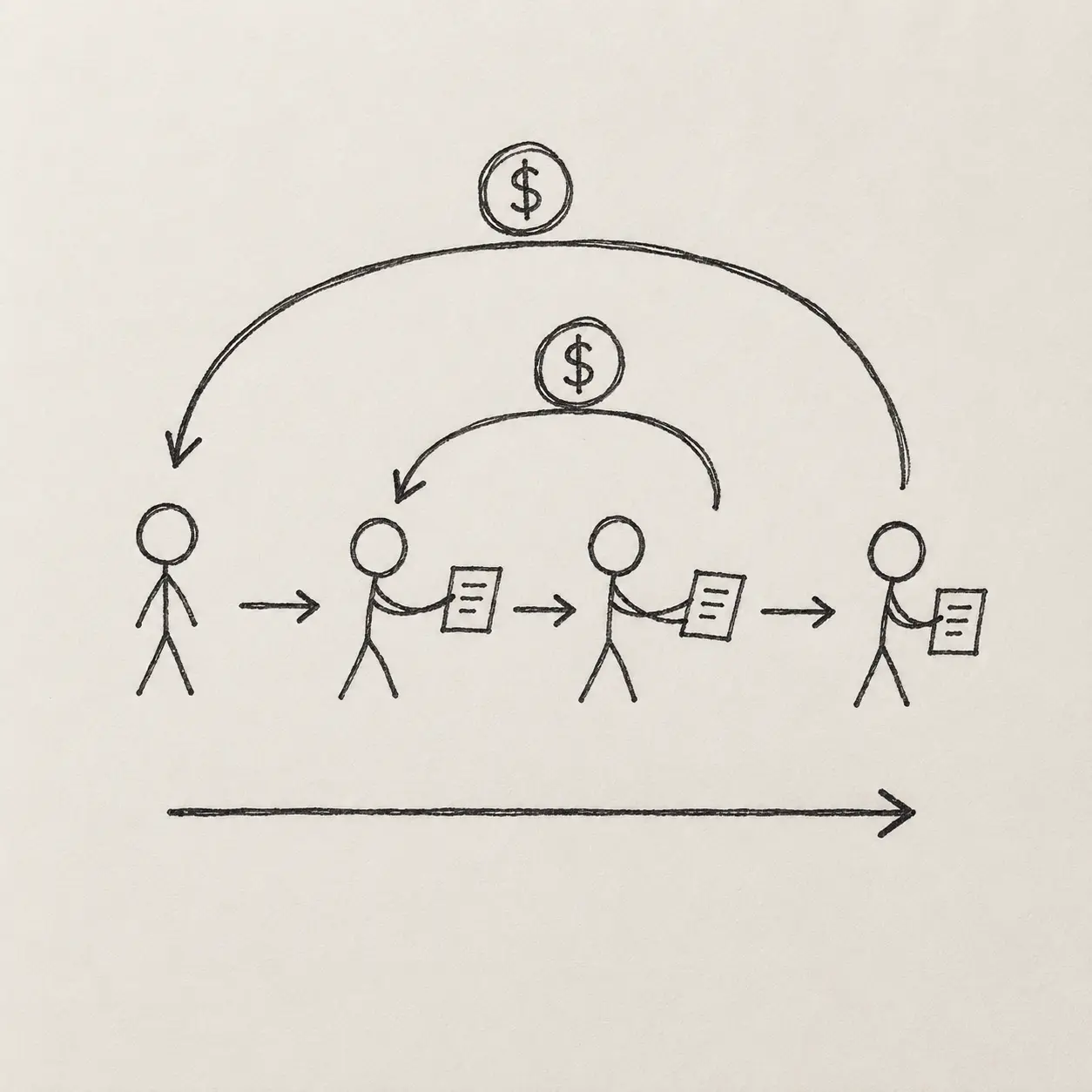
One possible sequence: the writer awaits a brief, the speaker first sees the questions on filming morning and the editor chooses the main conclusion. The designer receives the title after the final cut, then discovers that the footage lacks the moment needed for the thumbnail. This illustrative example shows how the stages depend on each other.
For the next video, agree the central question and working title in advance. Check that the speaker has supporting material and the editor has an approved structure. If the discussion changes direction, update the brief after filming and before editing starts.
Some decisions can be reused. Subtitle style, source-file delivery and technical checks can sit in a shared document. Topic selection, facts and the accuracy of a conclusion still need attention to the specific material.
What belongs in a handoff
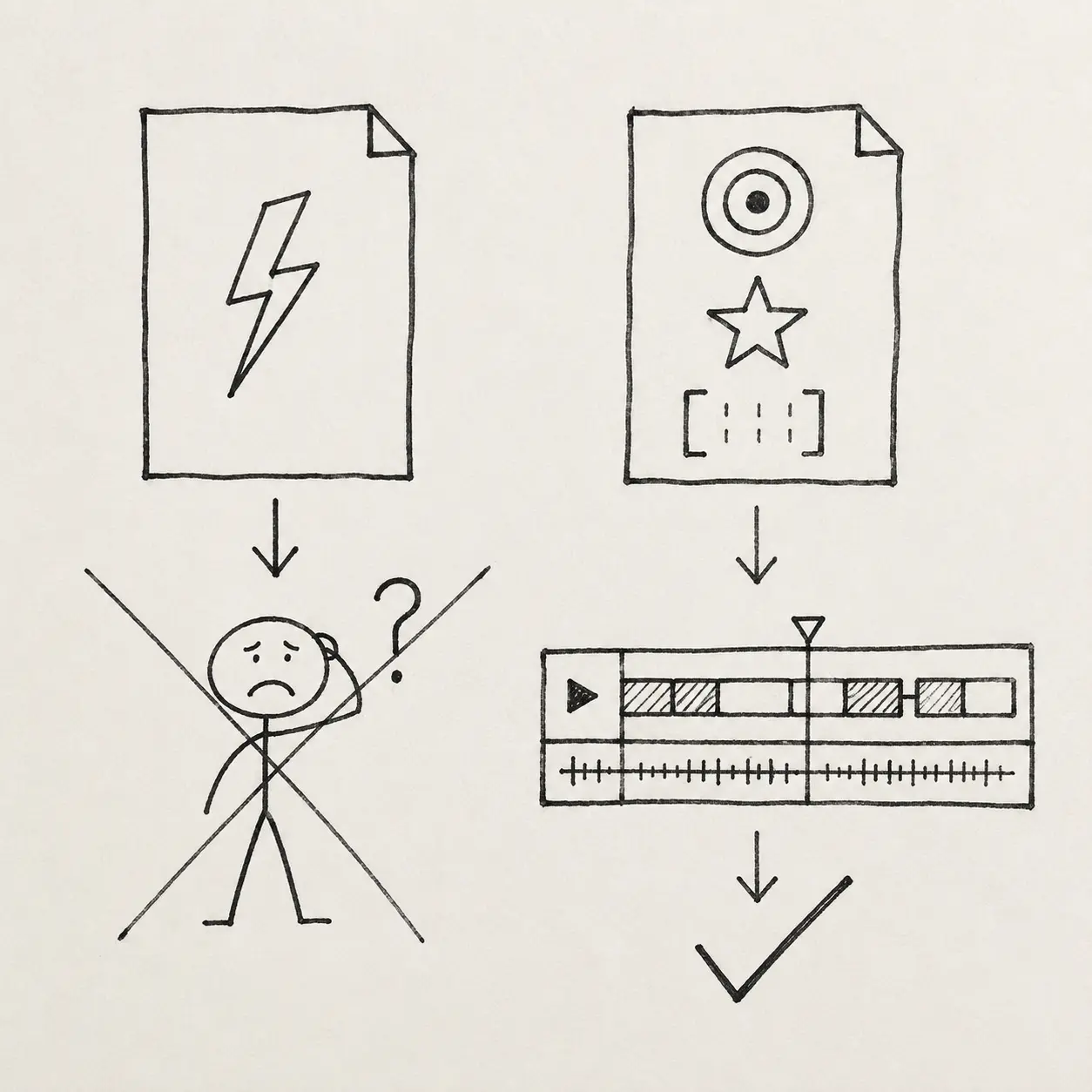
Anyone starting a task should understand the scope and what the finished work needs to meet. For editing, provide the source files, the episode’s main point, restrictions, references and the name of the person who will consolidate feedback. “Make it more dynamic” cannot replace that information.
A sample assignment note: “The producer reviews the first cut. The speaker checks figures and professional terminology. Feedback goes into one list with timecodes; the producer resolves conflicting requests before they reach the editor.” This is a proposed allocation of responsibility to adapt to the team’s agreements.
Connect deadlines to a clear starting point: editing time begins when all source files and the agreed brief have arrived. If the client changes the central conclusion, agree separately on the effect on scope and delivery date. That makes the reason for a revised deadline visible.
The editing brief guide provides detailed fields and a completed illustrative example. Choose what your production needs. The document should transfer decisions rather than create reporting for its own sake.
Assessing the cost
Collect available information for one video: paid services, in-house time, additional revisions and pickups. Keep direct expenditure and internal time separate. If the hourly cost is unknown, leave it unknown; an invented rate creates false precision.
Compare similar work. Editing a short explanation and assembling a long interview require different inputs. A cheaper video may demand more time from the speaker or manager. In that case, some of the cost has moved to them.
What to change in the next video
Choose a recurring delay the team can influence. For example, factual review may start too late. Assign a reviewer, share disputed figures before filming and collect outstanding questions in one place. After the next video, check whether that specific wait disappeared.
Record the outcome: reopened stages, time spent waiting for answers, errors and additional approvals. Assess speed alongside accuracy. A quick approval followed by corrections to a published video merely moves work to a later stage.
If the difficulty concerns topics, coordination and acceptance, discuss bringing me into your existing team. If employees film their own work but need practical skills, see content training. For an initial conversation, send a video link and describe where production stalled.