How YouTube production runs week by week
See two sample production weeks, with and without filming. Understand client approvals, team responsibilities and how to agree on a changing video workload.
In this article (8)
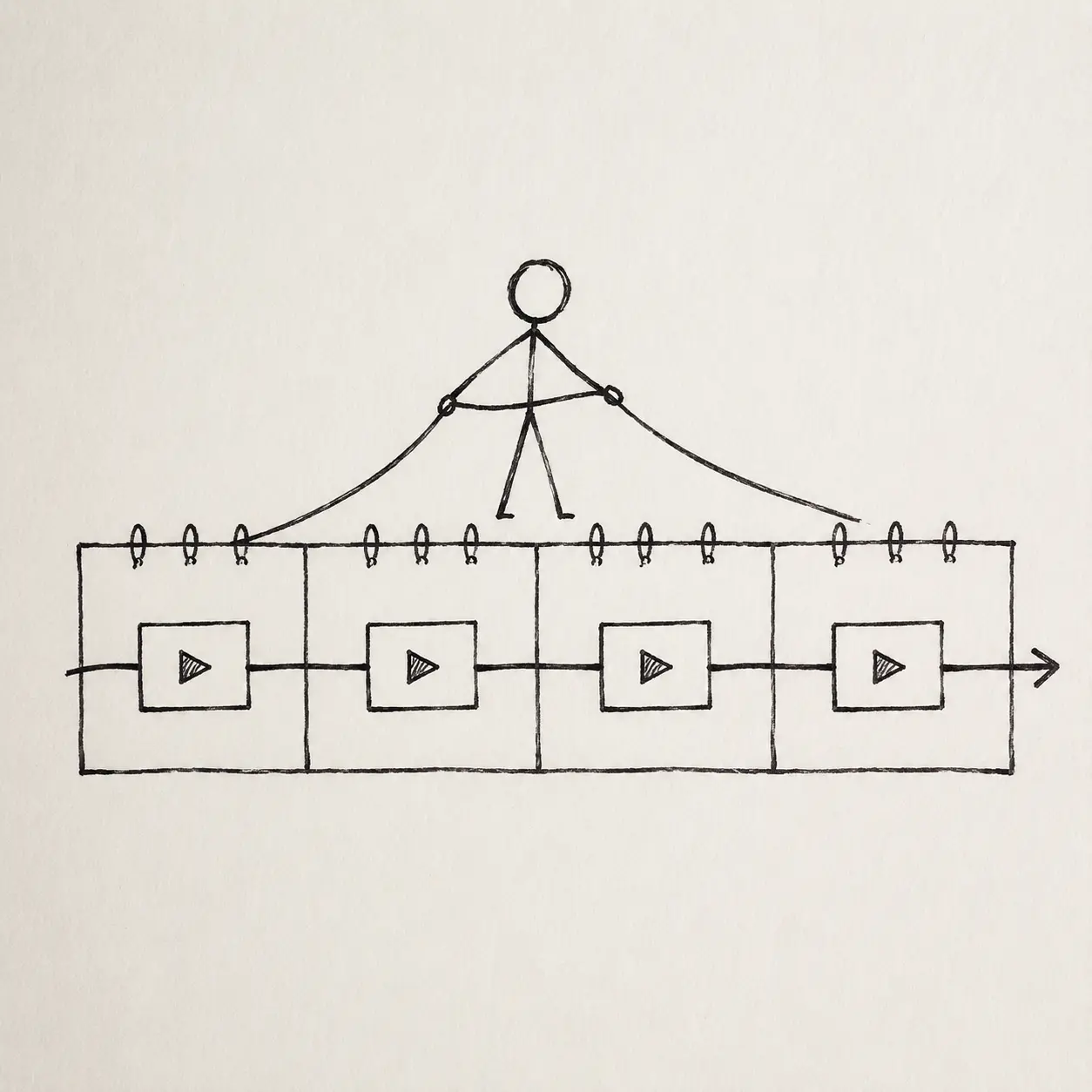
Running a channel should not take up the client's whole day. We agree the schedule, approvals and decisions I can handle. The number of shoots may change, but every video needs a clear next step and someone responsible for it.
The beginning needs more of the client's attention. I need to understand the business, products, audience, the speaker's strengths and the available resources. Those details shape the topics and format before the team spends time scripting and filming.
The project then settles into a weekly rhythm. The client has one point of contact. I collect questions from writers, designers, the camera crew and editors, and bring forward decisions that require the business owner or expert.
A one-off project or ongoing production
A one-off order suits a defined task: preparing and recording an interview, producing a series of lessons or testing a new format. We agree the starting point, deliverables, acceptance and file handover. Work finishes when the project is delivered unless a continuation has been agreed separately.
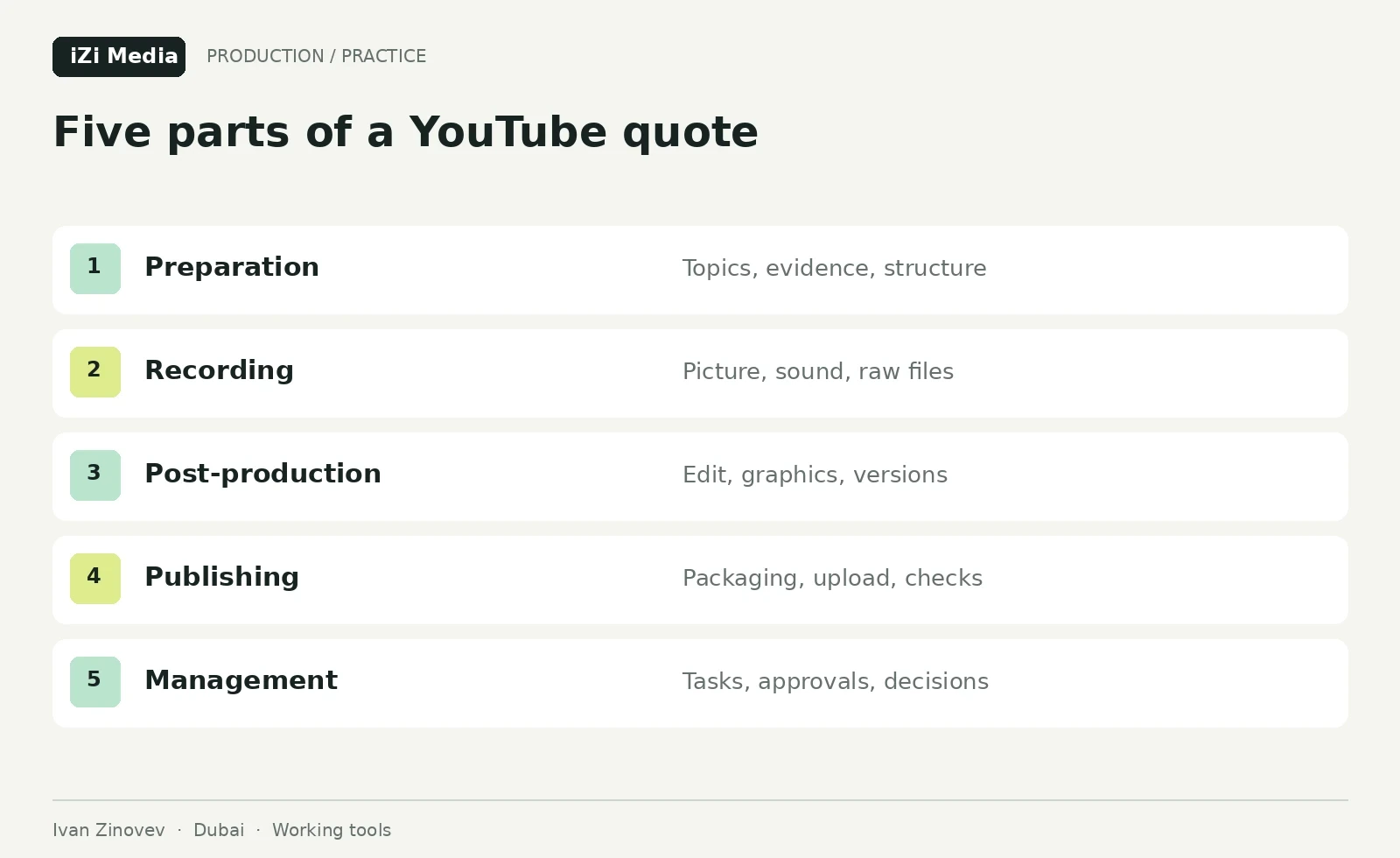
Ongoing production management is useful when the next topics and decisions depend on earlier videos. We plan recordings, manage production, publish the agreed volume and review results. One month may require more work with the speaker; another may focus on material already recorded. The plan and budget should reflect that difference.
For a specific video, start with video production for a defined project. For continuing work on a channel, there is YouTube production management, including work with your existing team. The choice depends on the task and available material; a separate shoot does not require an ongoing subscription.
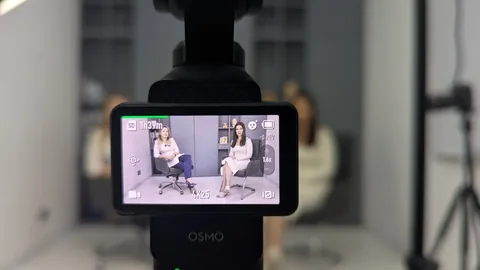
A normal working week
- Early in the week: a short status covering what is ready, what needs approval, what is being filmed and which result we are reviewing.
- Before the shoot: topics, the video's promise, structure and questions for the speaker.
- After the shoot: an edit with clear revision priorities.
- Before publication: title, thumbnail, description and the viewer's next relevant material.
- After publication: review results and decide what to change in the next videos.
This describes the sequence of work on a video. It does not mean every stage happens or a new video is recorded every week. One episode may be in editing, another waiting for factual approval and a third being prepared for recording.
We keep agreements in writing. When several episodes are at different stages, the team can check what was approved, who is responsible for the next step and why the plan changed.
A week recording two expert videos
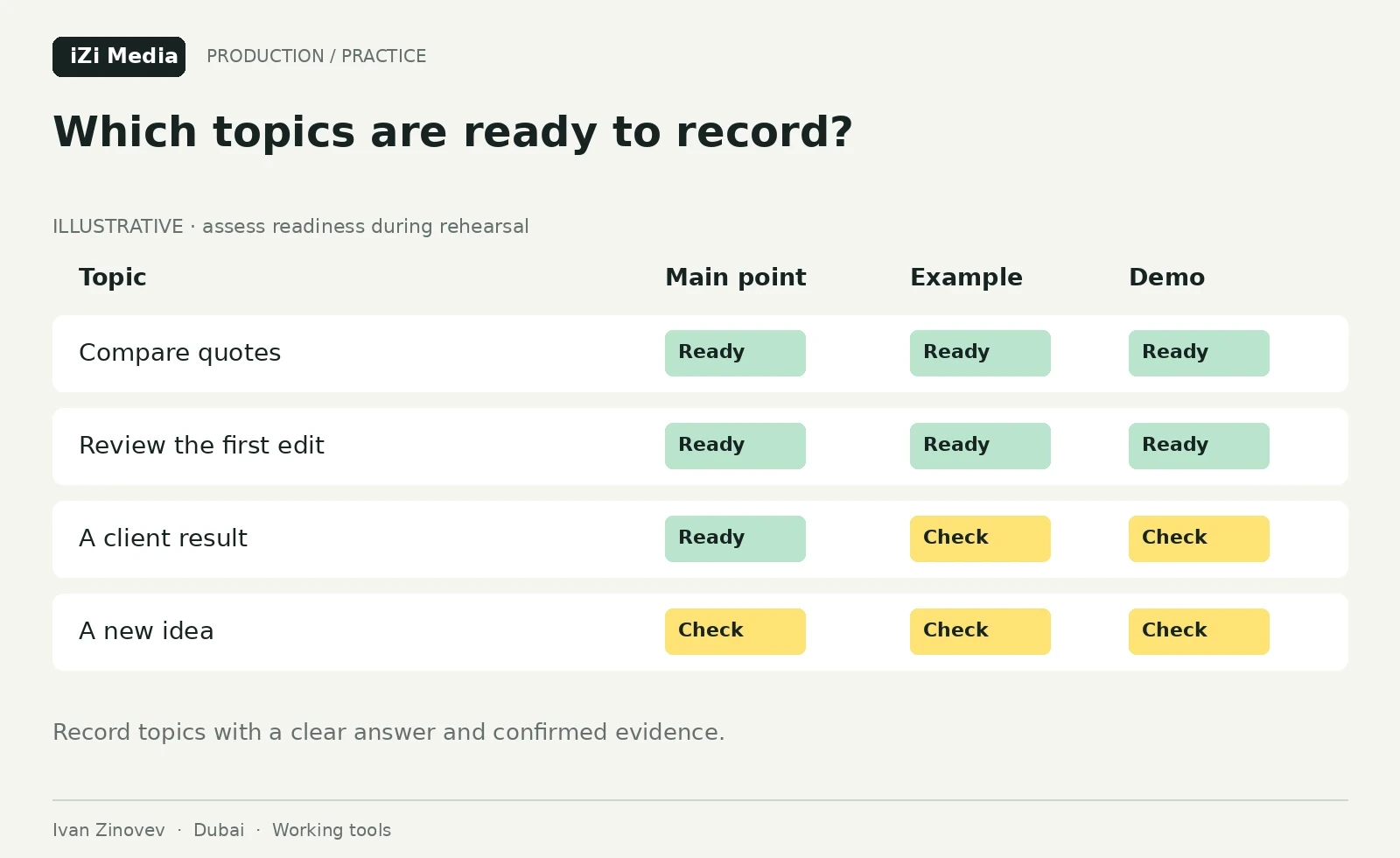
Suppose a company has prepared two topics and the shoot is booked for Thursday. The following schedule is illustrative. It does not promise two published videos in a week or describe a fixed package.
| Day | The team's work | The client's involvement |
|---|---|---|
| Monday | Select viewers' questions, gather examples and check that both topics are ready. | The expert confirms facts and provides material that can be shown. |
| Tuesday | Prepare episode outlines, questions and title ideas. The camera operator checks recording arrangements. | The approver agrees the content and its limits. |
| Wednesday | Clarify answers with the speaker, check demonstrations and finalise the crew's brief. | The speaker works through difficult sections and confirms the recording time. |
| Thursday | Record the agreed material. The producer leads the conversation; the camera operator handles the technical recording. | The speaker attends; a company representative helps with access and demonstration items where needed. |
| Friday | Check the recording set, brief the editor on structure and priorities, and agree the first-cut deadline. | The client answers outstanding factual questions. |
If Tuesday reveals that one topic relies on an unconfirmed example, decide how to handle it. Replace the topic, change the recording brief or postpone that section. Make the decision before paid studio time begins. The batch filming plan covers preparing several videos in more detail.
A week without a new shoot
Now suppose two conversations have already been recorded. This week the team needs to approve one long-form episode and prepare three self-contained short extracts, provided the recording contains enough suitable material. This second illustrative example has a different workload.
| Period | The team's work | The client's involvement |
|---|---|---|
| Start of the week | Review the first cut, select extracts and collect one list of editorial revisions. | The expert checks the facts and whether their position has been preserved. |
| Midweek | The editor makes the agreed revisions. Prepare the thumbnail, title, subtitles and short versions. | The approver resolves disputed extracts and packaging decisions. |
| End of the week | Check the file set, publish accepted material to schedule and review available data from earlier videos. | The client shares viewers' questions and enquiries, if any were received. |
No filming does not mean no work. It does not automatically justify keeping the same budget either: the completed tasks and payment terms must match the agreement. If this pattern repeats, review the next period's plan.
Who makes the decisions
I need the client's expertise, timely decisions and candid feedback. Within the agreed scope, I coordinate the team, track deadlines and plan the next videos.
The producer develops the topic, briefs specialists and checks whether the finished video works. The speaker confirms facts and statements they can stand behind. The camera operator, editor and designer handle their parts of production. The client names someone to collect feedback and accept the result.
If the specialists are already in place, agree which tasks I can assign directly and who controls their availability. That matters particularly when joining an agency or an internal team.

Useful approval stages are the content before recording, the first cut's accuracy and the final version's readiness. Each needs a response deadline. A new idea after script approval may change filming and cost; estimate it before starting. Keep technical corrections and changes to the brief separate.
Working with a changing production volume
A monthly plan can separate the producer's ongoing responsibilities from an agreed amount of team production. The first list covers topics, briefs, approvals and analysis. The second names specific recordings, edits, thumbnails and additional versions. This describes how work can be agreed; it is not a separate published tariff.
Before the period starts, record what should be released and which source material is ready. If another interview is added, first assess preparation, recording, editing and its effect on the queue. If a shoot moves, record the work already completed, what can continue and how the change affects dates and payment under the agreement.
Agree postponements, replacements and additional videos in advance. A file count alone says little about the work: two complex interviews may take more effort than several short answers. The YouTube production cost guide explains estimates and current starting prices.
What to review after publication
Discuss how viewers found the video, what happened at the start and through the viewing session, and which questions appeared in comments. Check whether the audience fits the business's purpose and whether viewers know how to contact the company. Conclusions remain provisional when data is limited.
The review should change specific work: clarify the title's promise, show an example earlier, shorten repetition or test a different topic. If relevant enquiries are not recorded, establish that process first. A click through to a messenger does not establish that someone sent a message or that their request fits the service.
The YouTube launch portfolio shows examples of preparing early videos. We agree a new project's schedule separately, taking account of the team, format and speaker's availability.
Where to begin
Before hiring, ask the producer to describe the first working week: who will contact you, what they will need and what they will send for approval. Agree unclear steps before production begins.
Send a channel link, a short business description and the immediate task. We can discuss a single video, ongoing production management or help for your existing team. Discuss working with iZi Media.