HomeArticlesTeams and handover
What a business should retain after working with a YouTube producer
Agree the files, decisions, permissions and usage rights before production begins, so the business can use the library and continue publishing.
In this article (9)
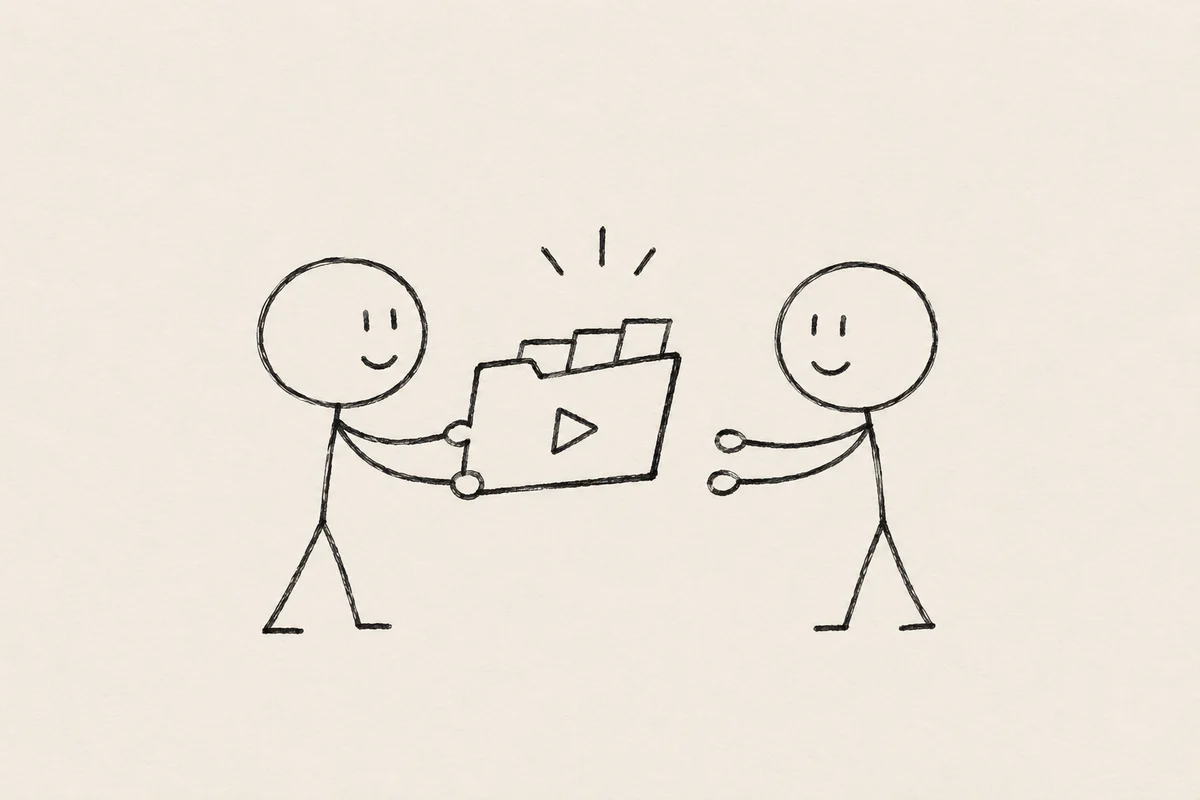
A project can end with a folder of finished videos and still leave the business unsure how to continue. Why were those topics chosen? Which approaches have already been tried? Where are the current thumbnails? What can be reused, and who can publish?
Discuss the deliverables before production starts. Alongside the videos, a business may need research notes, working documents and information for the next team. The scope depends on the commission. Developing one interview and running a channel month after month involve different handovers.
The practical question is what the client will be able to use afterwards and what further work will be needed.
Distinguish the published library from the ability to make more
Adam Chase describes a YouTube library as something the client retains after the working relationship ends. That raises a useful question for any production project: what remains valuable after the last paid month?
Published videos do not guarantee a continuing flow of enquiries. Topics age, links change, services evolve and distribution can fall. Even a useful video needs occasional review.
An archive and the ability to produce the next episode are also different outcomes. Continuing requires people, background information, usable materials, understandable decisions and a workable process.
Agree whether the project covers a defined set of videos or includes handing over part of the process. If it does, specify which part and in what form.
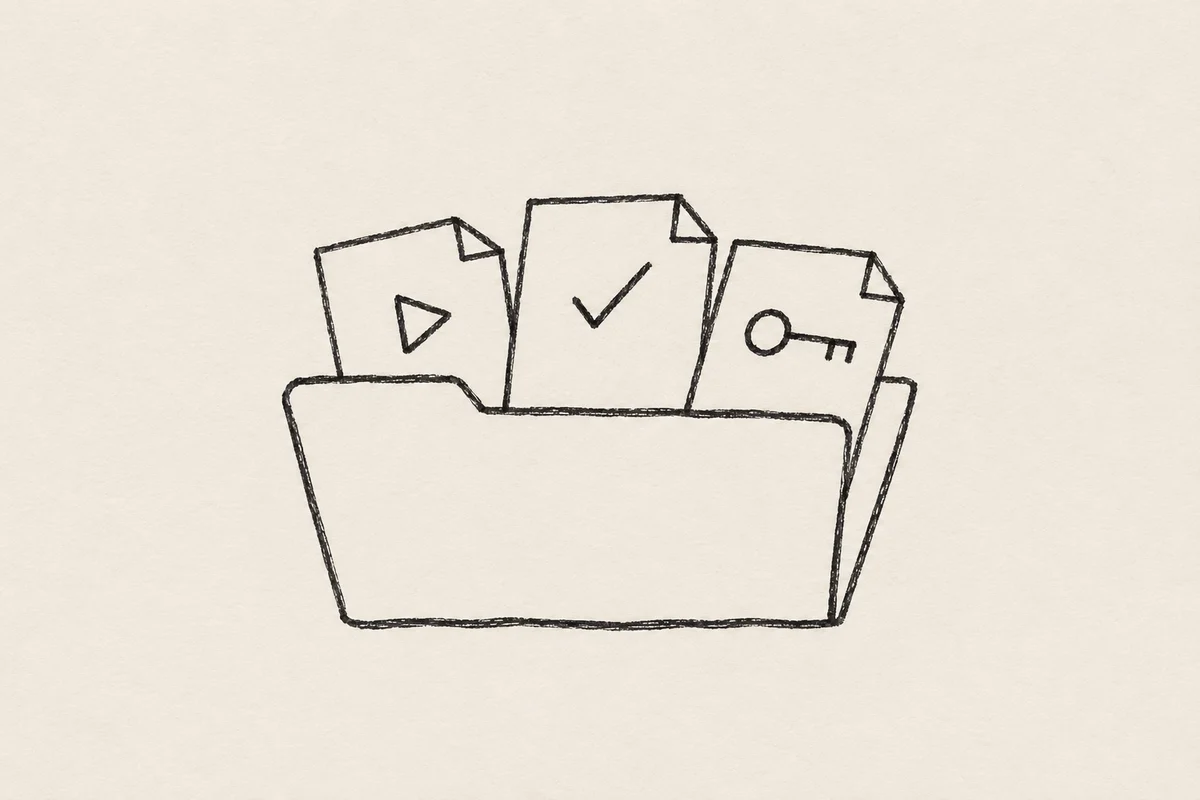
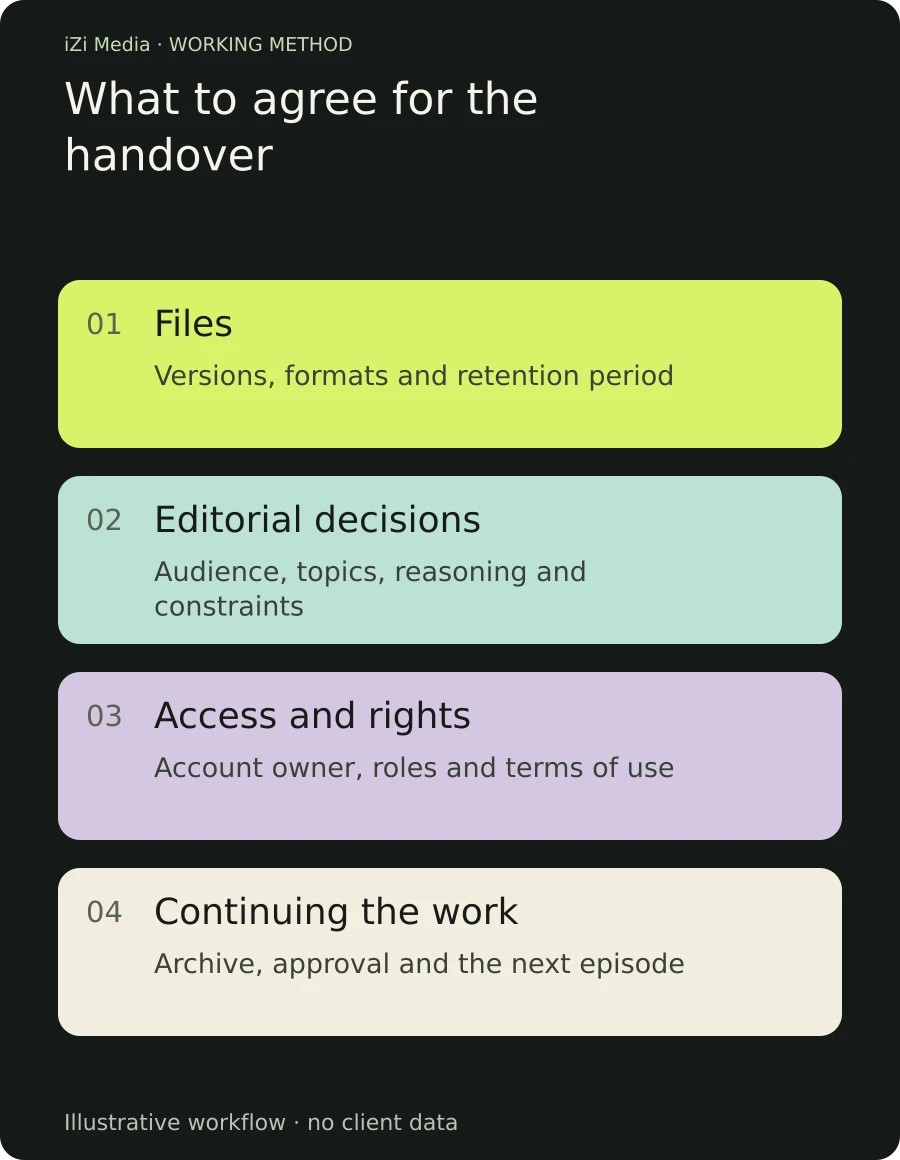
Define the materials to be handed over
“All-inclusive” leaves plenty unanswered about source footage, editing projects and licences. Replace it with an agreed list.
| Category | What you might agree | What to clarify |
|---|---|---|
| Finished videos | Full episodes, shorter versions, subtitles | Formats, languages, resolution and delivery date |
| Packaging | Thumbnails, titles and descriptions | Editable files and previous versions |
| Recorded material | Camera footage and production audio | What is included, retention period and transfer method |
| Editing projects | Project files and linked media | Software compatibility, plugins and fonts |
| Editorial documents | Episode plans, questions and decisions | Which versions are current and available to share |
| Analytics | An agreed report and change log | Reporting period, sources and available exports |
This is a discussion list, not the automatic contents of every service. If a client only needs finished versions, retaining every editing project may add unnecessary cost. If an internal team will update episodes regularly, editable materials matter much more.
Clarify third-party restrictions separately. Music, stock footage, images, fonts and software tools can have different terms. Possessing a file does not establish unrestricted rights to use it.
Preserve the reasoning behind the topics
A hundred titles quickly lose their usefulness if nobody knows how they were chosen. A few well-documented decisions can be more valuable to the next editor.
Who is the channel for? Which service does it help explain? What do customers keep asking? Which topics have been ruled out? Which formats can the speaker and team actually produce?
For each priority topic, keep its source and the reason for selecting it. Perhaps the question recurs in enquiries, suitable material is available and the expert can demonstrate the comparison. A new editor can then assess the reasoning.
The full working archive may contain confidential client information, obsolete drafts and material that cannot be reused. Agree a useful selection, who can access it and how it will be updated.
Nikolay Velizhanin describes turning a team's experience into an industry map. The useful principle is making observations available to other specialists. Keep the exceptions too: one successful topic does not establish a rule for an entire industry.
The customer research guide explains how to retain useful topic context. Keep the reasoning and permitted sources with the archive.
Keep a record of tested decisions
Without a change history, a new team can repeat earlier attempts or undo a useful choice without understanding it.
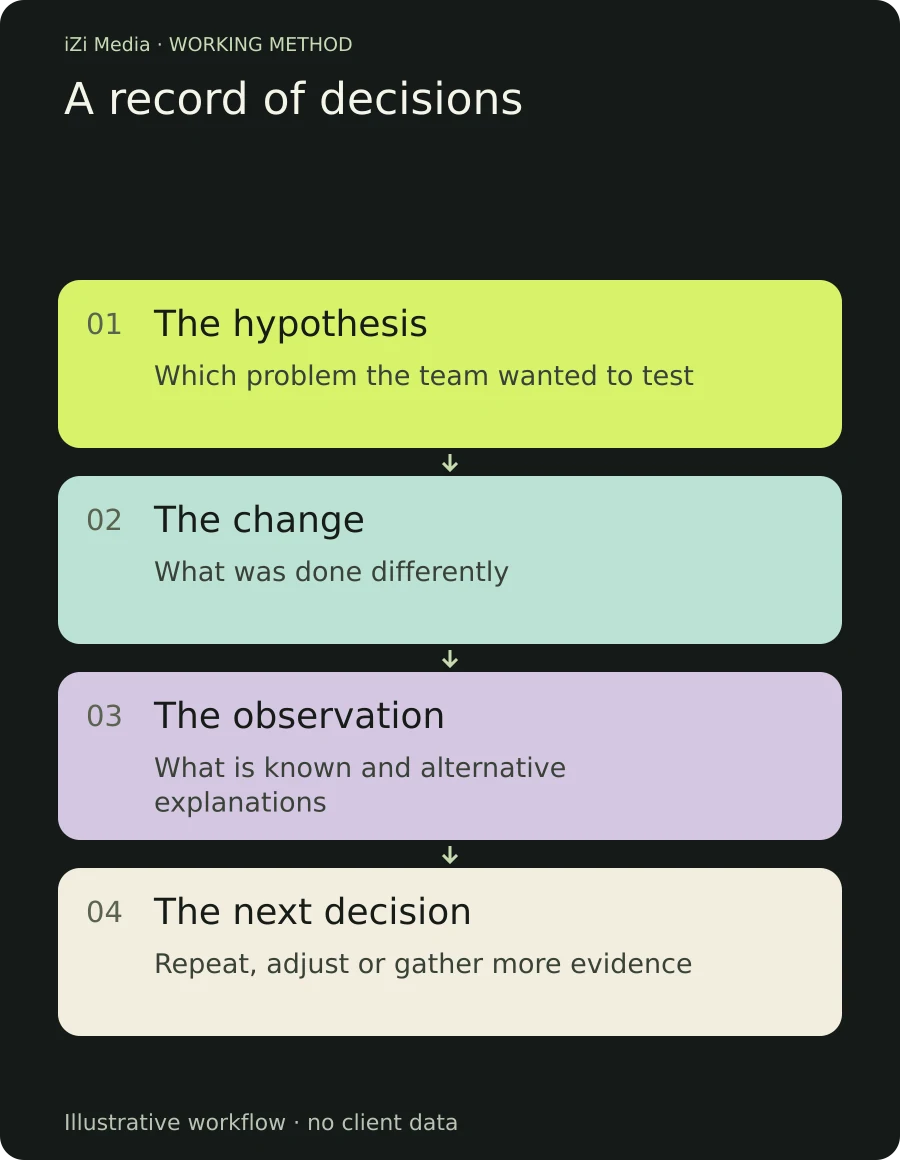
A short log is enough. Record the material, the hypothesis, the change, what was observed and the next decision. For an illustrative episode about choosing a supplier, the hypothesis might be that viewers cannot compare the offers. The change could be a comparison on equal scope. The observation column must wait for actual evidence.
That is a document example, not a report of published work. Do not fill the result field with an expectation.
Keep plausible alternative explanations. Viewing may change because of the topic, season, distribution or traffic source. If the team changes the title, thumbnail and opening together, it cannot confidently credit one element.
Oscar Owen emphasises successive improvements between uploads. A business also needs a memory of those improvements: what problem was noticed and why that particular next step was chosen.
Manage account access separately
The channel, shared folders, analytics and publishing tools should not depend entirely on one contractor remembering how everything works.
List the systems needed for the project, the person responsible on the client side, the purpose of each permission and how access is changed. Depending on the work, this might include YouTube Studio, footage storage, working documents, subtitling and analytics tools.
YouTube channel permissions let a business grant roles without sharing the Google Account password. The role determines what the participant can do. Check the platform's current documentation when assigning permissions and choose the access the task requires.
At a routine handover, first confirm receipt of agreed materials and the team's ability to continue, then change permissions in the agreed order. Suspected unauthorised access requires a separate, prompt response.
File delivery, account administration and rights to use materials need separate treatment. One agreement does not automatically settle all three.
Make the archive usable
A folder called “final final new” works until someone needs a file months later. Then several versions have to be opened to find the published cut or corrected audio.
Agree a naming convention the whole team understands, perhaps date, episode number, language and status. Distinguish approved exports, working material and reference-only files.
Keep the publication link and a record of the files used for the release. That makes a later update easier.
Ask someone who did not build the archive to use it. Can they find the approved version? Does the editing project open? Is the linked media available? Can they locate the final subtitles?
Sometimes a finished file and a decision document are enough. Other projects need a complete technical handover. Preparing and storing material takes time and money, so choose the scope for the way it will be used.
Hand over the approval process
A new team also needs to know who checks professional facts, who gathers feedback, who authorises publication and which changes require another review.
Record the current process and the actual project contacts. If the presenter approves the substance while a marketing manager controls deadlines, make that distinction clear. A scheduling comment should not accidentally become an editorial instruction.
Keep examples of useful feedback. “Make it more energetic” is hard to act on. “The opening promises a comparison, but the first option arrives after a long introduction” identifies a concrete problem.
The document does not need an instruction for every possible event. It should show where a decision is made and who owns the final version.
If the producer changes while the team stays, clarify the roles first. See the guide to a producer working with an agency or in-house team and an actionable editing brief.
Test the handover on the next episode
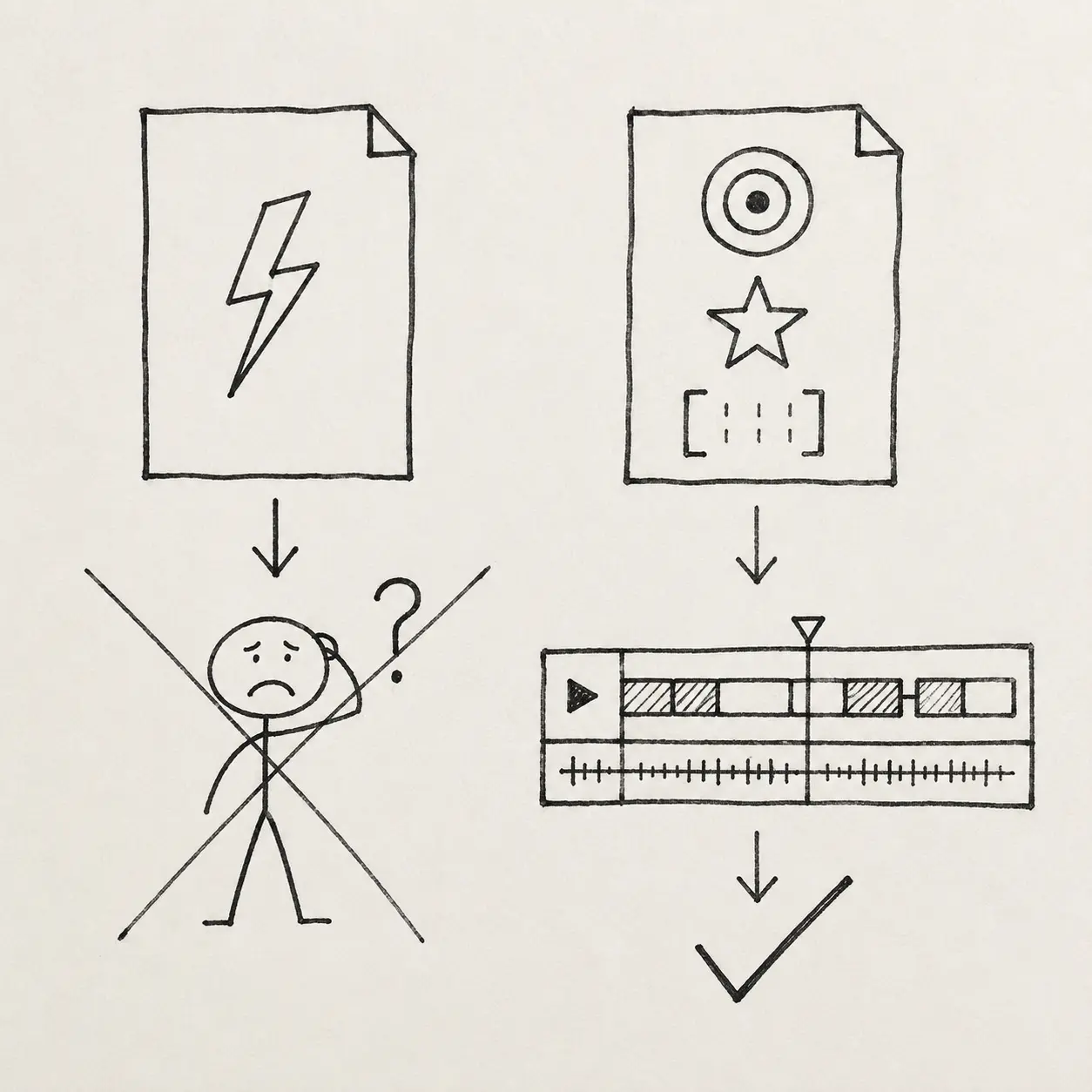
A useful handover test is letting the incoming team complete part of a real task using what it receives.
In an illustrative situation, a company keeps its camera operator and changes producer. The incoming editor gets the priority topic, intended viewer, interview plan, material restrictions and approval process. The next preparation step reveals what is missing.
If they have to ask again who buys the service and what the company sells, the files survived but the context did not. If they can prepare the interview but cannot find approved images, the technical section needs work.
A handover meeting or a limited period for follow-up questions can be agreed separately. Define the scope, timing and cost rather than assuming unlimited support after the project ends.
Assign responsibility for the published library
Someone still needs to monitor the published material.
Review videos when the service, pricing, team or professional requirements change. An old description may point to a broken link, while the video promotes an offer that no longer exists. Updating text or adding context may be enough; sometimes a new episode is needed.
Track which topics still receive attention and which videos the sales team uses with customers. There is no need to maintain every asset indefinitely. Review or removal should reflect the channel's purpose and the context.
An archive is useful when the business understands it, can use the agreed materials and has a way to continue. A large file count does not establish that.
When choosing a producer, discuss what will remain after the project, how it will be delivered and what your team will need next. That makes it easier to choose a workable scope without relying on promises nobody agreed to.
Discuss the handover scope when commissioning production with your existing team. Also agree how the business will use videos before client meetings and who maintains the library.