HomeArticlesTopics and research
Finding YouTube topics in real customer conversations
Use customer conversations, enquiries and objections to research a business channel. Separate observed language from assumptions before choosing topics.
In this article (9)
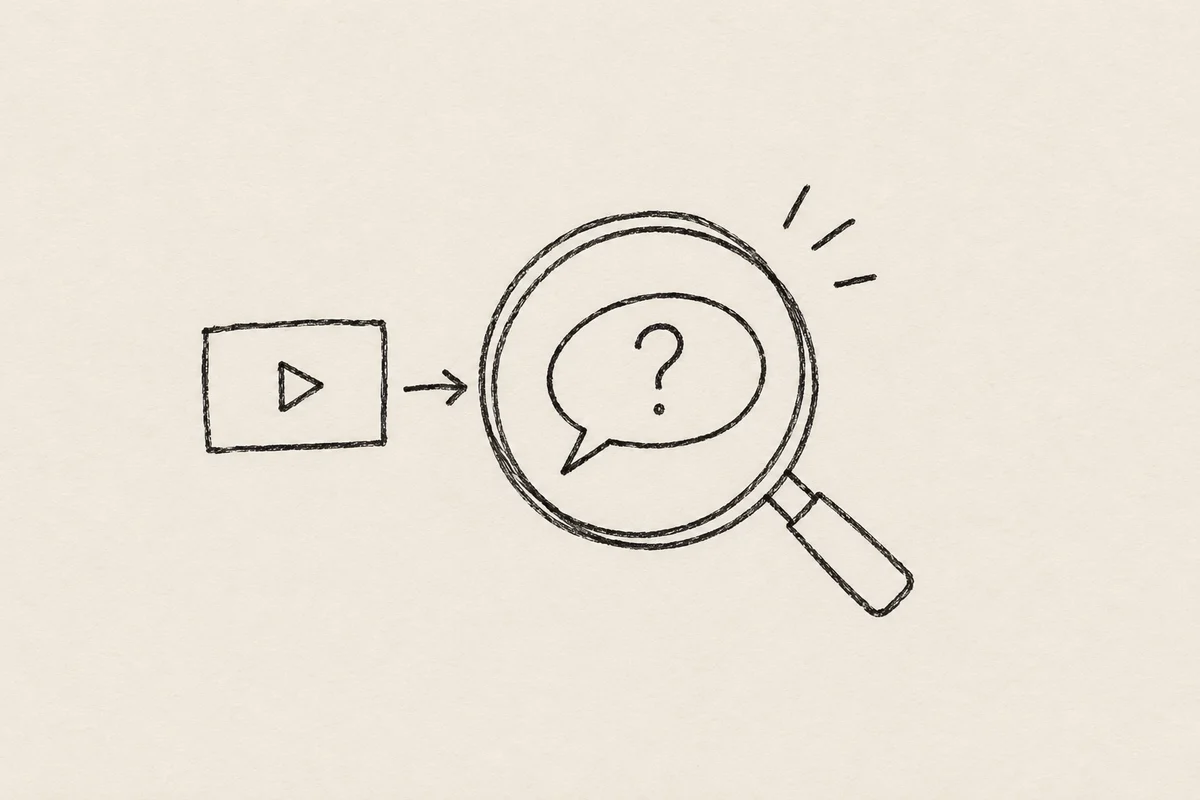
A topic list can sound professional while missing what buyers ask. A company talks about service quality while the customer wants to know what happens if delivery is late. An expert explains a product while the viewer is still deciding whether they need that category at all.
Customer conversations can expose that gap. Uploading transcripts and asking AI for titles is not enough. You need a way to separate people's words from your interpretation, a recurring problem from a one-off question, and a useful topic from an individual case.
The following process can be applied to consultations, sales conversations, support enquiries and interviews. It does not require a vast archive. Start with what is available and be explicit about which buyers it represents.
Define the decision you are researching
“We need topics for the channel” is too broad. It encourages collecting interesting phrases without getting closer to an episode.
Specify whom you need to understand. Perhaps people who compared proposals and did not buy. Or existing clients struggling to prepare materials. Or buyers encountering the service category for the first time.
Those are different research questions. Experienced buyers ask about details, newcomers use imprecise language, and dissatisfied customers discuss delivery. Each can suggest a topic for a different audience.
Write a working question: “What prevents someone from comparing two video production proposals?” It gives the analysis a boundary. You can investigate another situation afterwards.
Use different sources
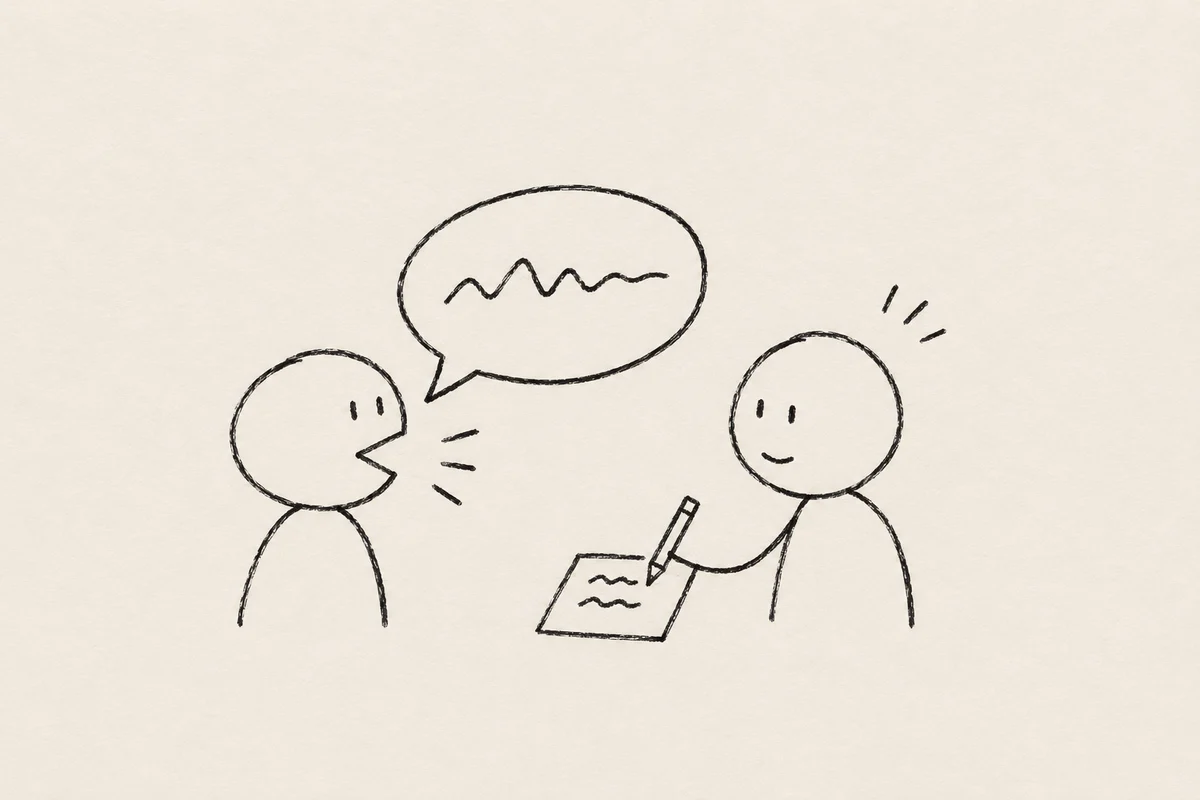
Every source has a bias. Sales conversations feature people willing to talk. Comments favour active viewers. Support encounters usage problems. Buyers who quietly chose a competitor may be absent.
Compare more than one source where possible. A brief interview with someone who declined can reveal a gap that successful sales calls do not show.
Record where the material came from, its period and which situations are missing. Recent enquiries for one expensive service cannot represent an entire industry.
Volume alone guarantees nothing. Adam Chase describes an extensive research process before using AI. The principle can be applied without copying the size of his questionnaire or the number of calls: generation follows contact with actual buyer language.
Prepare the material
Topic research usually does not need names, phone numbers, financial details, addresses or private circumstances. Remove unnecessary information before sharing material with outside specialists or tools. Consider the particular project's access, processing and publication requirements.
Replacing a name with “Client A” may still leave someone identifiable through an unusual situation, location or combination of details. Preserve the meaning of the question while removing unnecessary identifying context.
Check transcripts. An error in a negative, a number or a name can change the conclusion. If a phrase becomes the basis of an important topic, return to the recording or clarify it with the participant.
Keep source material separate from working extracts. The team developing topics should receive the information it needs, rather than an entire client archive.
Separate the phrase from its context
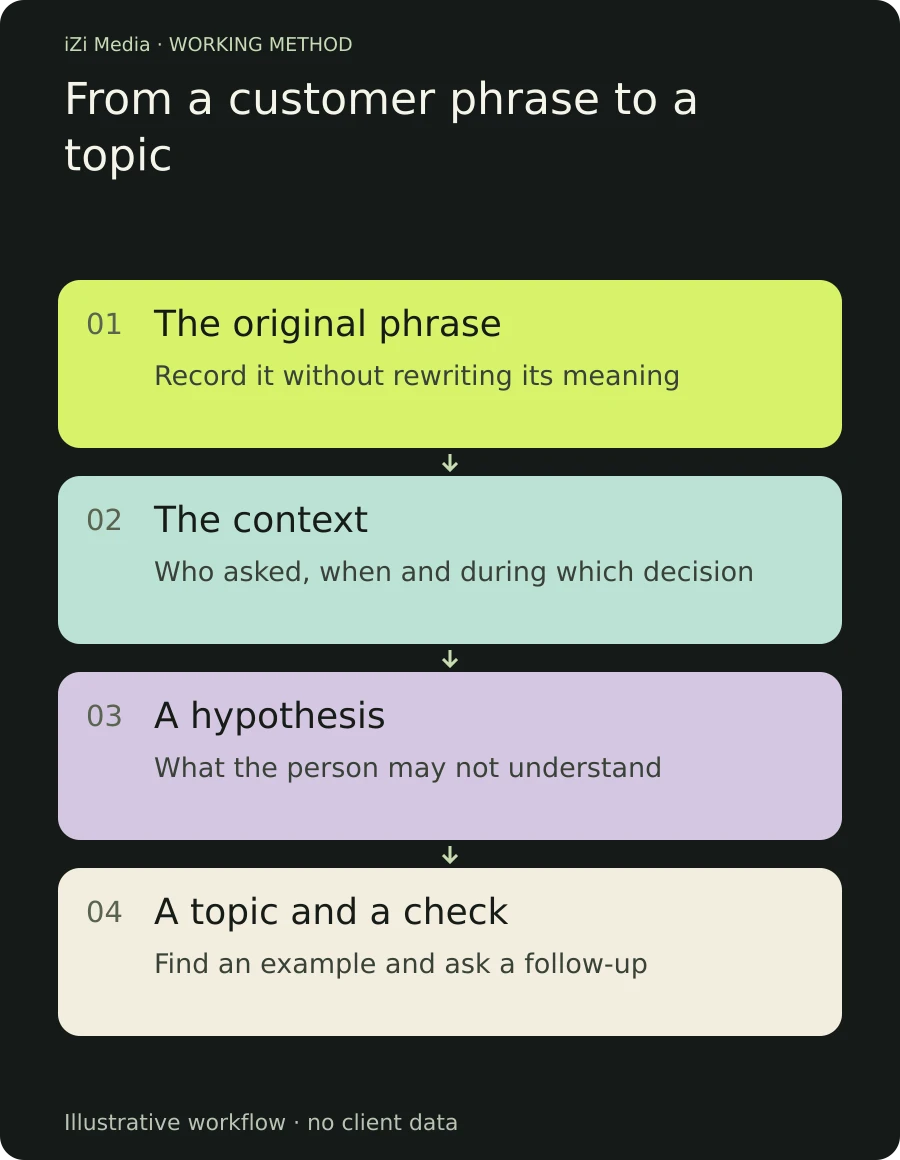
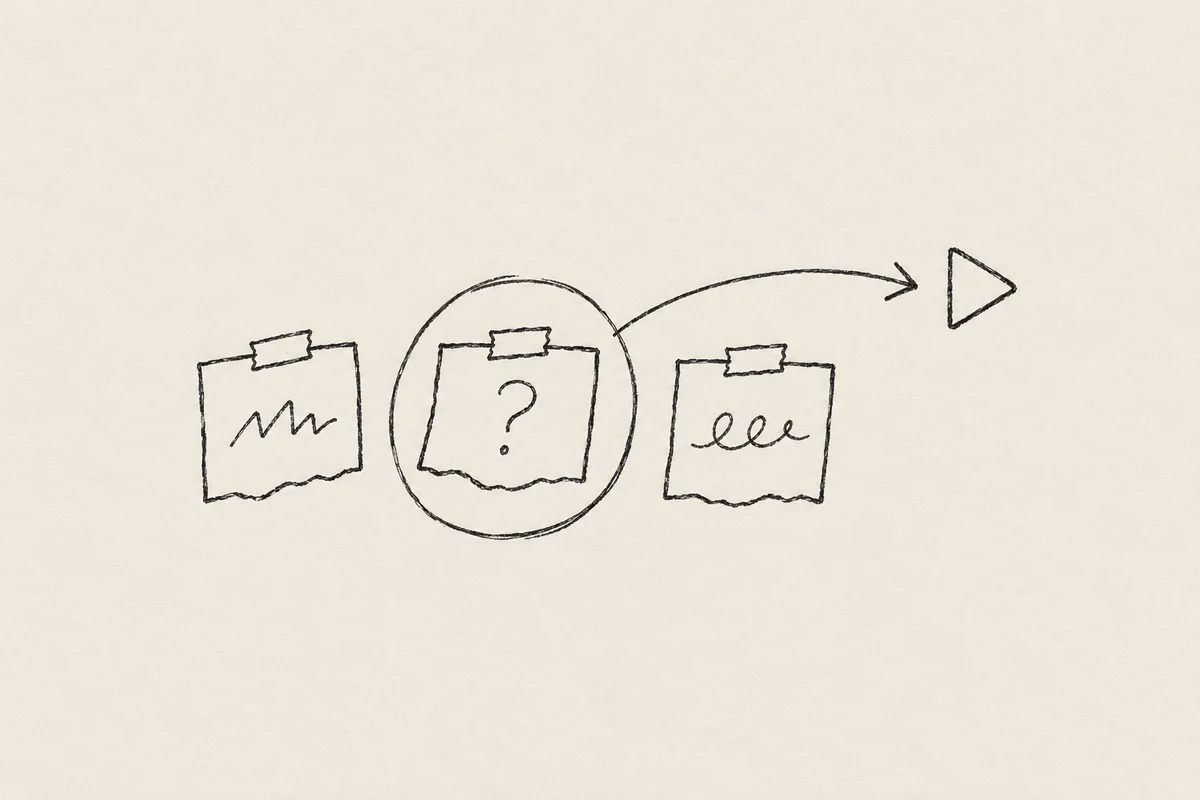
Consider an illustrative situation: an owner is discussing expert videos and says, “We already have an editor.” That could mean concern about duplicate costs, a wish to retain the team or uncertainty about a producer's role. One sentence cannot tell you which.
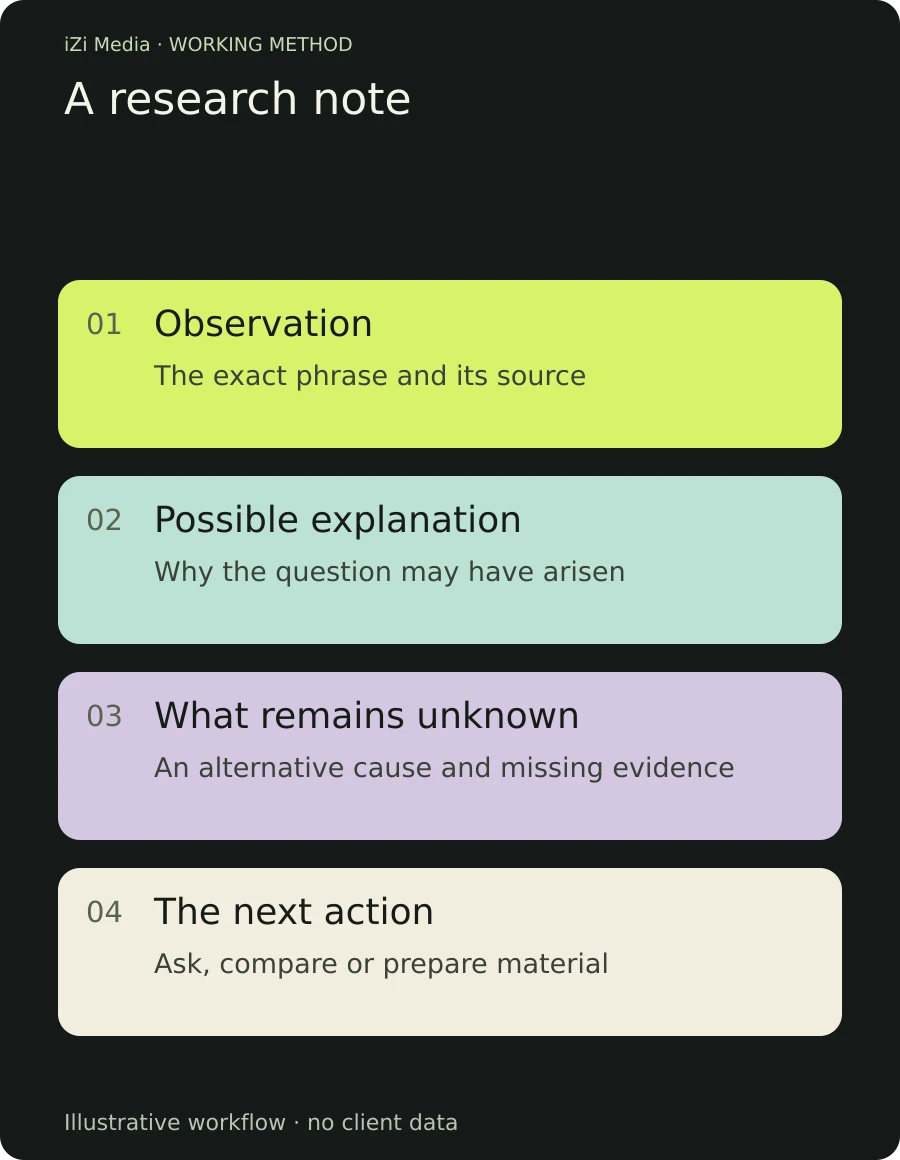
| Field | Illustrative entry |
|---|---|
| What the person said | “We already have an editor” |
| When they said it | After a discussion of team roles |
| What was clarified | They want to retain the specialist |
| Working interpretation | Explain how a producer joins an existing team |
| Alternative explanation | They are comparing costs and avoiding overlapping work |
| Still unknown | Who currently selects topics and approves edits |
This is more useful than “the client fears change”. That label hides several possible questions.
Motives such as status, safety or recognition also need investigation. Nikolay Velizhanin considers the motives behind a surface-level wish. Editorially, that is a reason to ask a better question, not to invent a psychological history.
Group questions by the decision
Identical words may describe different problems. “How many videos do we need?” can come from a newcomer choosing a starting budget or a marketer allocating an existing team's workload.
Different phrases may point to the same issue. “Who approves everything?”, “I have no time to read scripts” and “Can you work with our marketer?” all concern the client's involvement.
Group entries by situation, decision and consequences. Try to express each group in one sentence: “The person wants to start publishing but does not understand how much of their own time is needed.”
Then look for material. Who can answer? Is there a workflow to show? Can you demonstrate an approval? Which conditions affect the estimate? A good phrase does not supply a missing answer.
Frequency helps prioritise, but importance also matters. An infrequent question about a substantial risk may deserve an explanation. A common price question may be better addressed by a clear service description.
Turn one cluster into genuinely different topics
One observation can support several episodes when each helps with a separate decision.
For the existing-team example:
- what changes when a producer joins your editor;
- who should approve an expert video;
- why an edit may stall after filming;
- what the team needs before the first episode.
These should not be four titles for the same script. Each needs its own purpose, material and viewer outcome. If the substance repeats, one complete episode and shorter answers may be more useful.
Check the language. Anastazja Debowska discusses the difference between expertise and the ability to explain it. Preserve the problem's precision while removing internal jargon. A buyer need not know an “editorial framework” to ask, “Who decides what stays in the video?”
When the source is a founder interview, look for actual events and decisions. The interview questions guide explains how to follow up a general answer.
Let AI work on evidence
AI can help with an initial grouping, similar phrasing and contradictions. Its output should lead back to the material.
A useful instruction is: “Group questions by the decision the buyer is trying to make. Give the source-fragment numbers for each conclusion. List alternative explanations and unanswered questions separately. Do not invent quotations.”
Check several groups manually. If the model grouped by similar words alone, clarify the criterion. If it describes the audience in broad terms, ask which fragments support the description.
Oscar Owen treats AI as part of production rather than a substitute for human value. Here the boundary is responsibility for interpretation: the tool helps organise material; the editor decides what it supports.
Avoid precise-looking scores for “real pain” when nothing in the data measures it. A traceable topic proposal is more useful.
Check the promise before recording
State what the viewer should be able to do after watching. “Learn about the team” is vague. “Understand which decisions to agree before the first edit” gives the episode a job.
Check five points:
- Does this audience actually have the question?
- Can the expert answer with examples?
- Is a document, process or comparison needed?
- Which qualifications must survive simplification?
- Where can the viewer go after the answer?
This does not prove future demand. It reveals gaps before filming. Show the promise to someone similar to the audience and ask what they expect. “Do you like it?” usually produces less useful information.
Some of these questions may suit videos used before a sales call. For an idea from another industry, assess which elements can be adapted.
Compare expectations with what happened
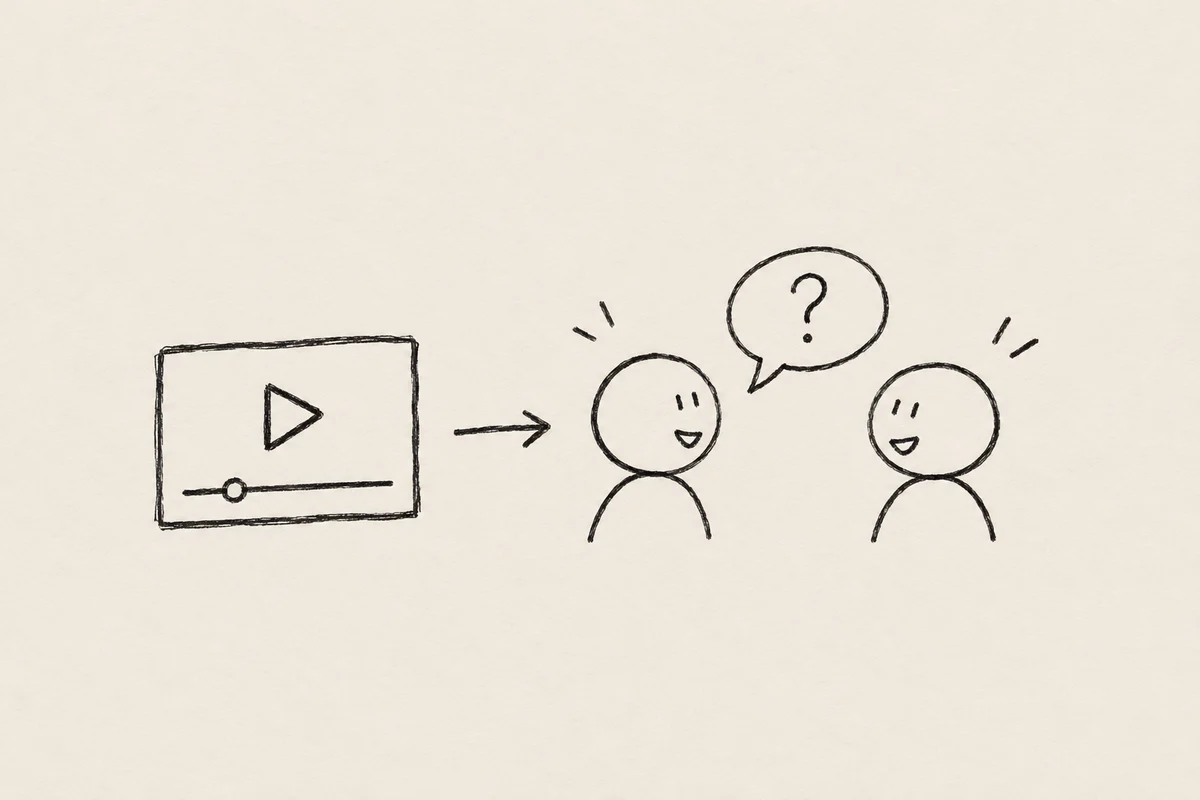
After publication, return to the research card. Who was meant to watch? Which question did you select? What help did you promise? What could you observe?
YouTube's impression, view and retention data describe different parts of viewing. They do not automatically tell you whether you understood the buyer. Compare them with comments, client responses and new enquiries.
Little distribution does not immediately mean nobody wants the answer. Examine where the video appeared and how the topic was presented. If viewers discuss a different problem, the promise may have attracted a different situation.
Add questions that arise after publication. A viewer's clarification may become the next useful episode, or reveal that the service page needs an update.
The result should be a usable set of decisions: which topics to prepare, what information to collect and which interpretations to test. An archive becomes useful when the team can explain why it chose a question and how it can answer it accurately.
Research can form part of YouTube production or production with your existing team. The channel launch portfolio describes preparation work without promising the same result across industries.