ArticlesSearch and AI
How to write content people, search and AI can all understand
Good optimisation makes the idea clearer. A person gets the answer quickly, while a search system can understand who is speaking, what the page covers and what supports the conclusion.
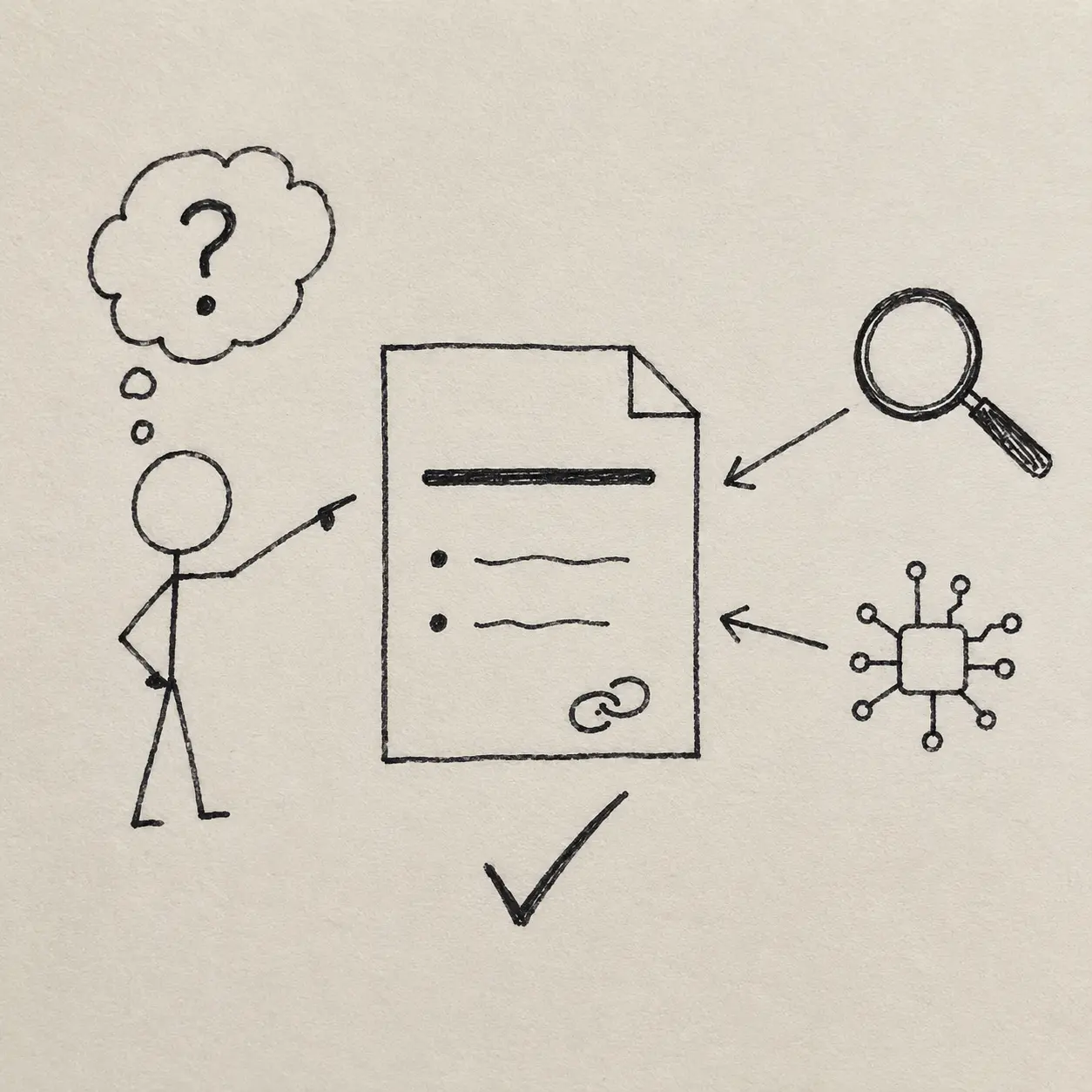
AEO and GEO can sound as if generative systems require a separate writing language. Google describes a simpler reality: generative search still relies on core search systems, so the foundations of SEO continue to apply.
That is a useful common-sense check. There is no need to split one idea into dozens of artificial pages, repeat every possible query wording or write in tiny fragments for supposed citation convenience.
What genuinely helps
- Answer one real question on each page.
- Put a concise answer near the beginning, then explain the mechanism and an example.
- Make the author, experience and limits of the claim clear.
- Link to a primary source for facts that can change.
- Use descriptive headings and the ordinary words your audience uses.
- Connect the article to a relevant case, service or next question.
Query fan-out means a system can break a broad question into several related searches. The useful response is depth inside the subject: cost, process, risk, timing, examples and choices. Publishing many near-duplicate pages creates a lot of text and very little new value.
Technical clarity still matters: crawlable pages, a stable article URL, accurate title and description, language alternatives, dates, authorship and BlogPosting markup. These elements help a machine interpret the page. They cannot rescue empty writing.
My working test is simple. A busy person should understand the article first. The page should then contain specific experience, verifiable facts and a clear structure. That same text is usually easier for search systems to use.